Light-edged azalea
Monday, 27 May 2013
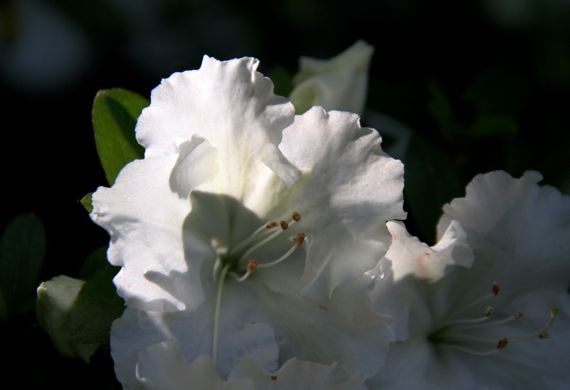
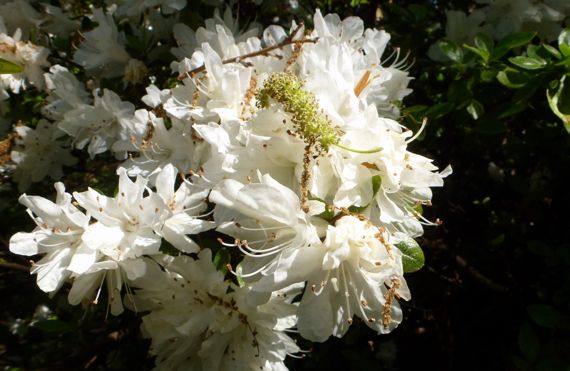
Ah, ’tis the season when the low-rise azaleas in our backyard (British: garden) bloom. Unlike the full-statured versions, these tend to bloom just once annually.
Monday, 27 May 2013
Ah, ’tis the season when the low-rise azaleas in our backyard (British: garden) bloom. Unlike the full-statured versions, these tend to bloom just once annually.
Thursday, 23 May 2013

For the most part, I see milkweed as a scourge in the orchard. They are taking over, squeezing out grass and fun flowers like lupin and sweet pea. And I don’t know how to reduce their aggressiveness.
On the other hand, I’m happy to have more than a few around to support the monarch butterfly caterpillars, as the species is besieged in so many places, especially in their wintering landscape in Mexico and points south.
Monday, 20 May 2013
More from David George Haskell’s The Forest Unseen: A Year’s Watch in Nature (2012; pg. 228)—I’ve gotten into December, so I’m almost finished:
The partnership between fungi and plants…is an old marriage, dating to the plants’ first hesitant steps onto land. The earliest terrestrial plants were sprawling strands that had no roots, nor any stems or true leaves. They did, however, have mycorrhizal fungi penetrating their cells, helping to ease the plants into their new world. Evidence of this partnership is etched into fine-grained fossils of the plant pioneers. These fossils have rewritten the history of plants. The roots that we thought were one of the earliest and most fundamental parts of the land plant body turn out to be an evolutionary afterthought. Fungi were the plants’ first subterranean foragers; roots may have developed to seek out and embrace fungi, not to find and absorb nutrients directly from the soil.
Ker-pow! (To the admittedly now ancient biology books I studied in HS.)
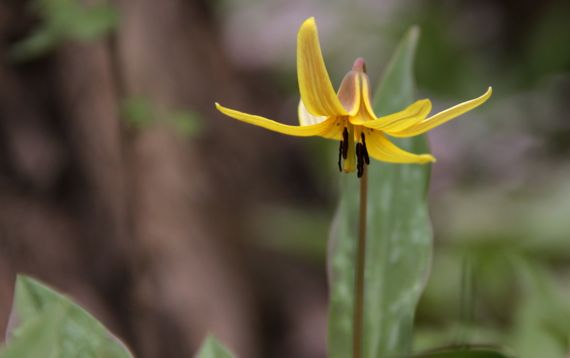
And, the trout lily is from yesterday’s excursion to the wildlife refuge. We found it in flowering expanses of valley floor amidst large-flowered trilliums and a smaller flower I keep thinking is a kind of anemone*, but can’t find in my wildflower book. Or don’t recognize the description without a picture that seems identical to me. Here’s my picture, of the little guys with a larger, nodding, um, maybe some kind of bellwort? (Clearly, I’m better at finding than identifying….)
We found the refuge busy with birdlife, too. We saw both trumpeter (I think) swans and ospreys sitting on nests, and many other birds not sitting on nests.
The Guru noted that there are creatures called anemone from both land and sea, and why? I said, must be related to the Greek? origin word. And my dictionary says (ignoring the sea critter): “from Latin, said to be from Greek anemōnē ‘windflower,’ literally ‘daughter of the wind,’ from anemos ‘wind,’ thought to be so named because the flowers open only when the wind blows.” And why wait for the wind (if that is indeed true)? Haskell would say because then its pollen can be distributed farther afield than it would be if the flower just opened and dropped its pollen near the mother-plant’s base. So, the sea version is also bending with the waves and tide, as if flexing in the wind? Ah, digressions.
Thursday, 16 May 2013
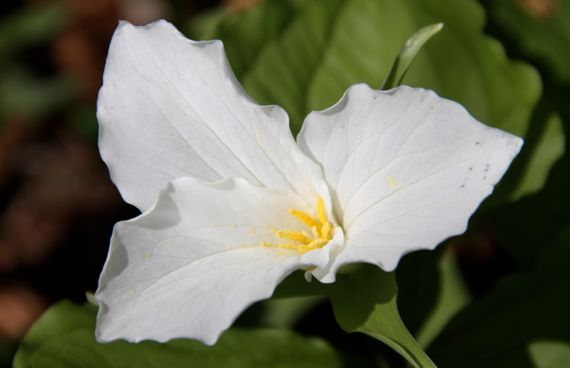
Aha! I found stretches of woods where the forest floor is carpeted in blooming trilliums*.
* Or maybe it should be trillia? Or perhaps a trillia is an obscure Medieval northern European musical instrument, typically made of wood?
Monday, 13 May 2013
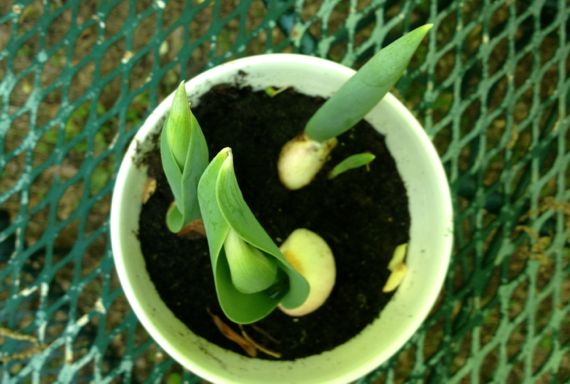
The world’s slowest tulips continue at their own pace. The leaf unrolling began about ten days ago. I can’t wait for what’s next!
Thursday, 9 May 2013
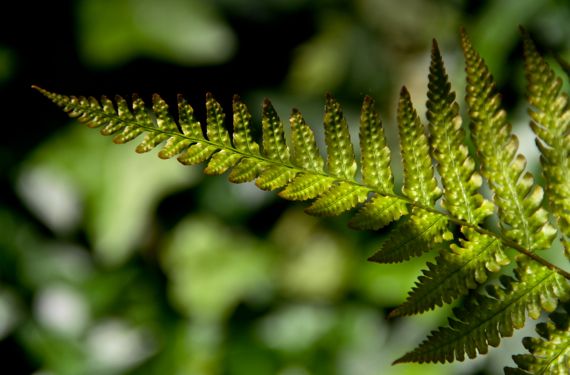
Lemme stick to the…plants…ferns. I’m no good at…planning. Scheduling. Sheesh.
Thursday, 2 May 2013
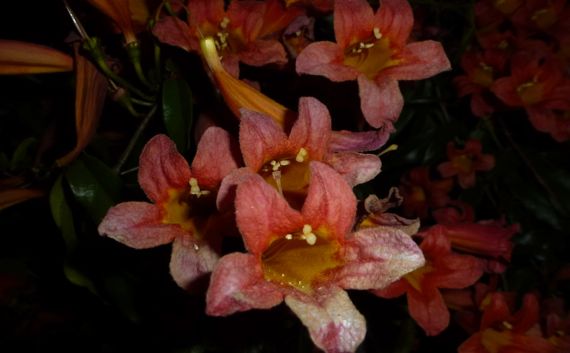
Server switch initiated by server-keepers this morning, and we’re not back yet. In honor of this 22:22 post, I give you a picture that’s also…aged…from last weekend.
Wednesday, 1 May 2013
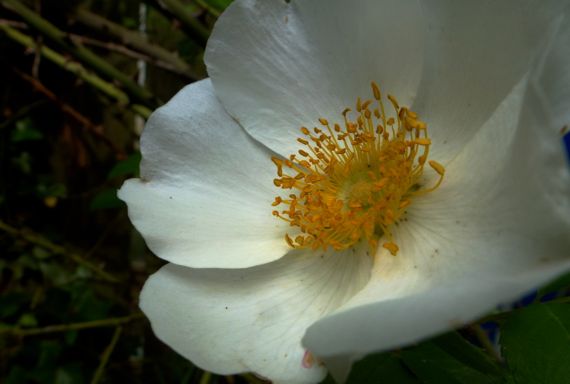
Cherokee Rose (Rosa laevigata)
We’ve had this rose for over a decade, but I can’t remember seeing as many blooms in any year as we have this year.
Garden note: the squirrel cage will spend this growing season protecting my neighbor’s tomatoes, and we’ll grow peppers and herbs, and no specimens of Solanum lycopersicum (will have to fight for sunlight in growing space too close to the house and slightly too shady).
Sunday, 28 April 2013
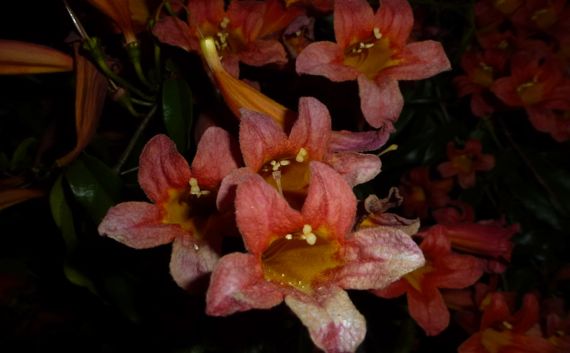
I found the rain today vernal and appreciated. The plants, too, I’m sure.
Now, to weed and plant the front bed….
Of all things—both vine and vinegar have their root in the Latin vinum meaning wine.
Sunday, 21 April 2013
The meteorologists are talking pollen count again, as there’s so much in bloom right at the moment.