Musings
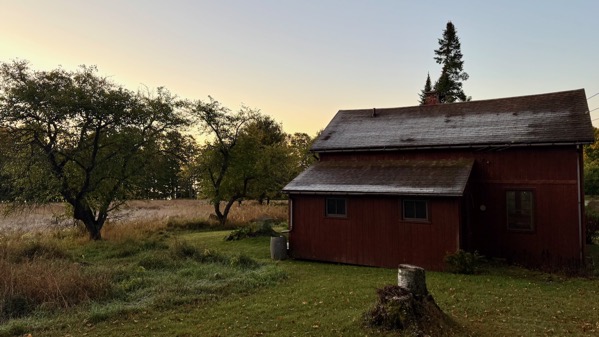
My pre-coffee outing was to gauge the first frost. There was just a teeny bit on the ground, but the roofs sported a goodly amount—I’d call it a light frost. See that lower right unfrosted area? That’s above where our pillows are…it shows a serious lack of insulation!

Today’s headliner was a hike to the shore of Lake Superior…partly along the North Country Trail.
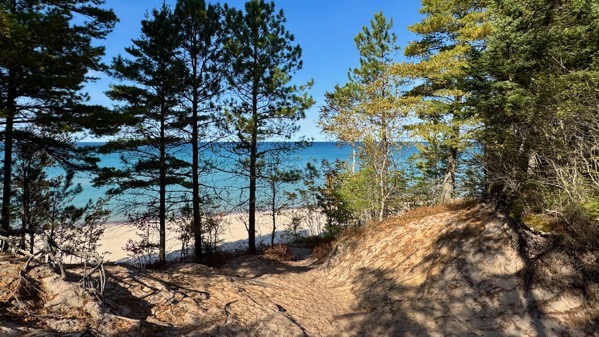
The lake was placid, much calmer than the other day.

See? That rock is the east edge of the Pictured Rocks.

On a more macro level, look at these grey fungi!
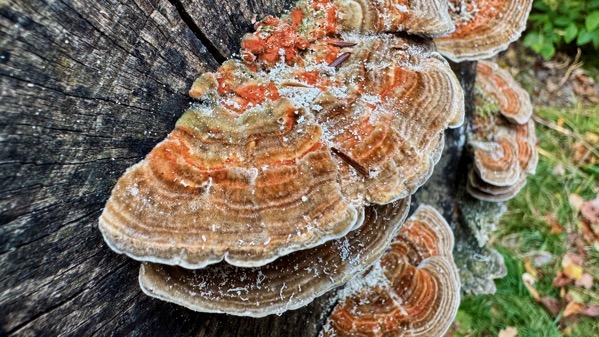
And these orange hued ones.
My-o-my did we return to the cottage (an hour-plus drive) all creaky. And hungry…ah, leftovers!
Posted at 8:06 PM |
Comments Off on Lake-ward hike
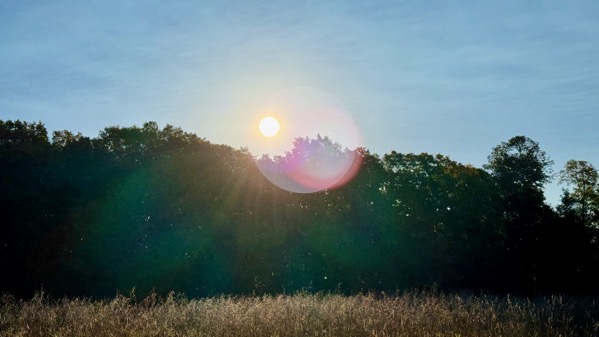
I was too lazy to head to the beach to watch the sunrise, but did get out to see the sun crest the treeline. Nice.
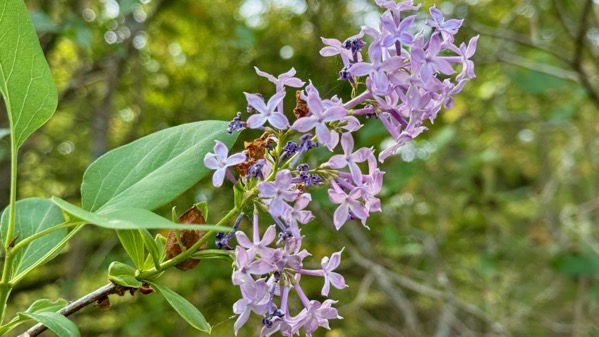
Now this is unexpected: a few lilac blooms in OcTOWber! They do smell like spring.
Posted at 9:34 PM |
Comments Off on Expected, unexpected
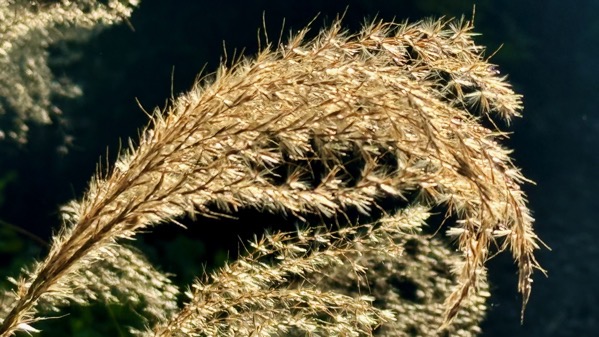
I titled this showoff grass, and that’s about the extent of my “creativity” at the moment. G’night.
Posted at 10:25 PM |
Comments Off on Yawn

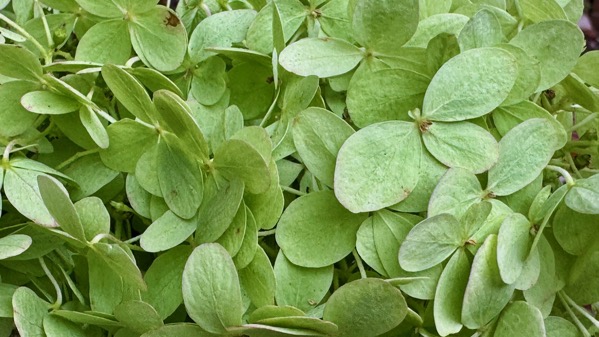
I can get mesmerized by patterns.
Posted at 10:25 PM |
Comments Off on Leaf me be…
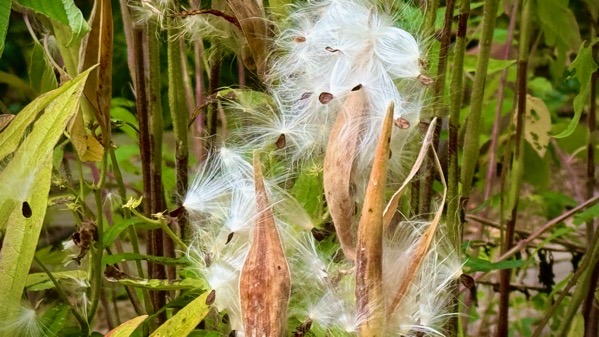
Here’s proof of autumn. There are colorful Asclepias species, like this one I’m guessing, that are not uncommon in gardens. I’m more attuned to A. syriaca (most likely), which however important to monarch butterfly caterpillars, is less commonly cultivated.
Note that winds from Francine will be arriving over the next 48 hrs, and I’m sure these floss/filaments soon will be lofting seeds widely in the neighborhood.
Posted at 9:36 PM |
Comments Off on Change a’coming
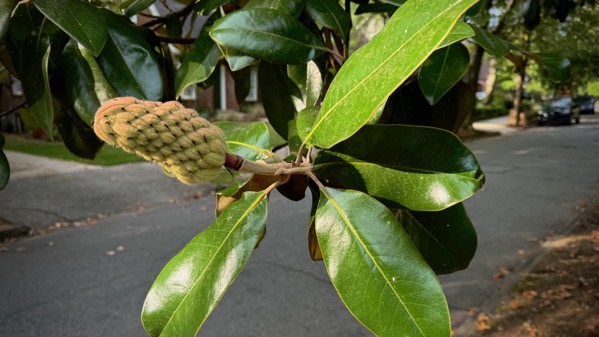
Striding along under this lovely, towering magnolia, a high branch dropped a leaf that landed on my hat. It was not a small leaf, and it landed with a small thud. My neck is fine; I just shook that floral debris off and continued my walk.
Posted at 7:10 PM |
Comments Off on Floral irritant

Today I’m opting to shift my time-space. This flower photo is from a year ago, and was taken in the UP.
This notion builds from today’s news from Winder and Ukraine, the Mideast, etc., and from finishing “The Midnight Library” by Matt Haig (2020).
Posted at 8:54 PM |
Comments Off on Different me
I sure enjoyed the below average temps this morning. Plus overcast. Both contributed to a super-pleasant walk, in contrast to the above-average temps and stunning humidity of, what? (I exaggerate)—the last six years??!! 🤣🥸😇
Posted at 8:33 PM |
Comments Off on So salubrious

We’re doing some travel dreaming…perhaps a trip before Xmas eastward across the pond. We shall see.
Posted at 9:47 PM |
Comments Off on Targets

I’m not a particular fan of diplomats, although I greatly appreciate all the work they do, which is frequently behind the scenes. I’m not sure why TV series writers recently have seized on a diplomat as the lead in stories, but we’ve watched both the Keri Russell version and the British one, binging the latter most recently. They’re very different. I think I enjoyed the British version, set in Barcelona, more. Confession: it was not merely to opportunity to hear Catalan dialogue that made it more interesting.
Posted at 9:17 PM |
1 Comment »