Musings
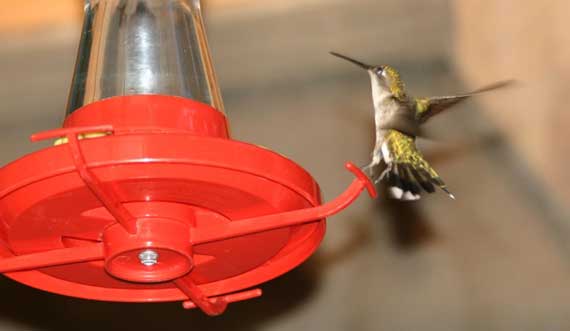
Played hooky today and headed for northeast piedmont GA, where the rains came last night (is that why the hummers were so busy?), but had gone by the time we arrived. ATL got nary a drop.
Today’s vocabulary:
levigate
to reduce something to a fine powder or paste
Posted at 10:22 PM |
Comments Off on El colibrí

Pet peeve: uncounted vs. uncountable. Yes, it’s permissible to use “uncountable” hyperbolically, but uncountable is overused when the referent is actually quite countable, and merely would take some time to do so—that’s actually a good time for “uncounted.” Consider opposing uncounted with infinite….
Posted at 10:22 PM |
1 Comment »
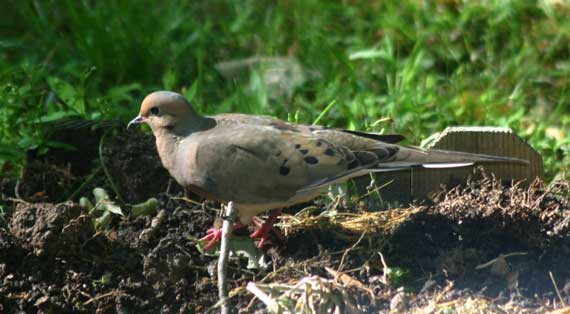
Despite the significant drops in crow populations (and other species), we did see several and hear more when we were descending Brasstown Bald a few weeks ago.
No crow pictures; I’m substituting a dove.
My current read, incurring fines from the library ’cause it runs over 900 pages and is only a two-week book (due last Monday), is Vikram Chandra’s Sacred Games, which is set in Mombai, and covers an amazingly brief time-span, somehow without being overly self-absorbed. Anyway, Chandra notes (pg 640), in the voice of his Indian version of Tony Soprano:
I’ve worked with politicians, and gangsters, and holy men, and let me tell you, none of these can compete with a writer for mountainous inflations of ego and mouse-like insecurities of soul.
Nailed it!
Posted at 1:54 PM |
2 Comments »
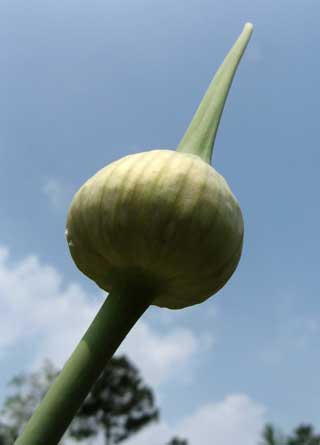
No doubt about it, garlic is a wonderful plant.
My favorite book about garlic (not that I can say I’ve read any others!) is Stanley Crawford’s Mayordomo: Chronicle of an Acequia in Northern New Mexico.
However, a wee bit of googling indicates he’s actually (as of 1998, so I’m out of it) written a separate title on garlic—I haven’t read it, but if I did…?
BTW, acequias are irrigation ditches, and in Crawford’s part of the world they are maintained and managed according to an ancient system, collectively, by those who use the water from it. The mayordomo is the person who makes the decisions about who get how much water, when the participating farms (meaning fields and acreages) will supply day-laborers (this is corvée labor, known as tequio duties in Mexico), and other business of the acequia. This acequia mayordomo is not a permanent position, but rotates through the participating landowners. Thus, Crawford writes about his own experiences as a (green, inexperienced) mayordomo….
Posted at 10:22 PM |
Comments Off on Garlic sky
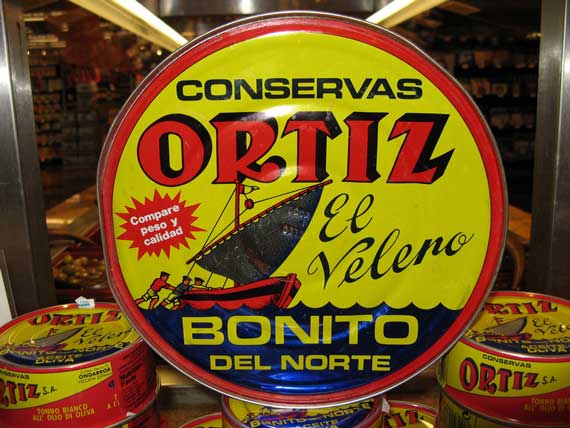
El velero means sailing ship. New vocabulary! And so useful!
Posted at 10:22 PM |
Comments Off on El velero

I’ve often been impressed by Gwen Ifill, even more so after reading this essay—and I have to agree: it’s an unequal playing field out there for most of us.
One issue I’d pick with Ms. Ifill, though: those Rutgers players are women not girls.
Posted at 10:22 PM |
Comments Off on Perspectives
…historians consistently differ from ecologists, who more often than not treat people as exogenous variables that fit awkwardly if at all into the theoretical models of the discipline. The historian’s tendency is quite opposite. The chief protagonists and antagonists of our stories are almost always human, for reasons that go to the very heart of our narrative impulse.*
We archaeologists often try hard to get people, emotional people, into our publications, but it’s difficult to do while appeasing the gods of science by describing what is nearly unarguably true—systematically observed truths, anyway (and replicable, if at all possible—that’s why there’s so much data published in addition to discussions and analysis).
Charles Hudson’s recent fiction, Conversations with the High Priest of Coosa, is an example of a premier ethnohistorian abandoning the limitations of academic publishing in a search for (adventure in?) truths not readily accepted there.
BTW, a triumphant (not triumphal) 4.6 miles today at 3.6 mph. Whew! T-shirt weather already, even before 8 am.
* William Cronon. 1992. A Place for Stories: Nature, History, and Narrative, Journal of American History 78:1347–1376.
Posted at 11:18 AM |
Comments Off on Story telling modes
Finished Daniel Tammet’s autobiography Born on a Blue Day (2006). He’s got both Asperger’s syndrome and synesthesia. The former is a mild form of autism (so They say, but nothing about it sounds “mild” to me), and the latter makes him associate colors and other physical attributes to numbers (“one” is a bright white light). The volume starts with more on the synesthesia, and ends with more on his life. I kept wondering what the synesthesia is like in his adult life, as I couldn’t find much on that.
Anyway, it’s quite readable if you’re interested.
And an antidote to ponderous reads on the Archaic-Formative transition in Mesoamerica….
Today’s vocabulary:
euryhaline
an aquatic organism able to tolerate a wide range of salinity
Posted at 6:12 PM |
2 Comments »
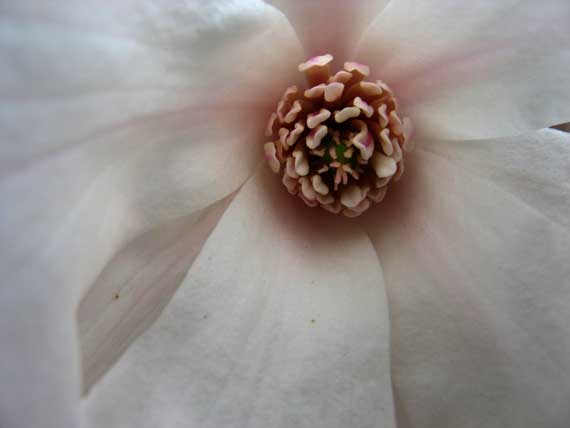
Magnolia liliiflora, or Japanese magnolia, although the species is from China.
From Carl Hiaasen in Nature Girl (2006, pg. 188):
Thirty years in the seafood business combined with grossly irregular bathing habits had cloaked upon Louis Piejack a distinct and inconquerable funk. Were it cologne, the essense would have included the skin of Spanish mackerel, the roe of black mullet, the guts of gag grouper, the wrung-out brains of spiny lobster and the milky seepage of raw oysters. The musk emanated most pungently from Piejack’s neck and arms, which had acquired a greenish yellow sheen under daily basting of gill slime and fish shit. Nothing milder than industrial lye could have cleansed the man.
I shivered reading that and the image of standing on a wharf awash in the odor of sea-ness filled my mind and nose. You can tell Piejack is a bad guy, right?
Overall take on the book: loved the character and adventures of Honey Santana. A good read.
Today’s vocabulary:
fetor (Br. foetor)
a strong, foul smell
We usually use fetid (Br. foetid), the adjective, rather than the noun form….
Posted at 12:26 PM |
Comments Off on Nose adventures
I believe that once or twice I’ve commented on the fiction of Jim Harrison. Here’s the beginning of his poem Suzanne Wilson:
Is it better to rake all the leaves
in one’s life into a pile
or leave them scattered? That’s a good question
as questions go, but then they’re easier to burn
in one place.
I’m sure I’m doing Harrison a disservice by not including the whole text (so you get the whole idea), instead leaving it up to you to find a copy of Saving Daylight (2006), page 101, on your own.
Meanwhile, my copy is due back at the library tomorrow….
Posted at 11:24 AM |
2 Comments »