A. palmatum catching rays
Tuesday, 13 November 2012
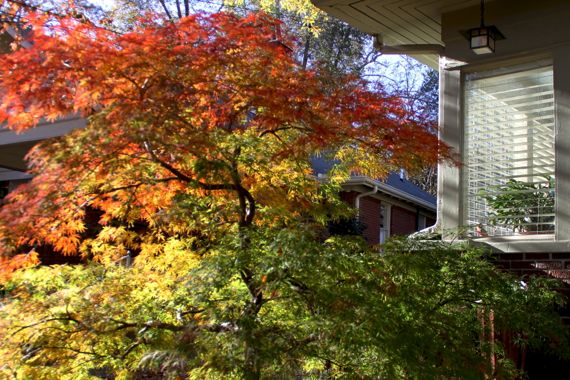
I’m a great fan of the aesthetics of graduated colors, and I’m especially charmed when I find such visual transitions courtesy of Ma Nay-churr.
Tuesday, 13 November 2012
I’m a great fan of the aesthetics of graduated colors, and I’m especially charmed when I find such visual transitions courtesy of Ma Nay-churr.
Sunday, 11 November 2012
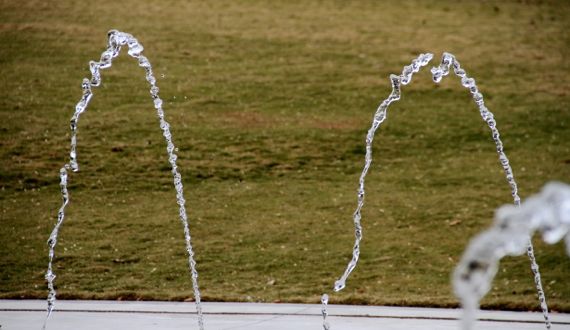
We wandered the park/BotGarden during the time when the sky shifted from sunny to overcast. I tried freezing the Legacy Fountain water with the camera, and have concluded that a tripod (probably) and far more patience (certainly) are necessary to get the shots I was trying for. Still, I had fun.
Friday, 26 October 2012
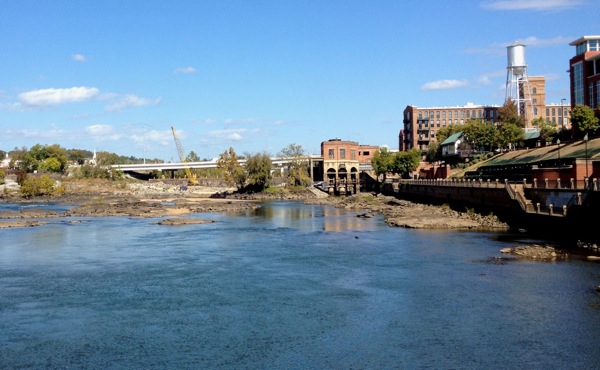
The Indian name for this place, I swear, must have been something like “Rapids with herons and turtles downstream.”
Indeed, the post-Colonials who dammed this stretch must have been channeling (ahem) ancient times, when they named their flow-stopper Eagle & Phenix Dam (two majestic birds of reality and myth).
Of course, when they blew the dam, archaeologists…monitored…what was revealed….
And now, six months after the dynamite (or whatever they used), we saw many turtles, including one with a shell more than a foot long, and herons, including one that nabbed and swallowed a feesh right in front of us, just downstream of the old dam site (or dam old site).
Sunday, 21 October 2012

What?!! No insects! So often I find an insect when I examine a flower/plant-photo like this on the big screen….
I found the sunlight in southern France quite compelling, although the last two days here I have found the light equally fantastic.
Friday, 12 October 2012
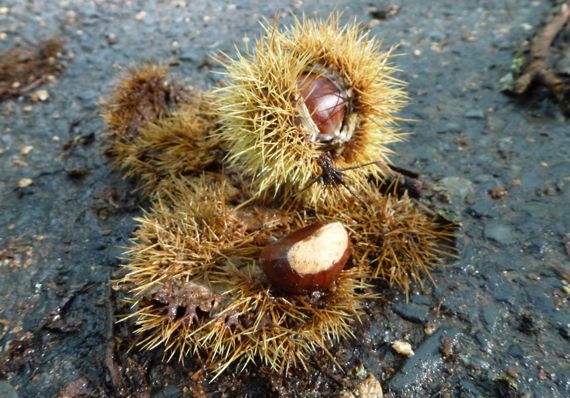
We’ve been seeing the chestnuts in the road, and twice we’ve been struck by them as we drove along. Yes, the sound is…enough to make you duck.
This one is very special. I found it on the road right at Lascaux—the real one, behind the tall fence, right up the hill from the replica they let you visit as part of a carefully timed tour. Still, it’s pretty impressive. And you can see how the artists used the shapes of the walls/ceiling as integral to the designs they delineated with the oxide tints (manganese and iron, if I have it right).

We haven’t discussed one of our repeat “companions” on this trip—the toll roads and their attendant machines. Here’s one where we’re collecting a ticket. Only once, maybe twice, have there been humans to take our money, but the machines are fast—although they don’t take US-style credit cards (chip and PIN only).
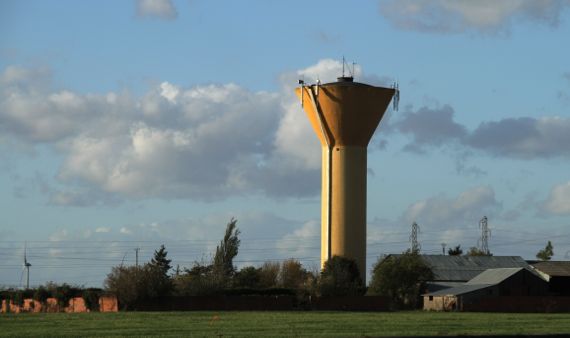
Sometimes we’ve been enthralled by the fantastic daylight. We expected this in “the south,” but this was maybe 60 miles from Paris. This water tour is one of the typical shapes, with a flare at the top, and antennae hanging off it. There’s another dominant style that evokes the crenelations of defensive walls. We’ve found that rather strange in a super-tall, stand-alone structure.
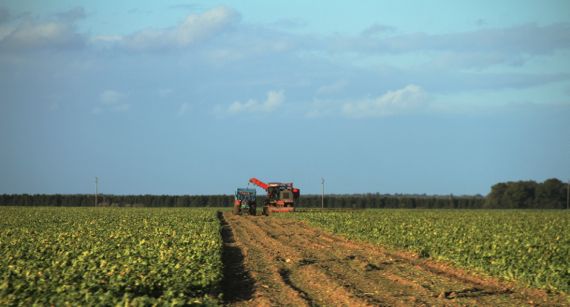
One of the crops I did not expect…sugar beets. These people are sugar fanatics—with their espresso. Servers may present up to four packets with your cup. I hate to think how many go straight to the trash—or not. Still, in the interests of national self-sufficiency, it makes sense that they’d be growing/processing sugar beets.
Wednesday, 10 October 2012

Descending from the heights, like many people through history, our first stop was Saint-Jean-Pied-de-Port. Its medieval section is basically one main street, with perpendicular side streets (it’s not a hilltop town), adjacent to a river with a gorgeous little bridge. We saw school-bound kids crossing, stopping, as children will, to look in the water.
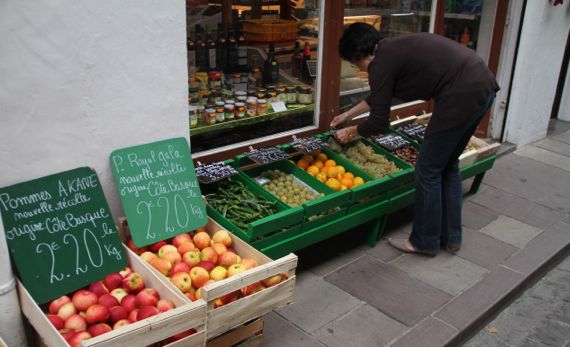
We were there early, and saw many shopkeepers opening for the day. You can tell that, although many shops catered to the tourists, people also live here—not many tourists buy apples by the kilo….
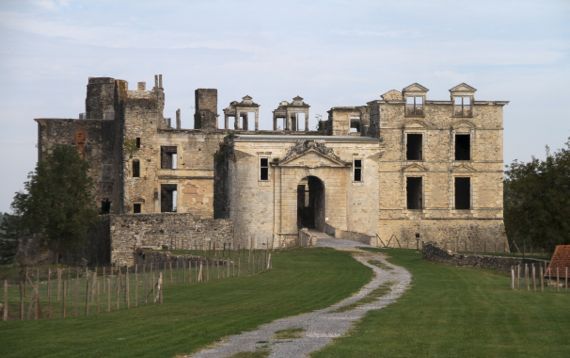
We detoured to Bidache to check out this ruined chateau. Without an appointment, we could only walk up to the front, but that by itself was pretty darned spectacular. We both found the tops of the stone window frames standing tall without their intended wall/roof partner-elements visually compelling.

How can this be last? Still, it was chronologically.
When we stood on the beach in the late afternoon, watching the surfing crowd trickle in (we theorized: after their day jobs), we knew we’d made tracks this day—from dawn in the Spanish Pyrenees to marine layer, late-day light on the Atlantic. What a great world.
Tuesday, 9 October 2012
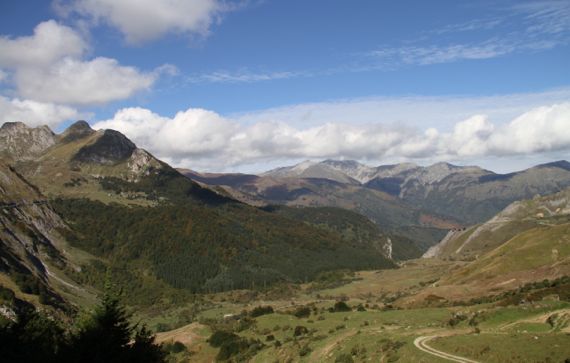
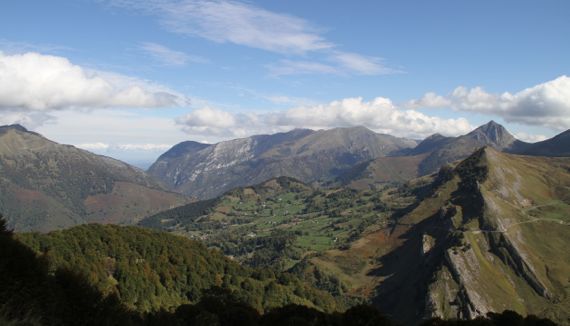
Sweeping views. Green vegetation just beginning to turn autumnal colors. High-elevation cattle. Hard-pedaling bicyclists.
The French side of the Pyrenees.
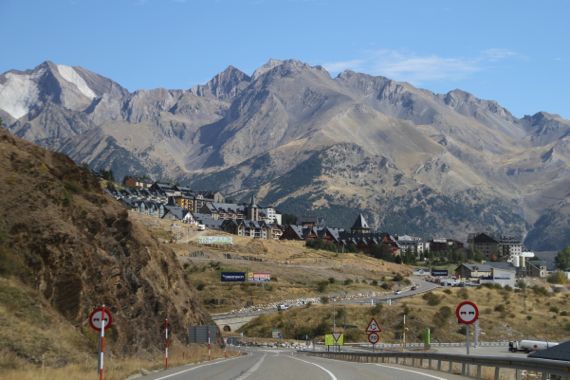
The Spanish side—our route, at least.
Less vegetation, so drier. One major ski town instead of several.
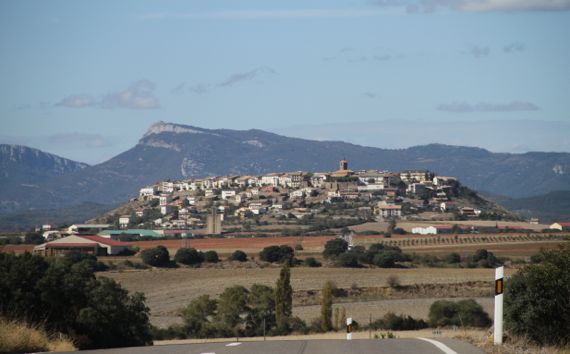
Then we dropped down onto a plateau with very red-orange soils. Where erosion had cut into the surface, the deeper soils were grey-white, and apparently not arable.
Gorgeous skies everywhere. Not sure when I checked that box….
Monday, 8 October 2012
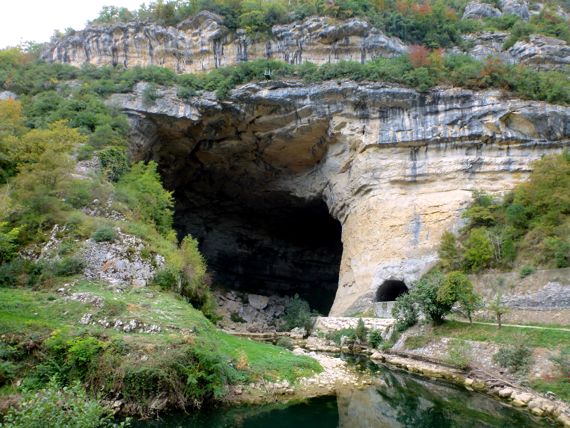
We drove into a cave. We drove in a cave. We exited a tunnel, just to the right of this, the south or southwest mouth of Le Mas d’Azil cave/grotte. Pretty darned special!
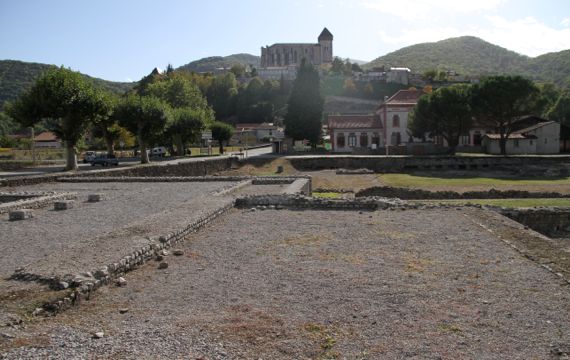
The march of time is often front/center, visually, here in the Old World. It’s there in the New World, too, but it is less obvious to the casual viewer. Here: in front, Roman foundations. On the hilltop, medieval Saint-Bertrand-de-Commings, with later buildings in between.
As we walked the more recent streets, gridded above the Roman ruins, we witnessed a kerfuffle we couldn’t quite figure out. My theory is that somebody’s cows got out and wandered the streets of the lower town…leaving deposits that made no one there happy. We saw the arrival of two aging cowherds who zipped in on bicycles carrying a stick apiece. They spoke to the woman in the truck who was quite angry? annoyed?, then gathered the small herd, and moved them on down the road to the left, then turned north, away from town. I very much like that interpretation, anyway.
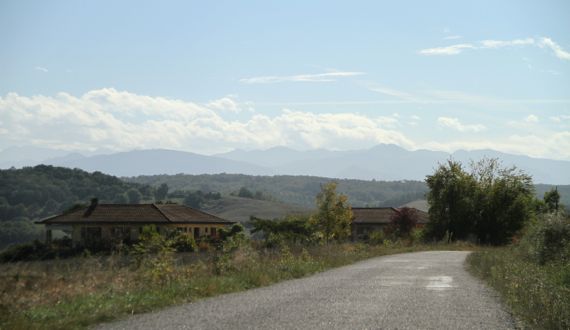
We’re now in the foothills of the Pyrenees, or were in and out of them all day. The highest ridges/peaks, when we can see them, look very rugged, often more rugged than the back row here. We will see more of the Pyrenees tomorrow.
Sunday, 7 October 2012
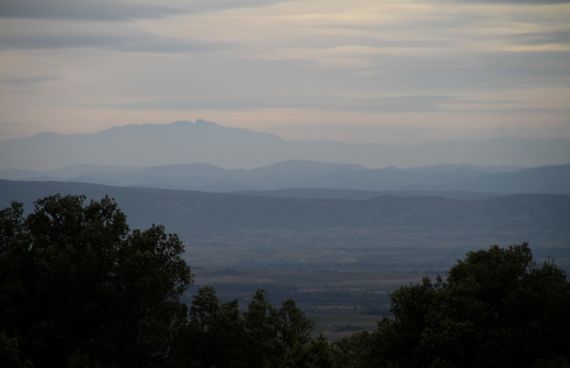
There’s a region near us, or where we’re staying now, called the Minervois, defined now as a wine region which historically was centered at Minerve. Many of the towns in this area have a version of Minerve in their names, a pattern I don’t remember from elsewhere in France. We looked in vain for a dolmen in the shrub-dominated garrigue on the ridge above town. Instead we discovered an incredible view, tinted in gorgeous shades of blue.
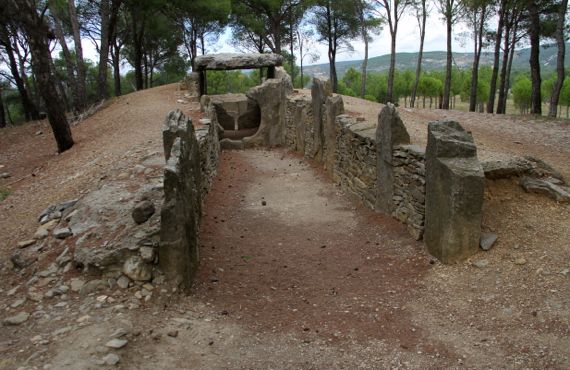
Several dolmen are known across the Minervois. This one is called Dolmen des Fades (or some variation thereof). Dolmen are, at least in the original definition, Neolithic-period megalithic tombs built across a broad swath of Europe. Seems to me that most of them are “empty” by now. We could tell there was quite a bit of reconstruction on this one, but the big stones did not appear to be from this hill. That’s a quick assessment, though.
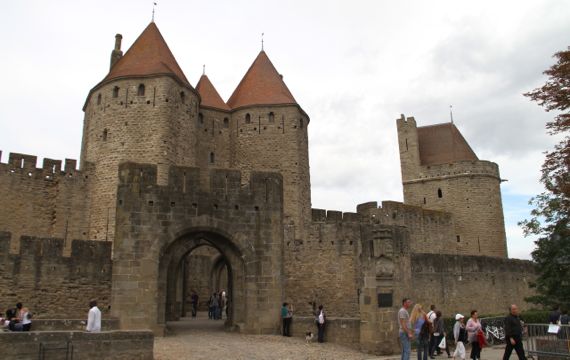
A bit later, we arrived at the east gate of the Cité, the fortified old town of Carcassonne (history in summary here and detailed here). The fortification has (at least) double walls, many towers and shooting positions, and encloses a separate fortified chateau (had a moat? now filled?)—look here (43.20731,2.36313).
I haven’t mentioned the Canal du Midi—we saw it yesterday (near Beziers first), and have been seeing it here and there as we cruise the countryside. Okay, here are the boaters at Homps, the “port” for Olonzac (our present home). The canal was built to facilitate a shipping route that avoided the Iberian coast, including the Barbary pirates.

I knew I could get us back to the political economy.
Tuesday, 4 September 2012
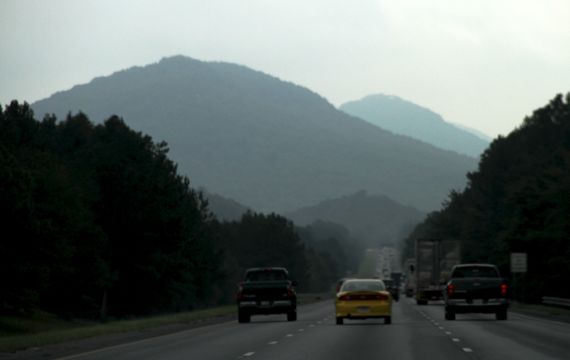
I’m so attracted to the blue-grey variable tinges of the mountains as they recede from the eye.