Musings
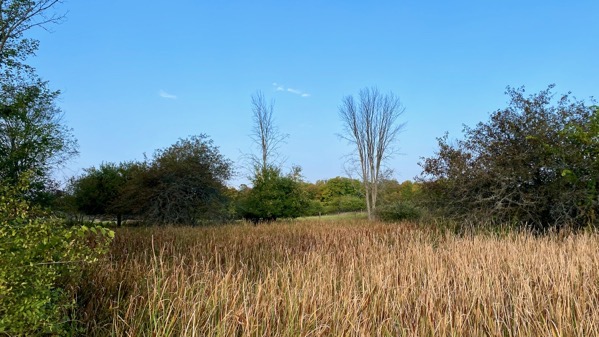
I felt like walking more than usual when I started out this morning, and made my goal an artesian well over on the next mile-road. Which means I got a drink and turned around. Wonderful.
The farmer had this pond made so he could pasture cattle instead of grow hay on these fields, way back when I was in elementary school. No cattle; back to hay. And nature is infilling the pond. As you’d expect. [Same farmer, however; he’s gotta be in his mid- to late-80s.]
Posted at 6:27 PM |
Comments Off on About five miles

My that’s some gorgeous moonlight!
And I do believe I see clues to how my phone-cam does its low-light magic…given the the green dot-cluster to the left, and the red highlighting on the foreground plants.
Still, what a fabulous moon!
Posted at 8:46 PM |
Comments Off on Lookee eastward
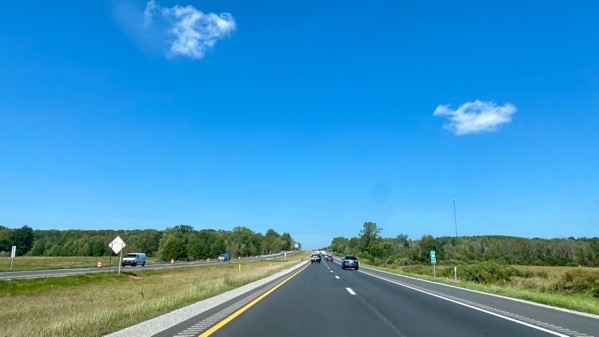
Just north of Clare (MI) on US-127, the road goes up a hill, or what’s a hill in these parts. I think it’s a glacial something, moraine perhaps. Anyway, this is it. If you were riding a bicycle, you would certainly notice this hill. North of it the country is rolling and the soils are different, and thus so is the vegetation. My mother always called this the North Country Hill, and her voice had such seriousness, that I always imagined it to be capitalized.
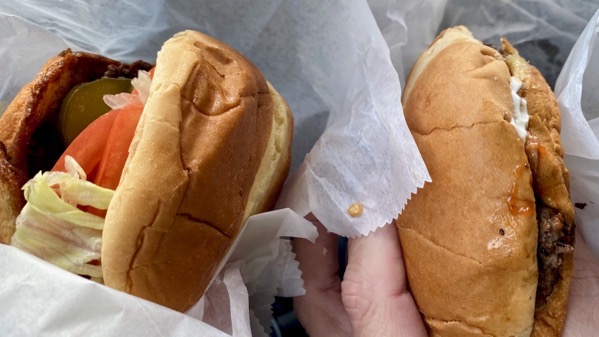
This set us up to get to The Bridge, and the local drive-in, Clyde’s, where we got a late lunch/early dinner of bison burgers. Mmmm.
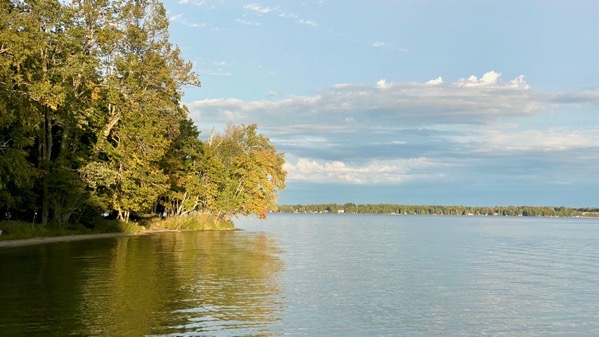
Did the most urgent cleaning and unpacking, and walked down to the lake to catch the last of the sun on the trees on the point. Our point. It’s far less of a point than it used to be, a victim of much higher water levels and scrounging of the rocks that made it by neighbors. The rocks were below the water line, so there was nothing we could do.
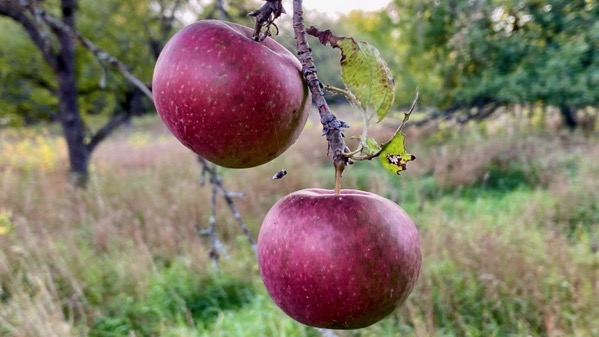
Despite irregular setting of the apple blossoms and the negative effects of an earlier infestation of leaf-eating Lymantria dispar (used to be called gy- -psy moths), we do have some apples. I don’t think they’re on the “best” trees, but they will do. Great color.
Posted at 8:11 PM |
1 Comment »
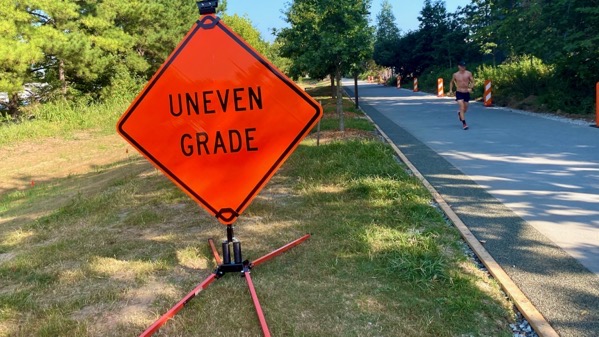
From afar, I have been seeing construction vehicles on this stretch of the BeltLine for weeks, and today there were very few pedestrians around, so I went down to take a quick peek. That strange narrow addition to the wide sidewalk? That’s where many runners trod (although not this guy), to avoid the hard concrete…and it looks like they’re adding a strip of a bouncier surface…which is a bit late, but darned appropriate. The space to the left of the sign is allocated for the planned parallel streetcar line…which is coming no time soon, as near as I can tell.
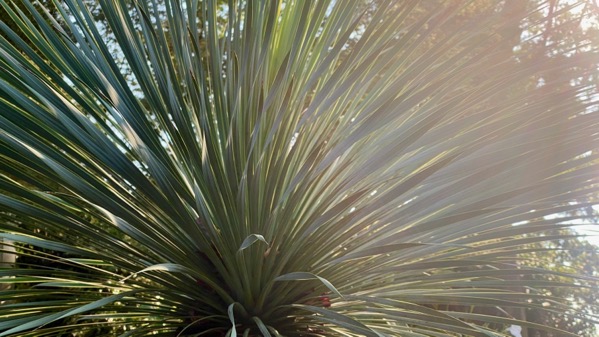
We’re almost half-way through September, and the light is changing…and so’s the vegetation. Jessayin.
Posted at 9:34 PM |
Comments Off on I’m perfunctory

Amplifications to old news…. Here’s the base of the Tree of Refuge from what became my adventure in Tuesday’s rain. I’ve added ovals to show where my feets were…. Those were the good ol’ days (hrrumph)….

And here’s some fresh hickory nut shell and hull detritus. Fast shot so no new material fell on me.
Posted at 8:54 PM |
Comments Off on Tree details
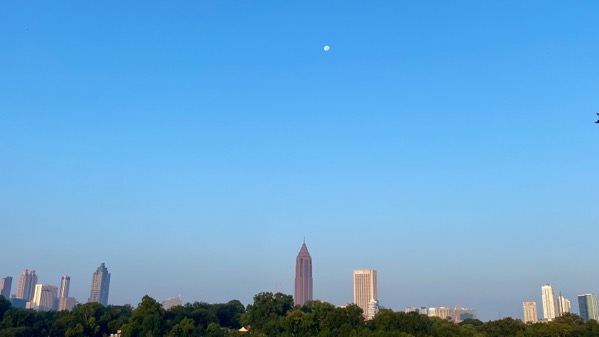
I got out early-ish this morning because stunning levels of heat and humidity were predicted by 10am. And I found a waning gibbous moon. I only know the moon phase because of my fancy watch/fitness device.
Posted at 6:51 PM |
Comments Off on Lunar view
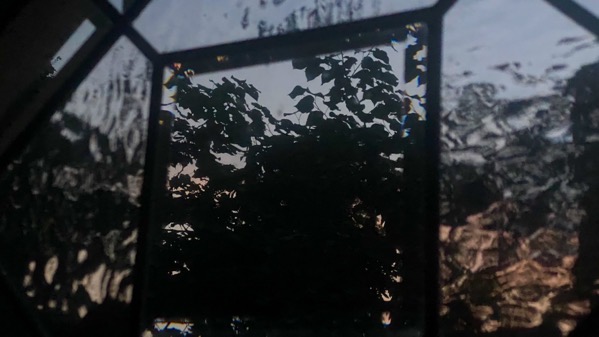
I called this photo night light. So clever (haha). That’s pretty much the apex of my wit and wisdom at this moment.
Maybe I’d have more of both if I had Magne’s hammer, or if it was nearby (just finished watching season 2 of Ragnarⱺk—that’s really a non-traditional “o” from the Swedish Dialect Alphabet and not the one in the logo, but this version was a new one on me…so I’m sharing).
Posted at 9:48 PM |
Comments Off on Cast your eyes to the skies
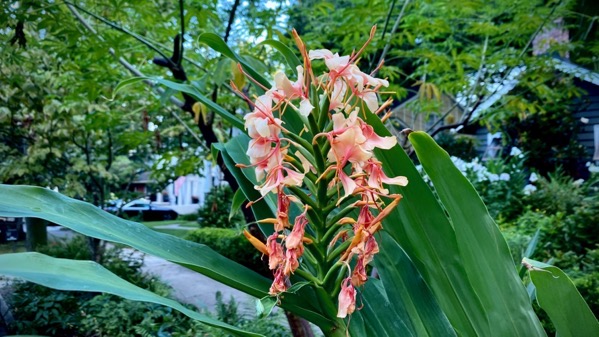
One (or more!) people at this house is seriously into gardening, with this and a large planting of white ginger flowering now. They smell lovely, and the scent cuts through the humidity.
In the UP, we were awash in the scent of blooming milkweeds. Too many, IMHO, as there were few monarchs feeding on the thousands of plants on our property. Thousands.
Posted at 7:22 PM |
Comments Off on I am not exaggerating
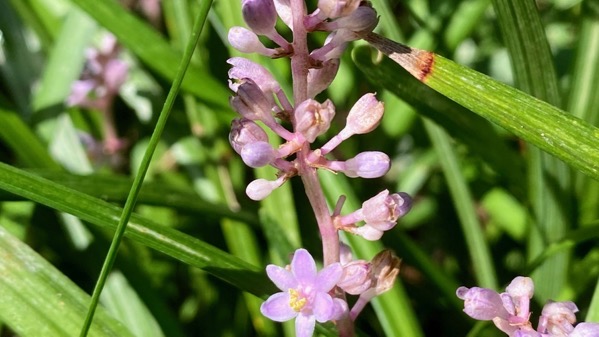
That would be floral and fungal.
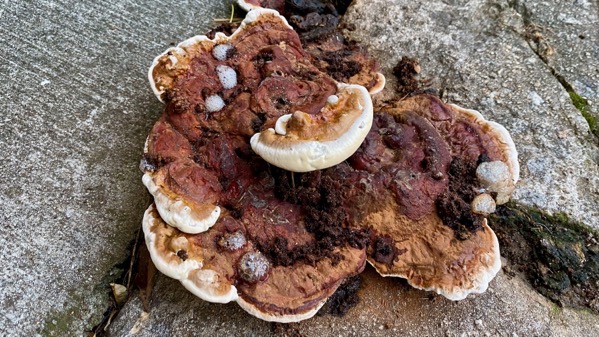
Floral is prettier, but fungal has perhaps the more interesting story. My guess is it grows on wood, yet here it is emerging from a sidewalk crack. The universe is upside-down. Perhaps. Or I’m missing a few facts.
Posted at 8:53 PM |
Comments Off on F x 2
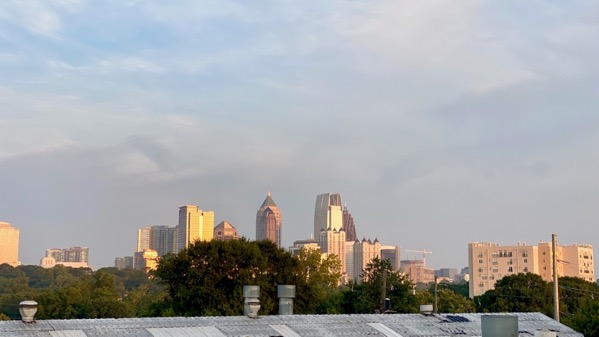
The smoke-haze and the dawning sun made the buildings copper and gold. I’m in the city again.

Scale switch. Bumble bee on Joe-Pye weed. Capitalization of the plant name varies. Use of hyphens varies. Or just call it Eutrochium purpureum. Native to eastern North America, from Lousiana/Florida to Ontario.
Posted at 8:56 PM |
Comments Off on Metropolizing