Musings

If…*
You’d think that by now biologists agree on what a gene is and have moved on.
Apparently not.
And the reason is both historical and scalar.
It’s historical in that the term was originally used in biology and genetics in a particular way that made sense at the time. Then, as research continued, scientists uncovered additional complexity in the role of genes and genetics. In addition, they began to look at genes from new scales and perspectives.
Thus, while a geneticist tends to still see genes as locatable regions of genomic sequences, those who delve into phenotypes and function tend to find that an insufficient definition. For example, DNA, that old workhorse considered the master molecule of life, is now seen to be sometimes quite passive (meaning other factors can act or dominate), and just plain multifunctional in ways that weren’t known when the locatable regions concept was developed.
If you want to read more (I’m not being sarcastic!), check out this 2007 paper by Evelyn Fox Keller and David Harel in PLoS ONE, one of the free, on-line Public Library of Science journals (hence: “PLoS”).
My take on this: see, scale makes all the difference (sorry to flog this idea, but, as I’m sure you’ve discerned, this is one of my truths).
Corollary: it may be difficult to match your language and concepts to the scale of analysis. If you’re using the words already in use, they may no longer suffice if defined in old ways. On the other hand, if you introduce new vocabulary, you may introduce layers of confusion. Still, the latter may well be the best choice.
Philosophical question: does this topic link somehow to my current “off-duty” reading that has settings in China, Tibet, and Turkey?—three different volumes….
Keller, Evelyn Fox, and David Harel (2007) Beyond the Gene. PLoS ONE 2(11): e1231. doi:10.1371/journal.pone.0001231 [Apologies to AFK if she’d prefer to be “Fox Keller, Evelyn”; I see both in the Google-able world.]
Sidebar: I see pink champagne, rechristened rosé champagne of course, is très chic, but I remain a prosecco gal! (Especially at those prices!)
Okay, one more. How could I not link to this, on a huge ice skating rink in Mexico City’s main plaza, created atop forty-six miles of chilling tubes, energized by ten truck-generators? Did they make the rink because the US border is harder to cross these days?—so they import the cold?
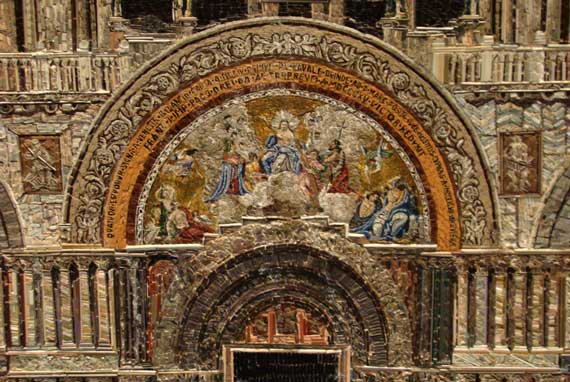
* If your eyes are sharp and your screen is good, you’ll see ice—the picture is from several years back, but right here in good ol’ ATL….
Today’s vocabulary—peripeteia
the sudden reversal of fortune or change in circumstances, often used referring to fictional narrative.
Posted at 7:16 PM |
1 Comment »
Doh!
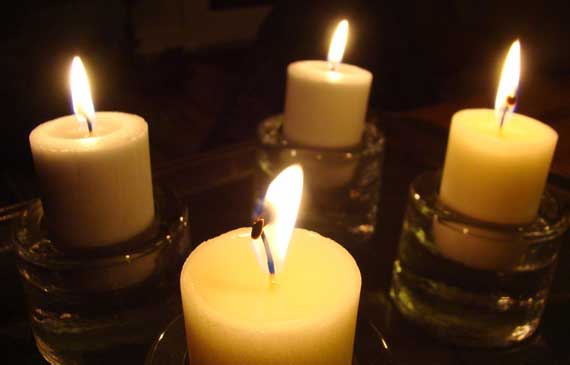
I can hardly believe it took me until today to realize that burning candles, fireplaces, and campfires add to the carbon footprint!
Posted at 4:59 PM |
Comments Off on CARBON sources

The share of the population possessing college degrees in the 1970s is the best predictor of which northeastern and midwestern cities have done well since then.
That is, northeastern and midwestern cities in the US of A….
Edward L. Glaeser says this in an article about Buffalo’s potential for “coming back” from the decline of this once-important manufacturing and transshipment hub.
Glaeser makes the point that however much tax/government money flows into the community, and however wise and effective are the projects that money is used for, what really makes the difference are citizen-originated entrepreneurial undertakings that effectively use human capital. Glaeser cites Boston and Minneapolis as examples of that kind of turn-around.
What Glaeser doesn’t mention, at least in this article, is that both those cities also have important, prominent, and vibrant university and medical communities that maintained their eminence throughout the second half of the last century. I keep thinking both have to have been important components of the mix of factors that allowed the reinvention/survival of those cities—factors that aren’t prominent in dear old Buffalo….
You will not be surprised to know that I read Glaeser’s article while thinking about Detroit and other cities in my home state. Same huge population and economic declines as Buffalo. Same elevated percentages of poor(ish) and generally poorly educated people. And the educational and medical training and treatment nexuses of the state are not in Detroit. Not good odds….
I also wonder if there are parallels among European cities, once prominent in transportation networks webbed among ports along coasts or rivers….
Posted at 11:12 PM |
Comments Off on Declines/resurgence

The Botanist keeps up with the modern world mostly through reading the NYT daily. So he guesses at pronunciation. Example: C D roam (for CD-ROM). And: blodging (for blogging, commonly recorded as blahging here, which adds to the confusion, I guess).
The WashPost reports that the Japanese make more blog entries than any other nationality, at least according to Technorati data (and how accurate is that, the Scientist in me asks). They apparently do it via texting on their mobile phones.
Pfffffffft. If I had to do it that way, well, you’d be reading something else every day! Like about some lady’s weekday lunch, or other “chatty postings”….
Posted at 12:08 PM |
3 Comments »

Cousin S is a very talented potter—she gave us a lovely pair of bowls that are my current favorites!
Post-T-giving turk soup looked great in it.
So did this lamb and spinach dish—with lots of cilantro.
Posted at 10:22 PM |
Comments Off on Super Bowl(s)

The cynic in me says let’s check back in a year and see if Brad Pitt’s initiative to rebuild New Orleans and the Gulf Coast residences in innovative, affordable, and green ways still has traction, and has produced as planned.
BTW, the GBH was standing in a tree today. Not far above the water, but still. Standing on a branch.
Posted at 5:37 PM |
1 Comment »

I have just passing contact with various aspects of Southeastern historic archaeology, but it seems to me if I were to brush up on domestic residential complexes, I would learn more about cisterns. Yet, I’ve never seen a modern house with a cistern in these parts (although I’m sure there must be at least a few out there). Despite the current precipitation record, it hasn’t stopped raining around here, so we must instead have undergone a revolution in how we obtain water—and switched to deep, drilled wells, and community water systems (also relying on drilled wells).
I listen mostly to NPR streaming on WUNC, and I am now hearing a friendly voice in the station’s cut-in telling me how to catch in a bucket the water that flows out of my showerhead while I’m waiting for it to get hot, so I can use that water productively.
The last time I did that consistently was when I visited rural Alaska years and years ago, where the tundra meant a water truck brought water (no buried pipes) and the honey wagon came by for the other “product.”
Even in Oaxaca, where the water truck is called the pipa, we didn’t catch the shower water, although I always wondered why. Maybe ’cause that water was pretty cheap (from our standard of living, but not, of course, for all), relatively speaking? After all, we purchased drinking water separately from the pipa water….
The other piece of our typical household water system that bypasses conservation measures, of course, is the ignored greywater, but I’ve already ranted a bit about that….
Air quality is of concern, without a doubt, but water is the show-stopper. Remember all those Roman aqueducts? The oases here and there across the globe? The explorers’ stories that recorded where the springs and “sweetwater” were to be found? The terraces and irrigation and flood control structures? Water is where it’s at in human survival. I’ve examined environmental concerns from every angle, and I come back to this….
So, although Google announced they’re investing in developing renewable energy sources (they started their philanthropy aimed at improving peoples’ health, and then saw that affordable, renewable energy underlies that problem), I keep thinking potable water, and water for living and food, is a poorly addressed limited non-renewable commodity. Or something….
Today’s vocabulary:
cistern
—tank for storing water: also, reservoir, container, butt (in the sense of a cask, a container for wine, ale, or water, possibly etymologically related to “bottle”)
…from Latin cisterna, from cista ‘box.’
Posted at 10:22 PM |
2 Comments »

Winterish weather is finally upon us. We enjoyed a fine walk in midday sun (errands—cruising DVDs at Movies Worth Seeing, and a quick visit to our county library branch), although temps were only barely in the mid-50s. Lots of folks were out managing leaves, or left evidence of same (leafless lawns, tall bags of organic matter by the curb).
I was surprised to find this glorious clematis surviving the cold, perfectly highlighted by the sun’s oblique winter angle, but I think that’s just my ignorance of the broad range of tolerance clematis has….
PS The WSJ reports that Nicholas Negroponte’s program One Laptop Per Child has had 45,000 buyers since sales opened on 12 November, and that they’ve extended the buying period through the end of the year. My guess is that the orders won’t top 100K at this rate, since almost half the sales came the first day. The story gives background I haven’t seen elsewhere about other inexpensive laptops in development by other manufacturers. I don’t know if that is good or bad.
Posted at 4:50 PM |
3 Comments »
It’s amazing what you can do if you devote the time it takes to get the job done. So, quit procrastinating!
Posted at 6:46 PM |
1 Comment »
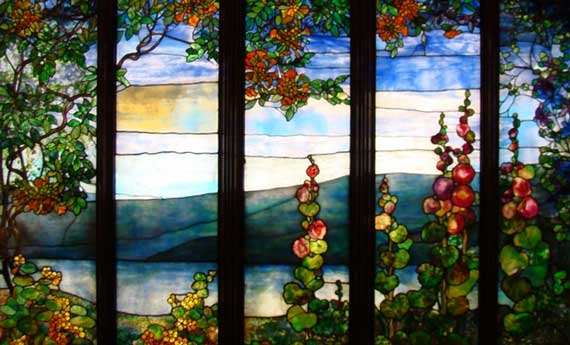
Central detail, Window with Hudson River Landscape from Rochroane by Louis Comfort Tiffany/Tiffany Studios, 1905; commissioned by Melchior S. Beltzhoover for the music room of his mansion (apparently demolished in 1978 after much of the artwork etc. had been removed) in Irvington-On-Hudson, New York. [Full view, but tiny image, although this one’s a bit larger.] I guess the music room had been relegated to a side of the house with an inferior view, of the driveway or stables….
One Laptop Per Child—OLPC. Here’s the link.
Today’s my day for a disquisition on this. We ordered ours today.
In short, Nicholas Negroponte has put together a team that has invented a versatile, easy-to-use, smallish laptop intended to improve and extend learning possibilities for kids (and teachers, parents, and families) around the globe. When you click the purchase button, you get one for you (which, perhaps, can be donated in this country) and pay for one for “a child in need” for $400 plus shipping (just under $425 total). And the OLPC Foundation is a 501(c)(3) tax-exempt organization. Cha-ching: tax deduction.
We all, as members of humanity, need to find ways to give to our fellow human beings. Giving can take many forms (EG, food, money, a listening ear). And the fellow human beings may be known to you, or be strangers you will never meet.
JCB and I try and spread our giving around, and vary it year by year, as well as philosophically.
I wanted to do the OLPC ’cause I think putting possibility in the hands of others is a wonderful thing, and possibility can take many forms.
We had already sealed the deal when I watched this one-hour video (highly recommended) presentation made to Google people—although I’m a bit squeamish that the identifiable individuals in the first three/four rows are all male…. I now understand better how the laptop works (using so little power, so efficiently, with an open system, so users can use it to invent and create and dream, to not need updates, armed with an anti-theft system, etc.) [link to text on this].
I was really sold that we had done a good thing when I listened to the opening section of the Google video when the presenter, Ivan Krstic, discussed how people learn (I know, that’s the anthropologist in me). OLPC’s goal is to change how kids learn, improve it and take it beyond the normal formal learning system (teacher in front of students directing the learning experience in classroom in building), in which learning is no longer mostly curiosity-driven (Krstic’s term), but mostly conducted by the teacher.
OLPC’s idea is to open up opportunity. Now. By reinforcing peer learning, allowing kids to follow their own curiosity. Laptops might help, assisted by the conventional classroom learning experience.
Then I became REALLY CONVINCED that this was a wise allocation of our giving resources.
’Nuff preaching. Your move.
After all, this is T-giving week….
Posted at 1:22 PM |
1 Comment »