Musings
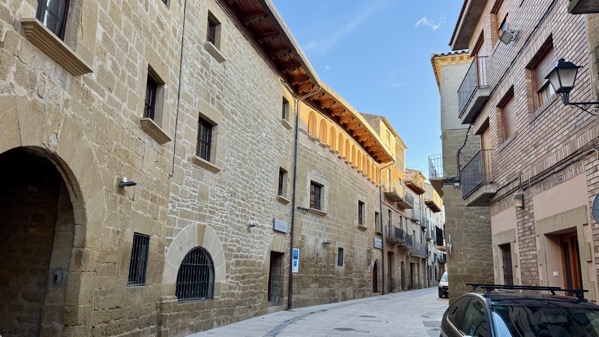
Our room last night had a pair of those arched windows on the third story (second above ground floor) that have gold framing. I learned that if you live in a place with narrow streets and multi-story buildings, like this neighborhood, you may not see much sunshine.
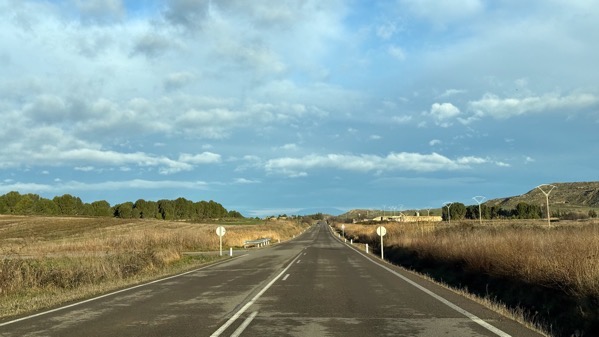
Ah, there is sunshine after last night’s rain.
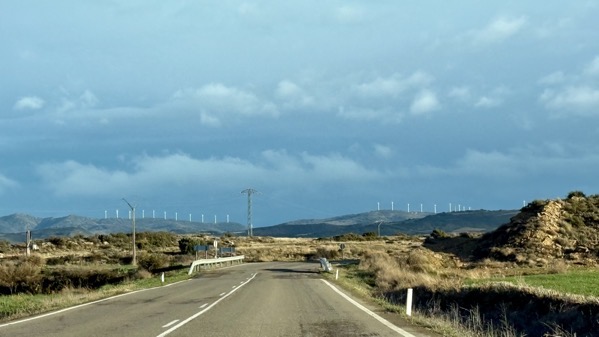
Is MaNachur offering some kind of irony in lighting up the wind turbines?
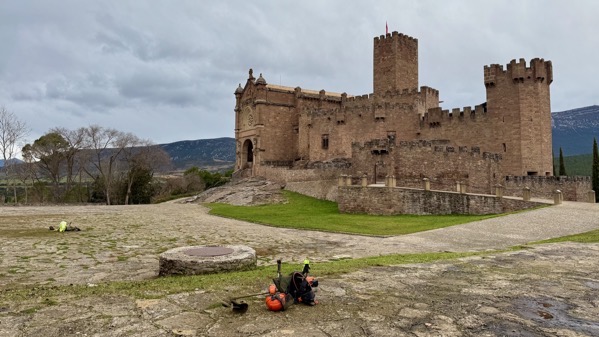
I wanted to see this church-castle-tower combo for the massive high walls on the tower. I did not expect to have the quirky bonus of arriving when the grounds crew was taking a break, leaving their equipment to mark the spots where they should resume, and highlighting that the priests rely on so much outside labor to strut their stuff.
This is the Castle of Xavier (Basque: Xabierko gaztelua), and the name Xavier/Javier is derived from the Basque Etxeberri meaning new house. [However difficult we thought Catalan was to grasp, I find Basque words impossible.] The Basque Jesuit cleric and famous proselytizer Francis Xavier (1506–1552; canonized 1622) was from here, taking the name of his hometown as his priestly cognomen (or whatever they’re called). Xavier is now used by many institutions, including Xavier University in Cincinnati, Ohio, to honor the man.
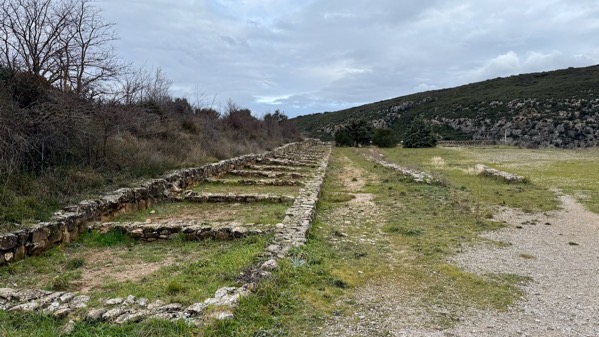
Changing gears, the is the entry area for the Villa Romana de Liédena, which was occupied from the 1st through 4th Cs AD, with its greatest size and decorative opulence at the end, including various mosaic floors. This was a villa, so an agricultural complex and a fancy dwelling complex merged together.
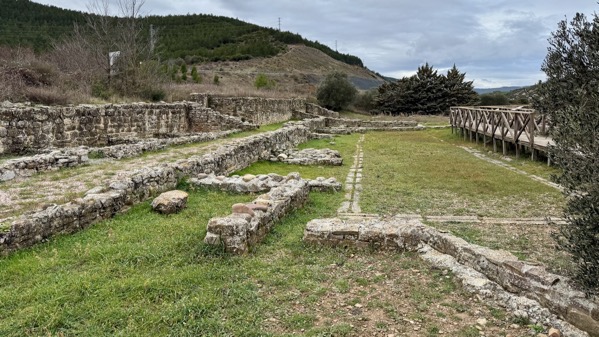
A visitor, it seems to me, would pass through the agricultural entry area and into this impressive patio that featured an open-water pool (the narrow-double-stones outline it) that drained toward the lower left of the photo and away from the house.
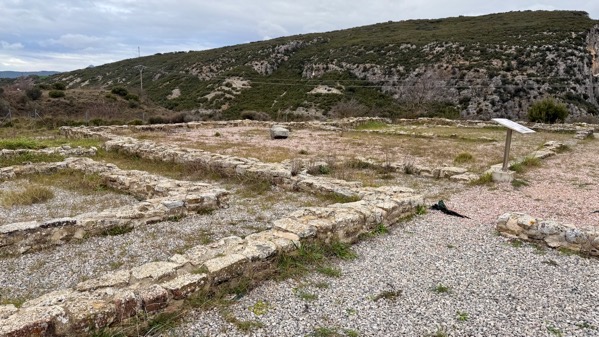
This large room was perhaps the core of the elite dwelling.
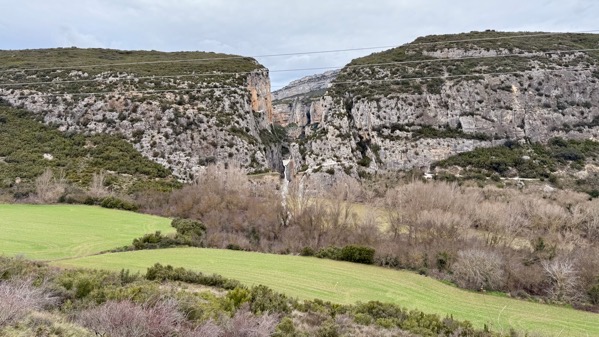
The villa’s location was chosen with this fabulous view of the Foz de Lumbier, or Lumbier Canyon, with the Río Irati in between, as well as the fields this villa controlled.
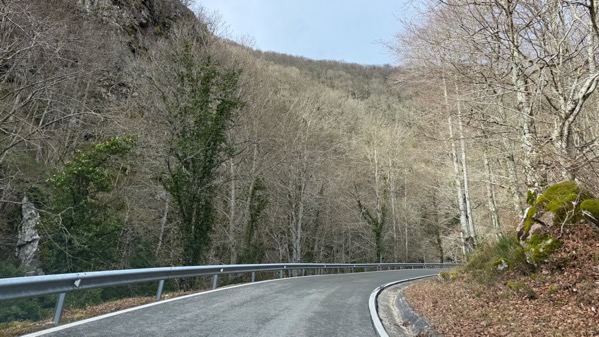
Next, we followed the Río Urrobi upstream a long ways. We had some precip, but thankfully it was too warm for the snowflake warning signs at the higher elevations to reflect our current situation.
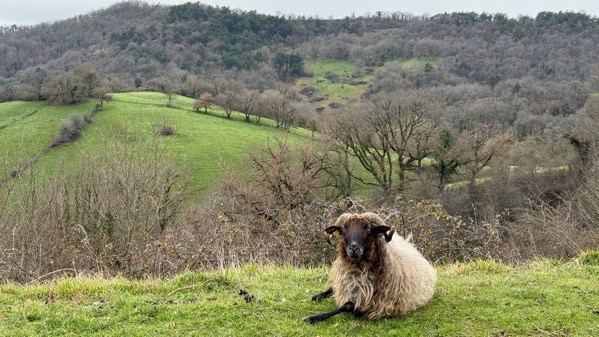
Despite many signs cautioning us about open range animals, this is one of the first we’ve seen, only a trifle worried that we’ve stopped moving.
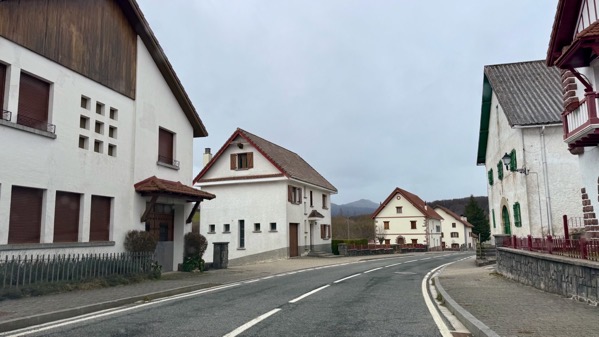
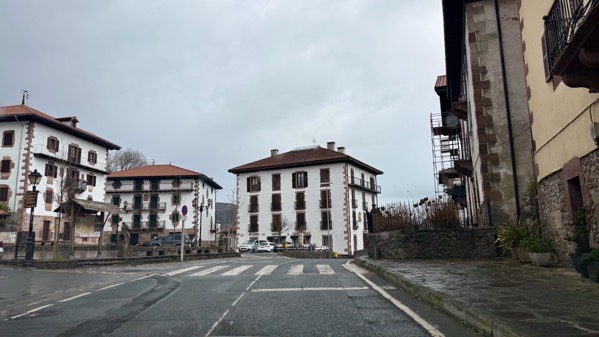
This is the typical domestic architecture in these parts…very different.
Sometimes, the homes are slightly fancier.
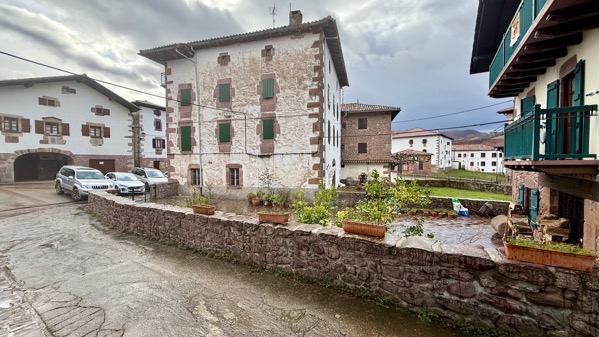
Our guesthouse is to the right, with the green shutters.
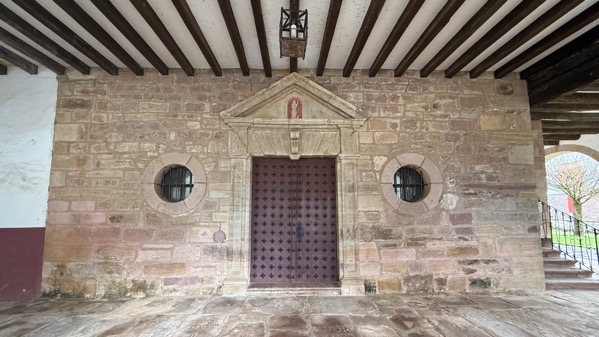
Next door is a church, with a portico over the entrance (seems unusual). Goodnight.
Posted at 2:42 PM |
Comments Off on We enter Basque territory
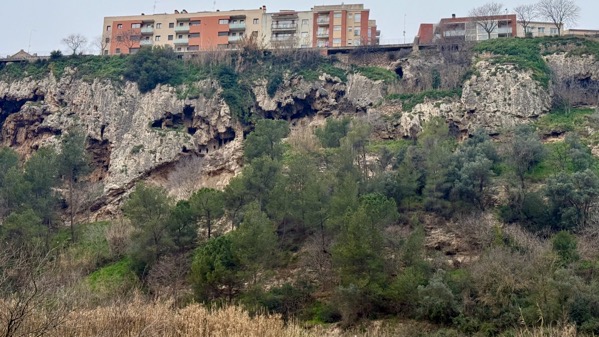
Leaving Capellades via the highway in the valley, we looked back up at the Quaternary travertine cliff formation. Here I see probably more modern housing carved into the soft-ish rock, but not the caves. Still: interesting.
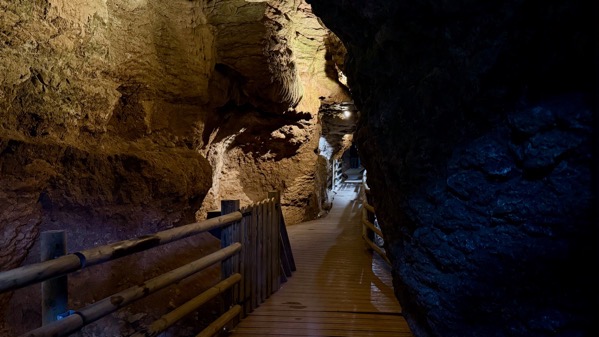
We visited a geopark in a valley lined with caves. We didn’t arrange to enter them, just walk the path in the valley, and peek through the bars. Cova del Toll.
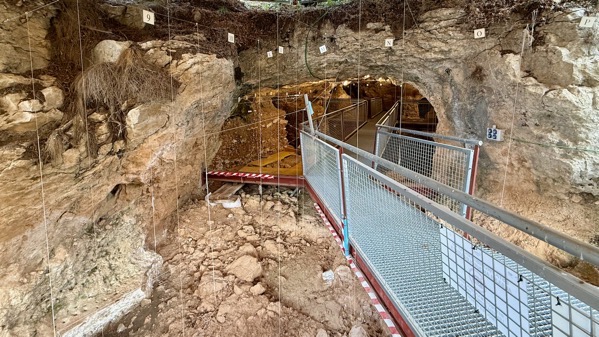
Cova del Toixoneres (Catalan spelling), usually Teixoneres in the academic literature. The strings outline 1 m squares to trip the workers…um, to make it easier to keep locations straight.
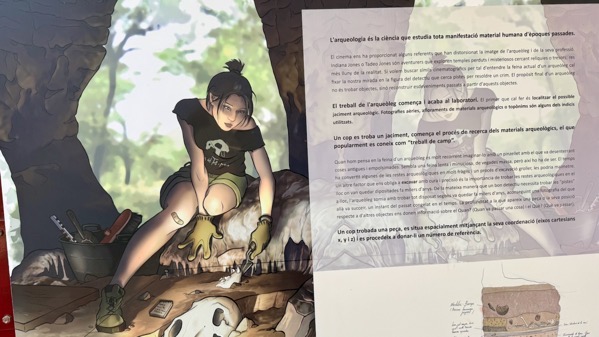
Artistic rendering of comely young archaeologist.
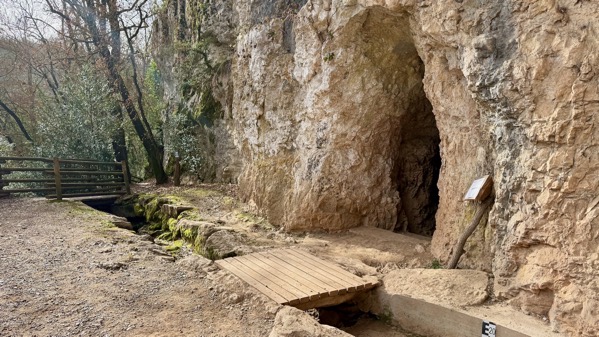
Cova Morta. They get significant runoff here at times, I’m guessing.
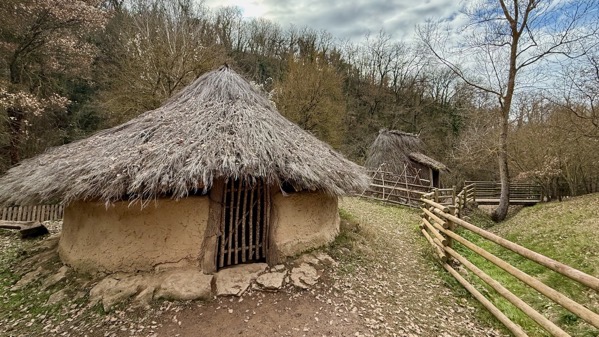
Reconstructed Neolithic huts.
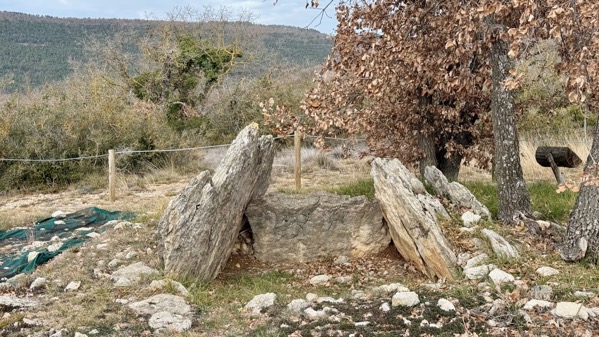
Beside the access road to the cave-valley: dolmen de Cuspinar, dating to the Chalcolithic (sometimes called the Copper Age), so after the Neolithic.
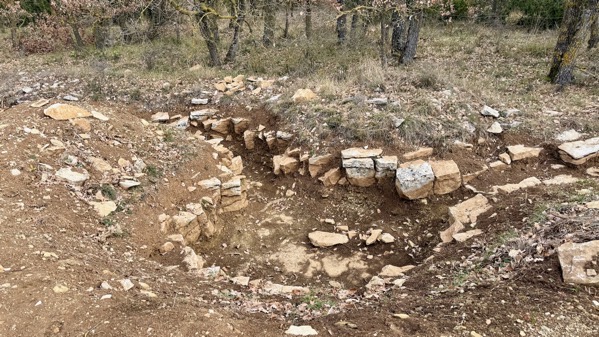
Also by the access road, Republican trench from 1936.
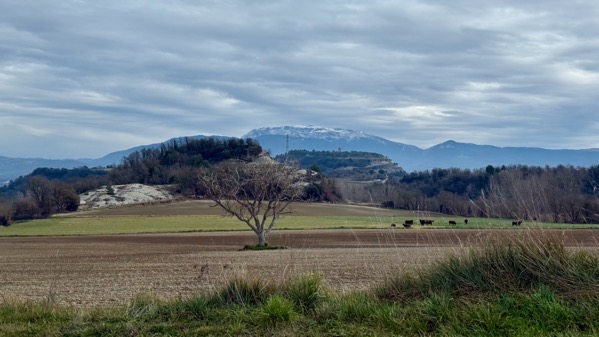
Roadside view—high-elevation snow.
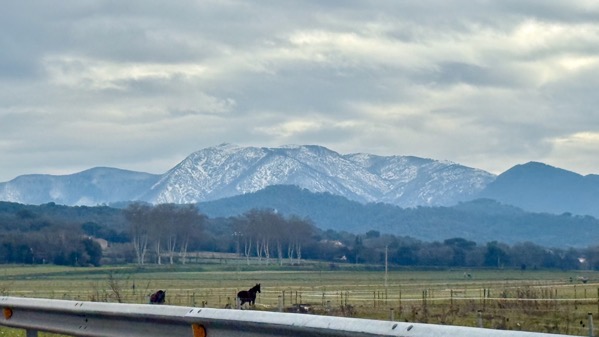
Heights with snow; horses in foreground (ignoring guardrail).
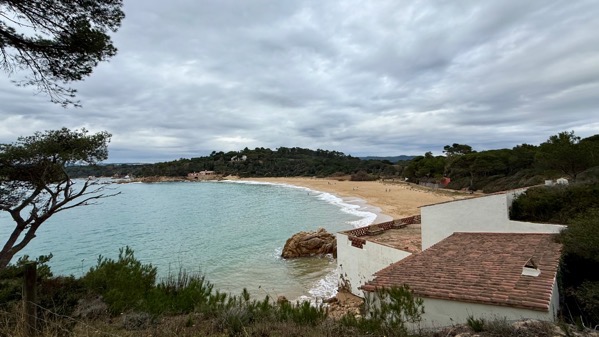
Our first view of the Mediterranean: Playa Castell walking to the Castell.
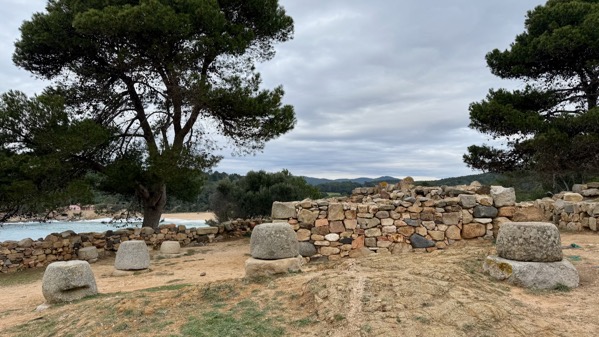
Look at some of the huge stones at the Castell de la Fosca, a promontory fort. Ascending to the top is no longer permitted, but at this level, inside the protecting wall at the neck of the peninsula, excavations produced datable remains. The first occupation was in the 6th C BC, in the earlier Iron Age—several small semi subterranean huts, then abandoned. The site was reoccupied in the mid-5th C BC, and the hut depressions were used for garbage. The maximum population was in the 4th C, and into the 3rd C BC, when buildings were built on terraces along both sides of the landform. The presence of column bases (shown here), of imported stone, and other features suggests there was a public building, possibly a Hellenistic temple, on the highest point in the community. Both Greek and Phoenician trade goods are among the pottery/material culture recovered by excavation, although most artifacts are of indigenous types/styles.
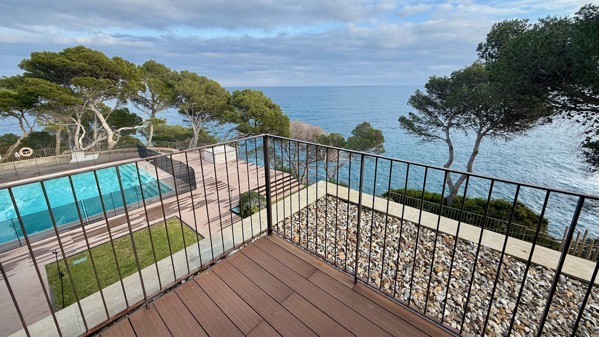
Enough archaeology. We have arrived at our home away from home for the next six days, and the splurge of the trip. Here’s our private patio and our sea view. Lovely.
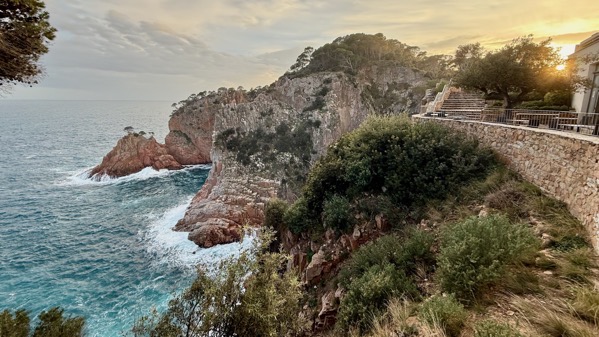
From the secure railing, here’s the view down onto the rocks where the sea is crashing.
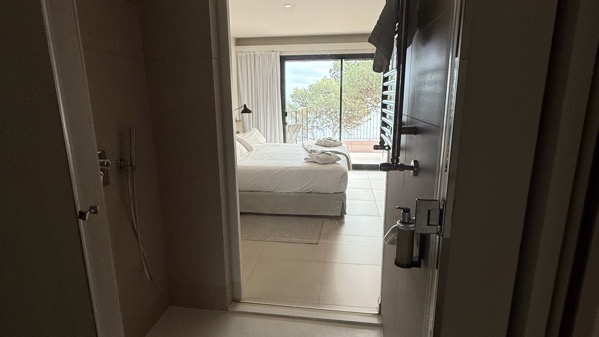
The room is designed so you can chose to shower watching the Mediterranean—at least until the glass steams up! Dinner at 8pm tonight (we chose early), petit breakfast at…we chose 8:30am. Off to eat, sleep, eat. Good night!
Posted at 12:48 PM |
Comments Off on Caves, fortress, sea views
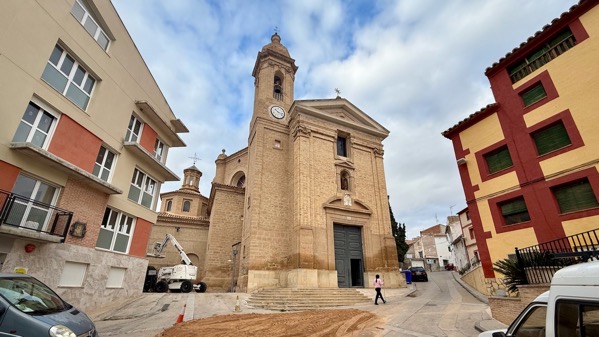
We took the long way back to our room after breakfast (the short way was maybe a dozen doors away), and the maze of streets brought us by the church, and the door was open!

So we looked in. Two priests and fifteen parishioners. What a surprise to see that oval ceiling and pantheon-like dome. A bit of digging (you know where), and I see that the building, Iglesia de San Pedro Mártir de Urrea de Gaén, was designed by Agustín Sanz (also the contractor for construction), with the building completed in 1782. The unusual layout was allowed by the church’s patron, 9th Duke of Híjar, Pedro de Alcántara de Silva Fernández de Híjar. A very progressive design.

We drove quite a ways, trying to absorb a bit about the always changing landscape. Here’s a lovely valley.
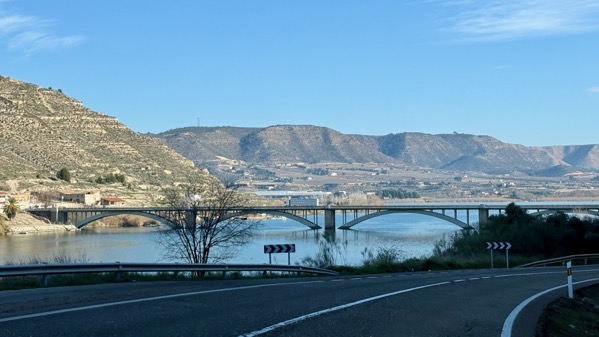
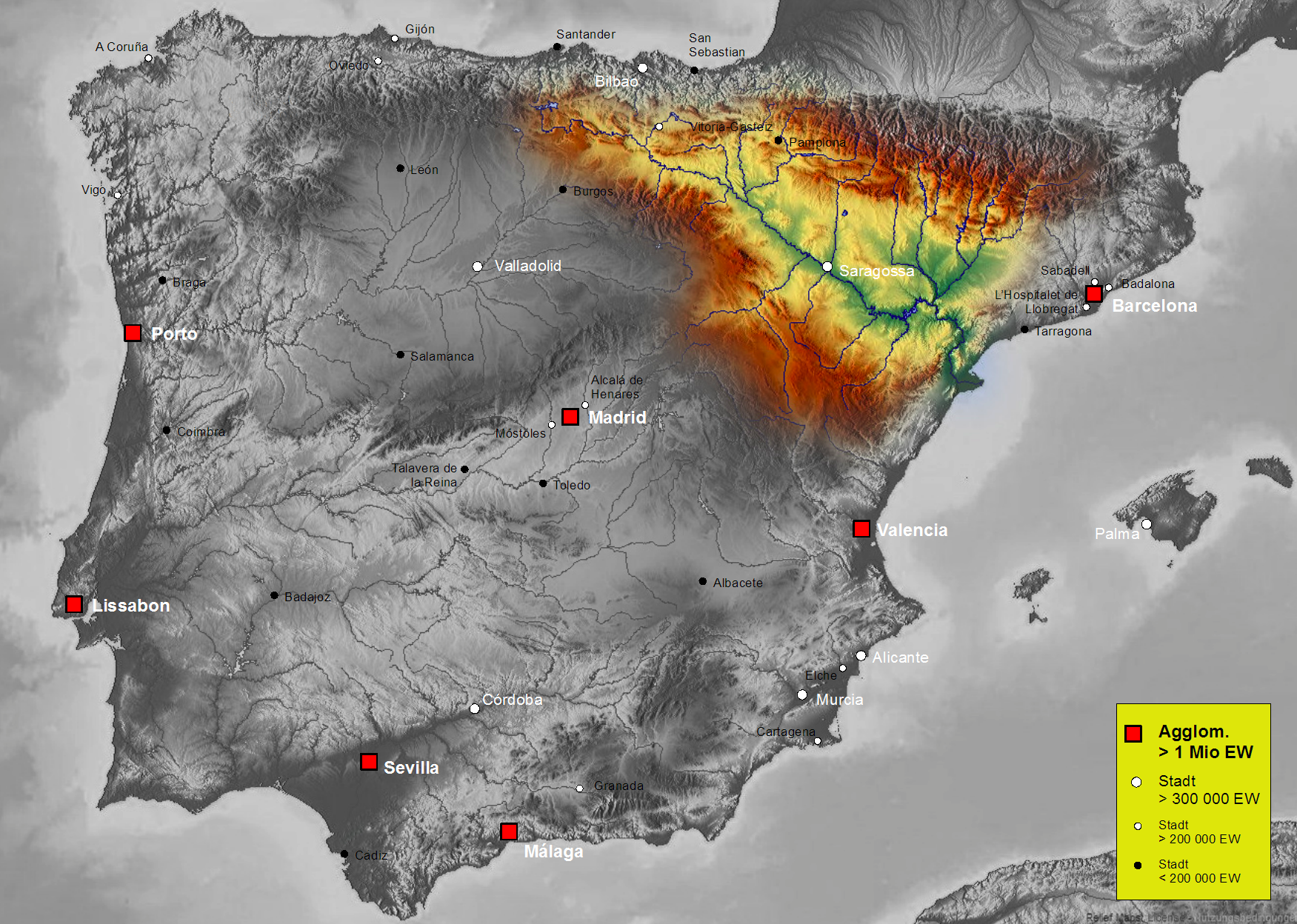
We reached our first crossing of the Ebro River, the major river of northeastern Spain. It’s south of the Pyrenees (duh), and flows east-southeast with a large, roughly triangular basin that I think was a breadbasket in Roman times. It eventually turns south and cuts through some low mountains, before reaching the Mediterranean at Tarragona. We will spend perhaps almost half of this trip in the Ebro basin. [Map on WikiPee here.] The area along the river is called the Ribera today. Shortly after crossing this bridge, we entered Catalonia, where we’ll stay for the next eight-ish days.
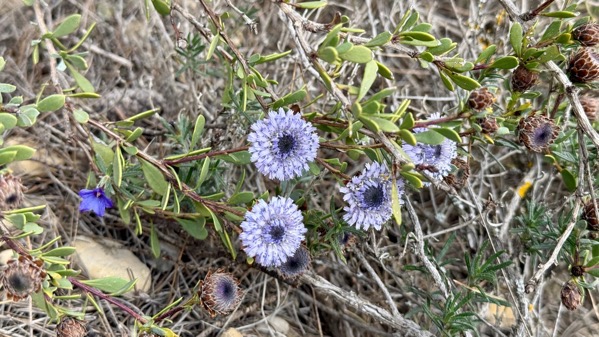
On our hill-climb to the first yacimiento ([archaeological] site) of the day, called in the literature Sebes, I spotted these flowers, mostly old dried out, but not this specimen. The one to the left is different. I don’t recognize either.
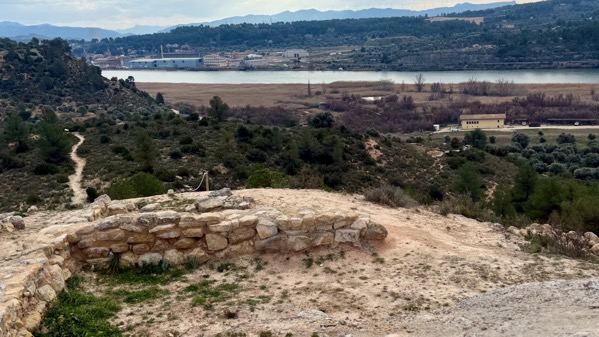
The heydey of Sebes was the Early Iron Age (7th C BC, and thus pre-Roman), when I think the best place in town was up here, but structures were on many terraces below the hilltop. Here’s the view of the Ebro from the high-point.
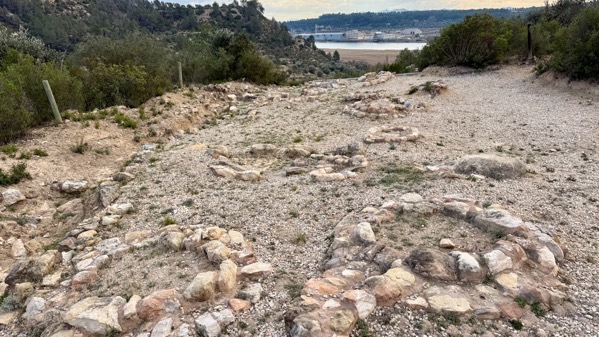
On a lower ridge-nose, the Sebes people put their dead beneath these careful rings of stones. Long before the Romans, people in Iberia put their dead outside their communities, but close by.
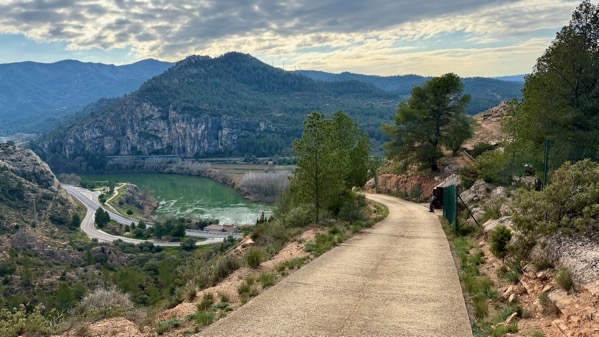
That ridge-nose off to the right and barely visible has the ruins of a later Iron Age settlement, high (as you can see) above the Ebro. The name for it today is Sant Miquel de Vinebre, so not an indigenous term that the Romans recorded before they ousted the inhabitants in 44 BC. Further parsing the photo, you can see the geological bottleneck to the left, which allowed this site to control passage up the Ribera, and the arable lands to the right or west-northwest and out of the photo.
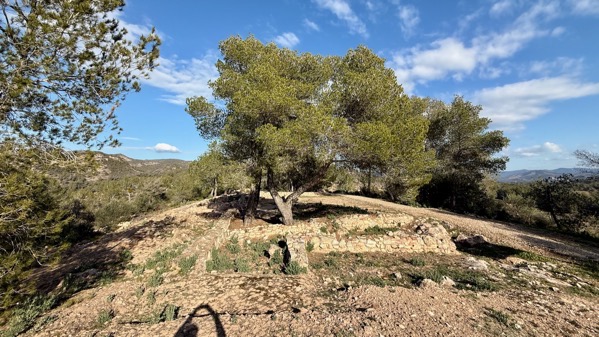
This site is typically referred to as El Molar for the adjacent town. John says the community’s business is dentistry, but the WikiPee indicates it’s agriculture (olive and almond orchards, plus some vineyards). This site dates to the Late Bronze Age/Early Iron Age (so earlier than the two above), and is along a narrow N-S ridge. Most of the excavation was a century ago, so we have far less data than if had been opened up in the last several decades. However, excavators did save some funerary artifacts of copper and lead. Interestingly, this site is in a mining area that produced the lead, but not the copper, although copper is known from the area. Instead, the copper was from southeast Spain, mostly from the Linares mines of Jaén, and, to a lesser degree, from mines in the Almería province. So I read.

We reached Catalonia, an autonomous community (Spain has 17), not a province. Here’s another bridge across…the Ebre, Catalan for Ebro. Our second Catalan word befits language learning in a Catholic region, and is creu, meaning cross. Poking around the internet just now, I learned that in Catalan, the name is Catalunya. Now up to three words!

Note the three balconies of laundry (I gotta include some cultural anthropology)—and one without—perhaps preparing for the weekend?
Posted at 2:26 PM |
Comments Off on On to Catalunya
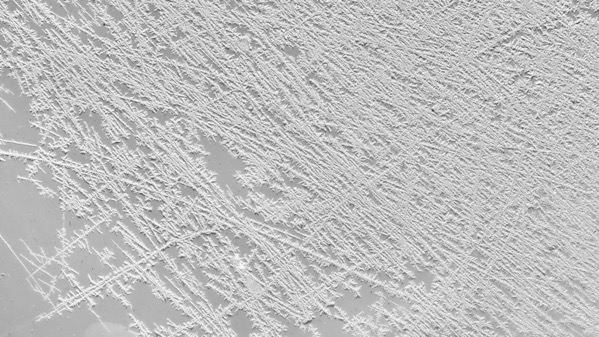
Our hood at 11:15am; car was in the shade all morning. Brr, yet nice in the sun.
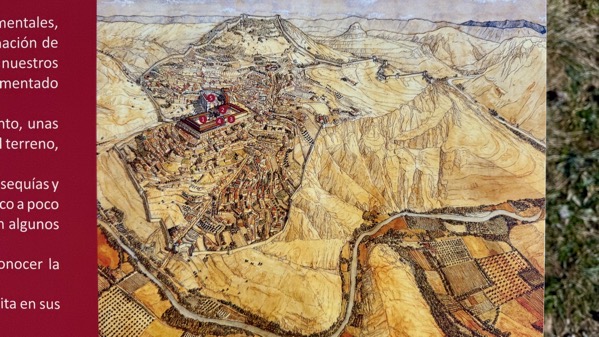
Here’s a stab at the layout of Bilbilis (sometimes with accent), a Roman fortified town on a hilltop and slopes. You can see the city wall clearly in this reconstruction. The forum is the rectangle with the red circle-numbers. It’s close to north-south, with the nose looming over the valley to the south. This location controls a major pass to the east, which today includes the important train route from Madrid to Zaragoza, and was a significant transportation corridor well before the Romans arrived.
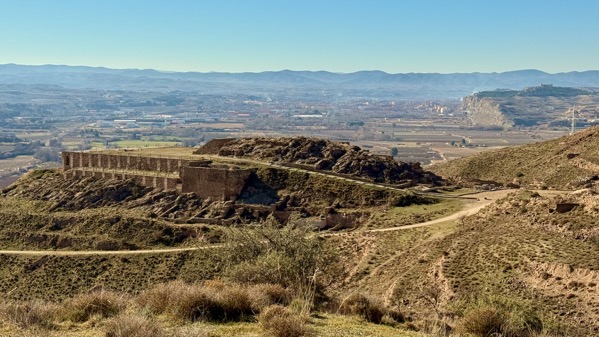
Looking southwest across the forum and into the northeast-ward flowing Jalón River valley.
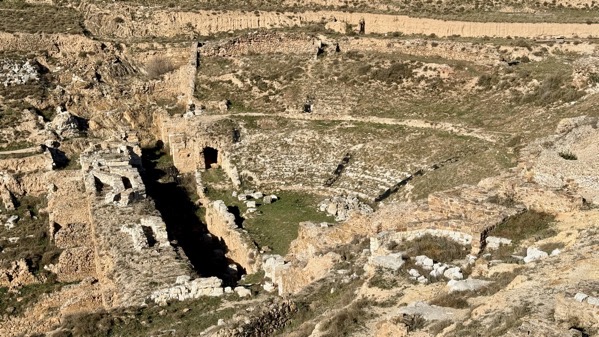
View west from the northwest corner of the forum, down into the amphitheater, which is nested into what would otherwise have been a ravine. A sign indicated there was a previous Roman structure of some sort here.
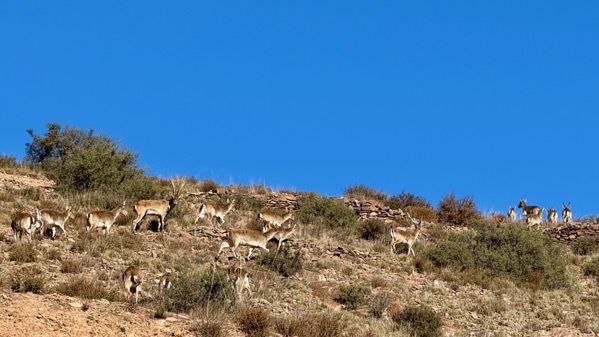
We set off to check out the eastern hill of the settlement, and looked up to see that we were disturbing a herd of grazing Iberian ibex. What a treat. The harem-boss is fourth from the left facing us, perhaps trying to stare us down. He’s got a large set of back-curving horns.
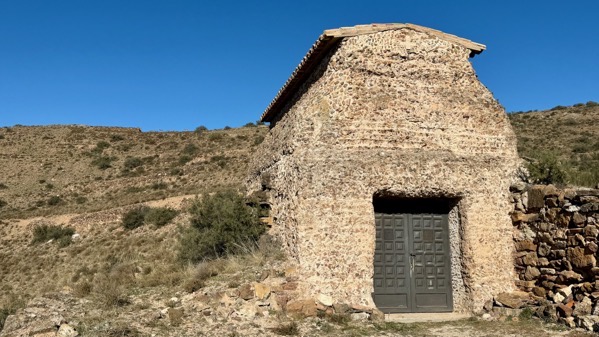
The Romans apparently built this as a cistern, and later Christians repurposed it as a chapel by creating a doorway, and no doubt adding interior features.
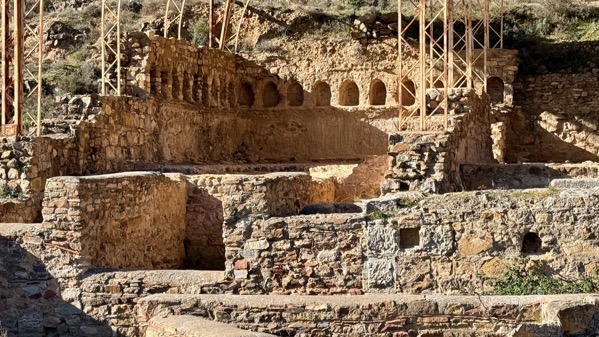
Back in the main part of the site, north-northwest of the forum, is a modest bath complex. This is the only one in this prosperous city—it even had a mint—due to the hilltop locations. The Romans built three cisterns to provide water just for the baths (not only for bathwater, but also for the steam-heat.)
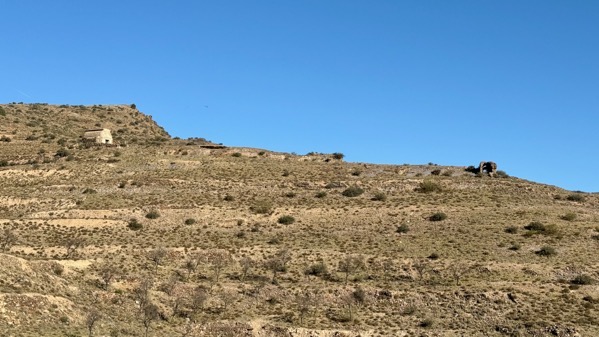
View west of the east hill, with the cistern-church to the left and what looks like another chapel with a round window hole to the right…not discussed on the signs likely because the site managers didn’t want tourists visiting it.

We thoroughly enjoyed our hotel’s restaurant’s prix fixe lunch to recover from our Bilbilis adventure. It included a first and second course, dessert, and a choice of beverages. I chose the ¼ liter of red wine, and was surprised when a whole, full (opened) bottle (a local garnacha) was delivered…I asked, eyes wide I’m sure…she said, just drink two or three glasses, whatever you like, that’ll be fine. Okay! With tax, all of the above for €16. A fine deal! BTW, that’s my dessert, a sorbet of lemon with a few drops of vodka.
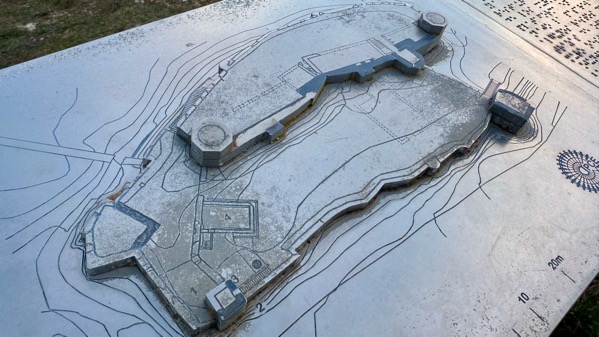
Late in the afternoon fortified from our fine luncheon (and a nap for one of our duo), we drove up to the main castle above Calatayud, formally: Castillo Mayor del Emir Ayyub ibn Aviv Lajmi, named for the official mentioned late in yesterday’s post. It’s a darned narrow castle, as that’s all there’s room for on the sinuous hill. The curved side is facing downhill to the Río Jalón valley.
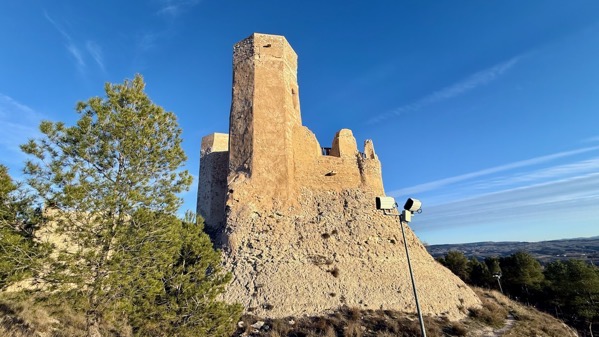
Here’s the west end from dead on. Ignore the nasty lights, far more acceptable before everyone was taking so many photos and instead watching and oooh-ing and aaah-ing at the night-time display.
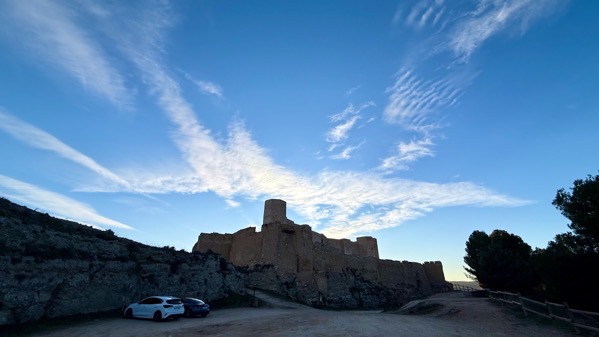
Here’s the view of the east end from the northeast, a massive structure against the sky—and what a sky!
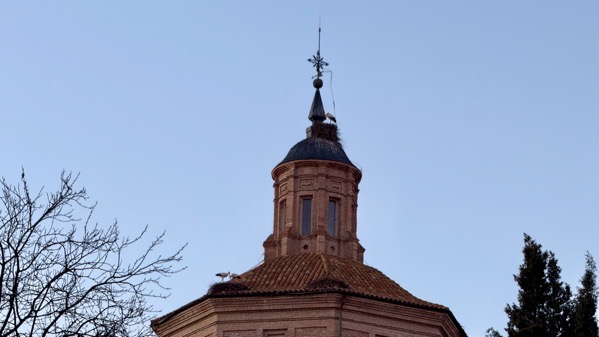
Returning to our hotel for the night, we spotted these storks circling and returning to their nests (two to the lower left; one high, just below the cone). I had to ask the ever-helpful Sandra, the afternoon desk person, what the Spanish is…cigüeña, pronounced something like see-gwain-yuh, very strange spelling for Spanish. Too long for Wordle, fortunately.
Posted at 4:32 PM |
2 Comments »
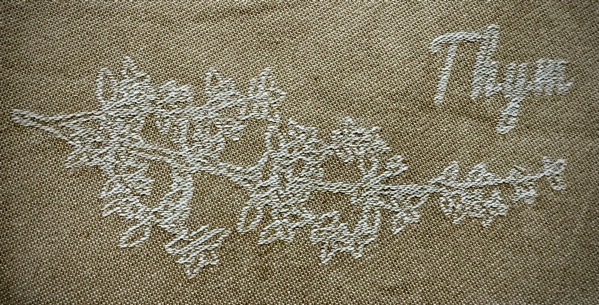
I’ve heard of tea towels now and then, and now I have one. I still don’t know the role they play in tea-time—to coddle the pot, perhaps? Speaking of time (or herbal thyme, here in French on this tea towel of “Paree”), isn’t that the essence of life?
Thanks for this thoughtful gift; you know who you are!
Posted at 8:02 PM |
Comments Off on French time/thym

Street seating decoration…bar bow…or barbeau? I don’t speak French and my sense of its etymology is…poor. But I think barbeau is related to barbed, like a type of fish-face. This, however, is an inexpensive fake-velvet bow on the separator-fence of a neighborhood tavern. So, bar-bow?
Posted at 9:30 PM |
Comments Off on What’s in a name?

Look at them branches! What a nest of angles!
Posted at 9:43 PM |
Comments Off on Ain’t no brain rot

The word history traces back to the Greek, where its meaning required investigation/inquiry and research; it wasn’t merely story telling. History also has a context (social, cultural, temporal, etc.), and, sometimes, good luck figuring that out.
Apologies for the two-day delay in posting….
Posted at 10:22 PM |
Comments Off on It’s about timing?

There’s a bit of politics behind it, but the lake levels are dropping (by removing boards in the dam) to prepare for the ice season followed by the spring melt.
Just off our beach, odd bits of sandbars are surfacing, like this island(let). I was spellbound by the diamond pattern generated by the wave series coming from different directions on the far side of the emerging landform.
Perhaps riffles are technically only created by interruptions in flowing water, like creeks and rivers, but I keep thinking of this as a riffle.
Posted at 8:55 PM |
Comments Off on Not Atlantis

I’m sure it’ll be warmer again soon, but for now the mornings keep being in the 60s. I’m still distrustful that it’ll continue. Call me a climate sceptic?
I found the word minimifidian among the synonyms for sceptic. I’ve no recollection of ever seeing it before. Turns out it was apparently used by Samuel Taylor Coleridge in 1825—once. No wonder I missed it.
Posted at 8:28 PM |
Comments Off on I’m a minimifidian (sometimes) (kinda)