Watch the shadow
Friday, 19 June 2009
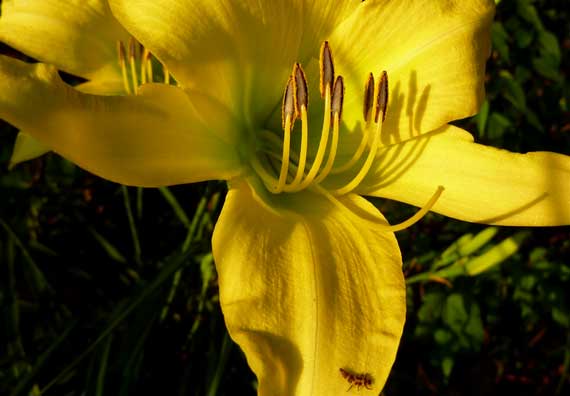
We walked early enough today that the shadows were still interesting.
In this city, I think the greatest biodiversity is in the insects (of the critters you can see), although their biomass—not so much.
Friday, 19 June 2009
We walked early enough today that the shadows were still interesting.
In this city, I think the greatest biodiversity is in the insects (of the critters you can see), although their biomass—not so much.
Wednesday, 13 May 2009
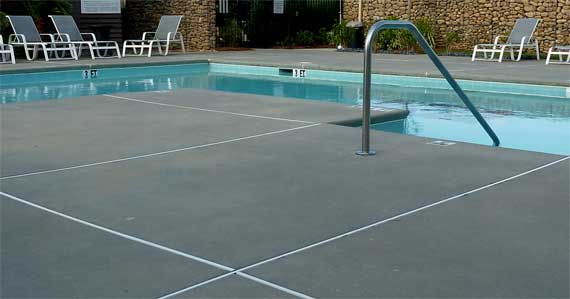
As I began to compose this, my mental landscape was dominated by the word perspective. Of course, I googled it—and discovered the many aspects of the word that Google has separate pages for—here.
The picture obviously illustrates the graphical/pictoral version…. However, I think I was pondering something closer to the cognitive version, or perhaps the wisdom or accumulated knowledge, well, perspective….
And there ya go, we’ve come full circle….
Cool thing—we watched a single swallow repeatedly fly by and swoop to dip into the surface of the pool. Barn swallow perhaps (although no response to birdcall emanating from iPhone)? Enamored of Michael Phelps?
Monday, 20 April 2009
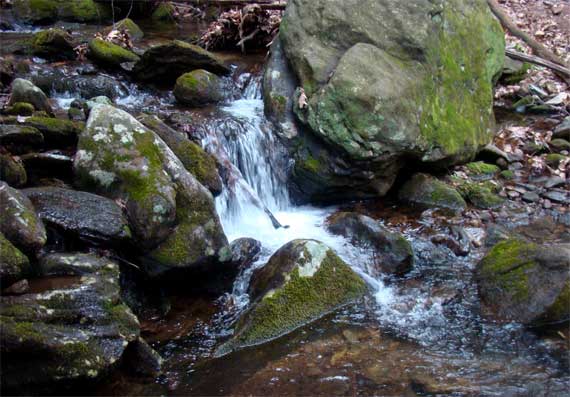
This from yesterday….
One real benefit of hiking in the mountains on a rainy day: the creeks are rushing and burbling and delightful!
Sunday, 19 April 2009
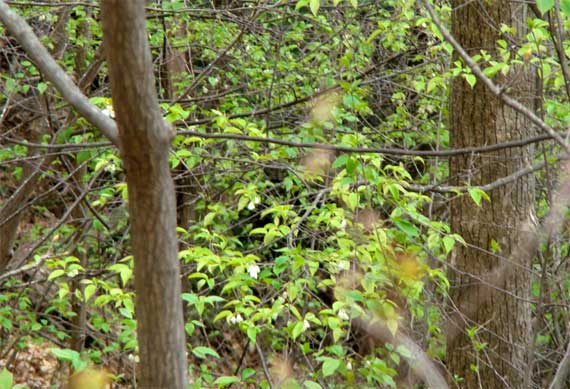
Not that YOU can tell, but the black spot in the background in the middle of the frame, rushing down the slope away from the hikers on the trail above, is a bear, about 1/3 grown. S/he was with Mom and sibling (not pictured). This was up above Dockery Lake, mid-afternoon, in off-and-on light drizzle.
Nice early spring wildflowers, especially violets or species that look like violets.
Tuesday, 24 March 2009

“Beware bears” doesn’t really cover it.*
We’ve been hearing about legislative budget dickering at the Federal level. It’s also happening at the state level here in Georgia.
The legislators seem to employ this logic: cut the heck out of everything, and then wait for the constituent backlash, and use that to decide what “has” to be put back in.
Late afternoon’s breaking news was that the Georgia House has cut the archaeology program to the tune of $279K-plus, including the Federally-mandated State Archaeologist position.
So, the backlash begins. The SGA story is here, and there’s more on the GCPA page here.
Fellow Georgians, please start dialing for dollars….
* Bears are harassing hikers and breaking into their gear along the stretch of the AT we hiked last Friday…. Our companion F added the drawing….
Sunday, 22 March 2009
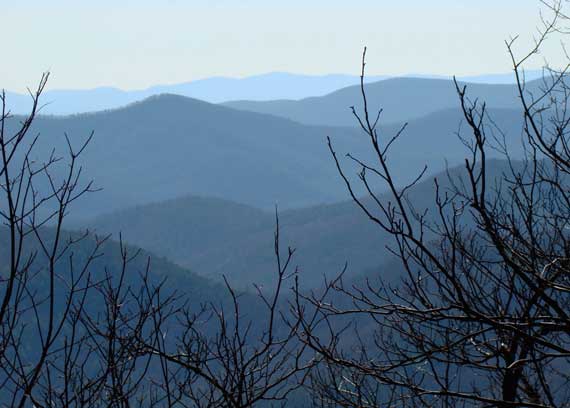
The landscape we saw on Friday had a lovely blue cast, supporting the name Blue Ridge Mountains. Scenery around here today: leafing out and springlike. Or becoming green.
Saturday, 21 March 2009
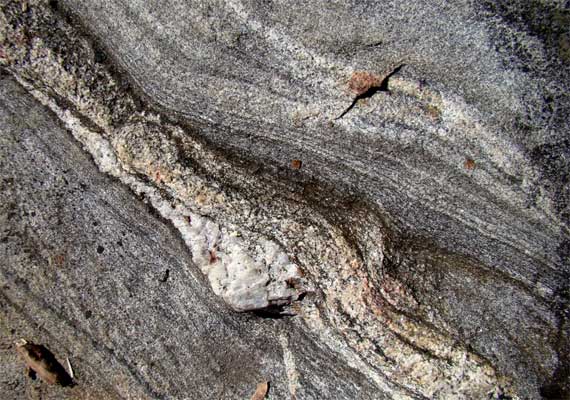
You might be wondering what the rock strata of that bald looked like close up…. Maybe. I just changed my desktop image to rock closeups from yesterday’s hike, including this one…. It resonates for me….
So that’s today’s science comment, and here’s one about the arts. Billy’s sister was on NPR this morning. She’s in the quartet QQQ. Listen to clips and the story here; I really enjoyed their music, and now I know what a hardingfele is, although I’m not sure I can pronounce the word properly!
Friday, 20 March 2009
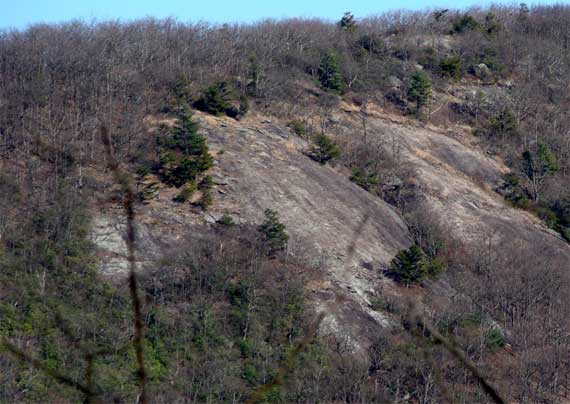
Played hooky today and hiked a short section of the AT, east from Neels Gap. We had perfect weather for taking this ridge-running route, which gave us glorious views down into the piedmont, across the mountains into NC, and of several balds, or rock outcrops like this. The plants are just beginning to waken from the grey of winter. The sun was brilliant and we finished the hike rosy-cheeked.
Slicks are stands of mountain laurels (Kalmia latifolia); we saw a few, but didn’t have to pick through any, thankfully.
Wednesday, 18 March 2009
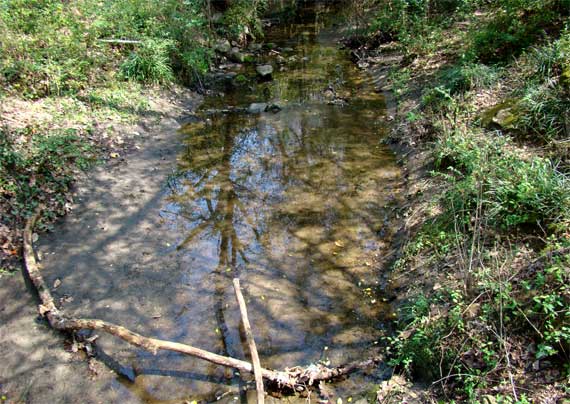
This creek drains the Little Park*, and it’s already delivered most of the rainfall from earlier this week downstream. The streambed is dissected, or deep below the adjacent ground surface. This is the result of sediment deposition in the valley, as well as downcutting by the drainage after the forests were removed in the catchment area. So, the pattern you see here is very historic, and relatively recent. The piedmont sure looks a lot different now than it did 500 years ago.
* my term
Monday, 16 March 2009

Recipe: take one ornamental pear tree just past full bloom when the leaves are beginning to emerge. Add at least two days of drizzle. Examine the ground below.
Enjoy the pattern of still-fresh petals.