Musings
I guess I’m convinced that I was the victim of misinformation: turns out coffee at normal levels of consumption is not a diuretic.
In other dietary data: the NYTimes says beets (Beta vulgaris) are the new spinach. BTW, chard is botanically a leafy beet or a small-rooted beet (depending on how you look at it), and they’re both in the amaranth/chenopodium family, which has lots of species people have harvested and cultivated, including quinoa, huazontle, and epazote, all of which I find quite tasty….
Hmm, dinner tonight: soup, but maybe without any type of Amaranthaceae….
Posted at 4:20 PM |
Comments Off on Link-crazy!
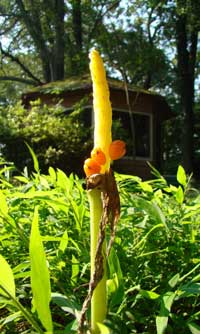
I could not have predicted that I would track this plant through its growth cycle. I’ve sure been enjoying it, though!
This is the fourth blog entry with a picture of this rogue jack-in-the-pulpit (Arisaema triphyllum) that appeared in the spring in an untended flower bed in our backyard.
Over the last week or so, the plant’s been throwing off its ripened berries, and is now down to the last three at the base of the spadix. Yes, that’s the botanical term for the “jack,” which is now left to dessicate, having done its work. The seeds are thrown out up to several feet from the plant. I say thrown out like I saw them spin away, but I haven’t; I’m just surmising.
This sets me up for next year, when I can see if any of the daughter plants germinate! Maybe I should continue to leave this bed untended….
* 1) Good title? Did you really want to check out the text?, and
2) sorry if you thought it was, but this is not a typo of a reference to James Spader (sigh).
Posted at 10:36 AM |
Comments Off on Near-naked spadix*

Pan from ATL Bot Garden
I understand that the US builds flood control barriers for what is at the time of construction (and that this assessment is not regularly adjusted is part of the problem) thought to be a “100-year” flood. Of course, that’s theoretical, but it is a label that provides perspective. I also understand that in Holland they build for 1000-year flood events.
HUGE difference.
Meanwhile, at one earthen levee along the Mississippi River:
Officials spent nearly six hours choking off the leak caused by a muskrat burrowing in the soft ground early Monday.*
Six hours, mind you. Now, I’m not the most knowledgeable at natural history, but a muskrat? This is not an unexpected species (Wikipedia has its range as across the continental US), and its habits are well-known. Will we soon be hearing that we taxpayers must ante up X-gajillion dollars because of ONE MUSKRAT?
This from an AP story in the NYTimes this afternoon, dateline Winfield, Missouri.
Posted at 4:23 PM |
2 Comments »

I can’t remember the last time I laid on my back in the grass and watched the clouds drift by. This morning, after planting pepper plants and cucumber seeds, was the perfect time for this indulgence.
Posted at 1:33 PM |
Comments Off on Gorgeous clouds
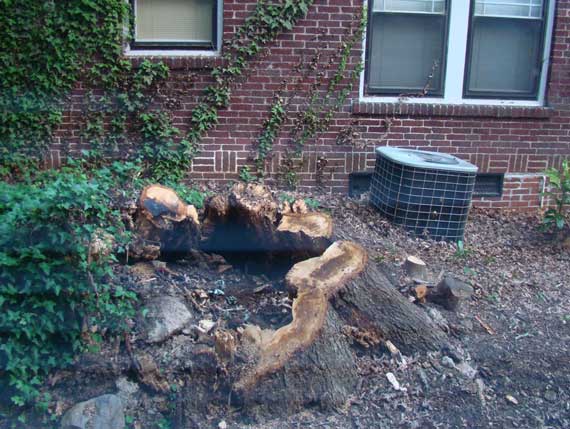
This is the scene I now see from the kitchen window (note eerie, ghostly white banding from reflections of the slats of the blind). Moss is dying on the blacktop between the stump and the house, out of view in a foreground that’s cropped from this picture.
In other news, I’ve posted a family-favorite recipe, a well-loved potato salad I made for our weekend feast. It’s really tasty, but more time-consuming than most of my recipes (yet still less complex than many fine recipes out there!).
* Actually, all ecosystems are in reactive, adjustment mode, I think.
Posted at 7:27 PM |
Comments Off on Mini-ecosystems* constantly adjust

Before the floods of light we now get by midday and through the afternoon heated up the front yard, JCB and I went out to do some tidying. He picked up a bunch of small pieces of ex-house, including small, clear glass fragments (window glass and honeycombed safety glass from the shower door/wall), and I moved the tattered herb garden to a safer locale.
Posted at 6:57 PM |
2 Comments »
I guess it’s time for details. The tree fell sometime around 9 pm on Sunday night. We had gusty winds associated with a solid front (well-marked on the weather maps, anyway), but no rain—thankfully! We were in the back of the house watching TV, very close to the back door, and that was our escape path away from the noise/tree crashing into front corner of the house, although we didn’t know what part of the house was being crushed. Your brain tells you: big noise in the wrong place; move feet to transport body (ears?) away from that sound!
The electricity stayed on for almost two minutes (it seemed) before going out with dramatic fireworks at the pole by the street in front of the house. We later discovered that the tops of the highest branches (formerly highest branches, actually), had dragged the wire down enough to short out something important but not enough to bring them down to the ground. I guess the tree finally settled enough that we lost power.
Some of our neighbors had heard the tree fall, but with the lights out (and the looming darkness caused by the top of the tree on the ground), they couldn’t tell where the tree was!
As we tried to scout the house and figure out the damage, our soundscape was dominated by water, which my brain couldn’t process, but John’s did, figuring out it was coming from the pipes in the master bath, which had been mostly obliterated by the tree. One neighbor is a contractor and another is a retired fireman, and both were in the street, so I hollered down from our porch for them to please cut off our water if they could, as John talked to 911. They found a key and did so, but the water ran for almost 10 minutes, I estimate.
Eventually, maybe 25 people were milling in the yard, making sure everyone was okay, etc., all the best you hope for from your neighbors!
Unlike in 1991 when Tree Number One fell, we now have the iPhone and the situation has been oh so different. We stayed that first night at John’s brother’s, after removing hard drives and computers, and locking the doors. We’d already called the insurance people, and lined up tree removal people for the next day.
The tree guys came shortly after 8 am, and looked the situation over. Decided they needed a big crane to lift the main trunk off the house, which would limit damage. Ordered a crane, found out one could come that afternoon (Monday). The crew cleaned out enough so we could extricate the Prius (just flipped over 15K miles), and the dents are relatively minor, which is a miracle given that the tree’s limbs embraced the vehicle from all sides.
At that point my major stress came from: 1) not knowing how much damage we had to deal with, including how much more the house would suffer as the trunk was removed. This was a BIG tree, and 2) not being able to reach our neighbors by phone—the neighbors who owned the base of the tree.
When they finally returned home after a long holiday weekend, the 70-ton crane was busy and many people were standing on their lawn watching the amazing work going on. They were shocked to say the least.
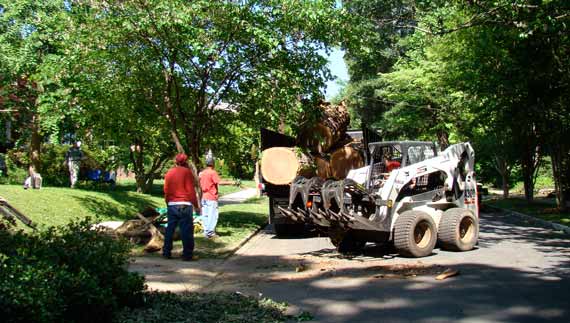
Here’s the current situation. The tree guys finished the removal this morning (look at the diameter of the trunk!) and cleaned the yard before they left. Our landscaping plants look pretty droopy, but the hardscaping is undamaged. Or at least I haven’t noticed any. That mini herb garden I was planning to blog (brag?) about—wiped out.
John’s brother helped move precious crap to safer parts of the house, and to get the wet Persian (-like) rug we inherited from the Burns family home moved out of the dining room. We dropped it off at the amazing rug place before rush hour traffic got too bad; they’ve cleaned this family carpet before.
The tarp guys are removing some of the crap preparatory to building what is necessary to make the house shed water once again. We will be Blue Tarp People—or maybe there’s another color? They have capped the water pipes going upstairs and the water’s back on. They have isolated the upstairs wiring and JCB’s called Georgia Power and they will turn the electricity back on quite soon. Yes, today! Amazing!
* JCB coined this one; I borrowed it unashamedly!
Posted at 6:17 PM |
Comments Off on Triage*: the longer version
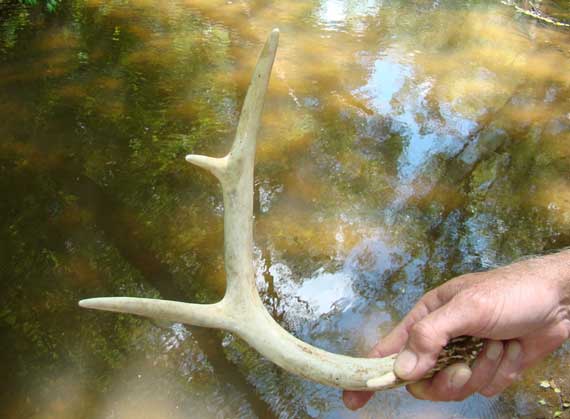
Given how many rodents populate the woods, and how much they like to chew on antlers (I guess for calcium, phosphorus, and other minerals, plus assistance with teeth-management), it’s rare to find one in this lovely, pristine, un-nibbled condition.
Posted at 5:18 PM |
Comments Off on White antler
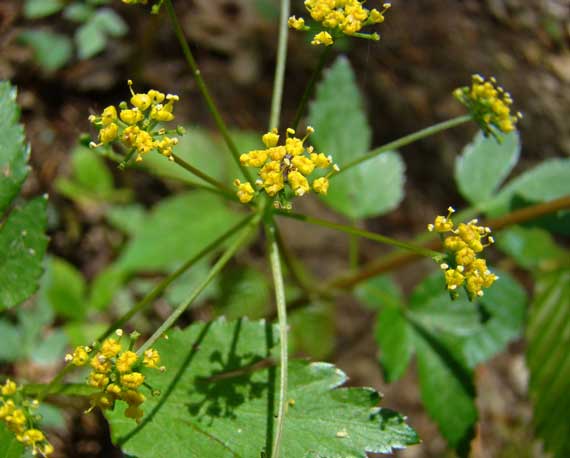
Wild parsnip (Pastinaca sativa)?
Recent rains have whacked the pollen count, and now we’re getting a cold snap. Where’re my socks?
FYI—abbreviation: GHGe
greenhouse gas emissions
And some solid figures from Circle of Responsibility:
Researchers estimate that the average American diet produces more than 15 pounds of CO2 per day which equals 5,600 pounds of CO2 emissions per person per year…. Compare that number to other “practical changes” suggested by respected environmental organizations that ask individuals to cut their carbon by taking shorter hot showers or changing light bulbs. A 10-minute shower is often cited as contributing four pounds of carbon per day (or 1,460 pounds of CO2 per year); this is only about one-third the impact of our daily food choices! [text from here…]
Posted at 10:22 PM |
Comments Off on GHGe
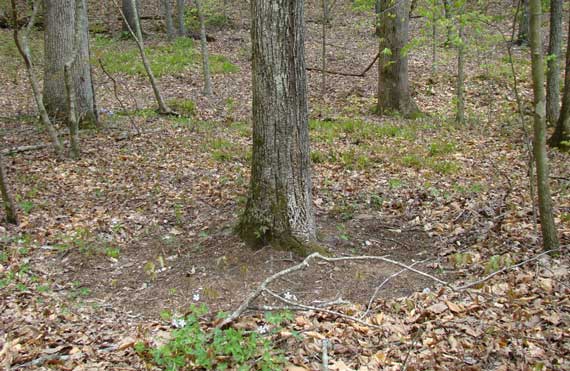
I’m perplexed by this. I’ve never seen anything like it. Have you?
Around the base of this modest-sized tree, and no other in the whole area, all the loose detritus is gone. The clear area extends a bit over a meter away from the trunk, and has no holes or dents or evidence that a heavy weight sat on the cleared area. The edge is even but not overly defined.
This special tree base is near a little-used but still public hiking trail. The spot is unremarkable, and nowhere near a hilltop or other prominence.
I’m thinking human not natural, without a doubt. But I can’t figure out why or what for….
Perhaps to mystify me and other hikers?
Posted at 5:14 PM |
4 Comments »