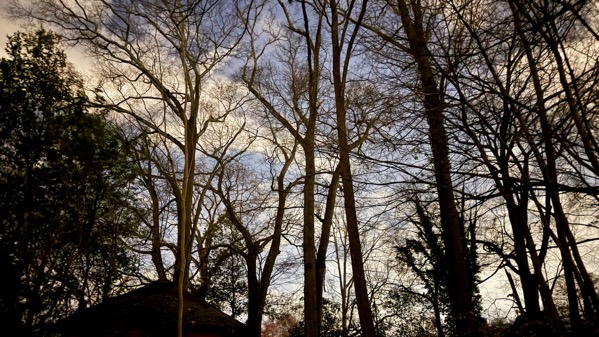
Sooooo bright
Friday, 14 February 2025
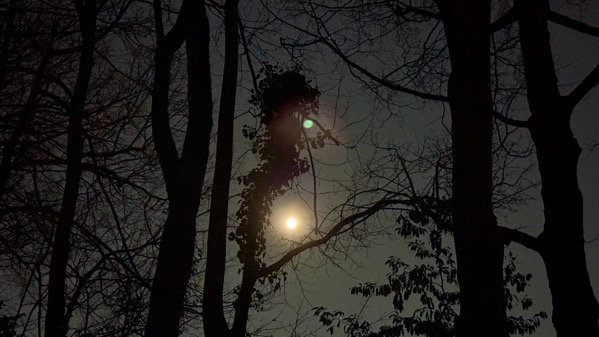
The moon was bright this morning, even just after 6am. Clear and cold.
Friday, 14 February 2025
The moon was bright this morning, even just after 6am. Clear and cold.
Thursday, 13 February 2025

The “possible five inches” of rain turned out to be about two-and-a-half, which is far less…dangerous. Even more exciting: the sun came out almost all afternoon.
Wednesday, 12 February 2025
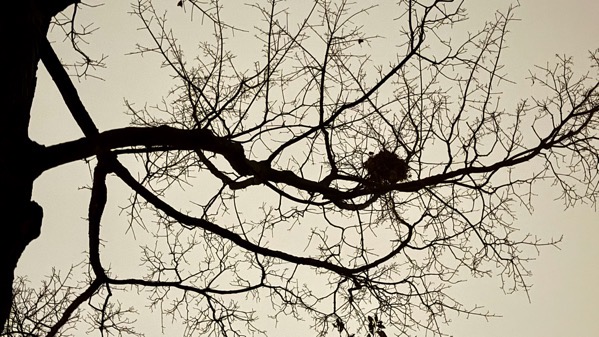
It really doesn’t look like it, but this is a night shot, from a few minutes ago. My guess is that the unbroken drippy cloudcover is reflecting the light back and back again, so the sky isn’t dark? Goodnight, squirrels.
Tuesday, 11 February 2025
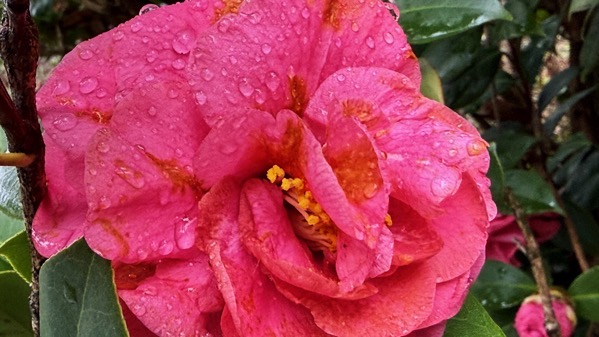
Today’s precip was on the misty-moisty end of the spectrum. The prediction I hear for the next two days is deluge…perhaps five inches.
Sunday, 9 February 2025
Time-change drowsiness got me, and I flaked out just before 9pm, with a brain that was half-asleep by 8:30. Adjusting sleep-wake schedules is tougher than upping reps.
Saturday, 8 February 2025
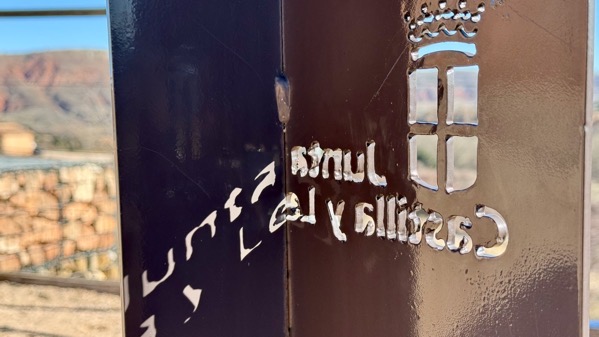
Clever signage from our trip that I neglected to post…as in, I already had too many photos selected for the day’s post…. The letters and symbol were cut from the sheet metal, when the light was bright, produced a…what’s the opposite of a shadow? A pass-through of light?
Friday, 7 February 2025
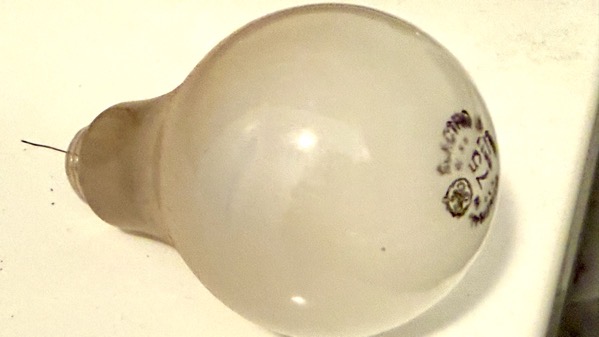
Above our washer-drier is a tube light. When I flipped it on while processing the dirty laundry we brought home with us, the bulb blew and fell onto the drier. I have yet to dig out the socket part that stayed in the tube.
It’s dangerous being home?
I managed to stay awake last night until shortly after 7:30pm…and woke up at approximately when we had been getting up in Spain. Errg. Already yawning now…. My body isn’t proficient at fielding time changes.
Thursday, 6 February 2025
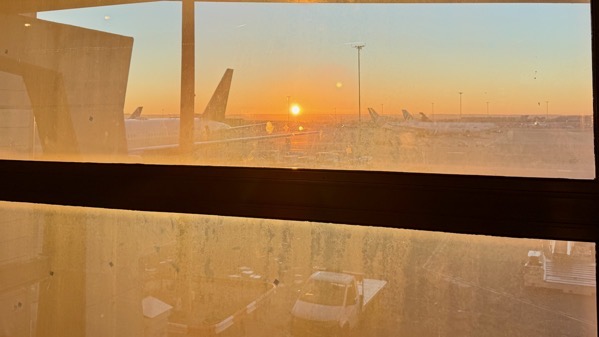
We got to see the sunrise while at the airport…waiting.
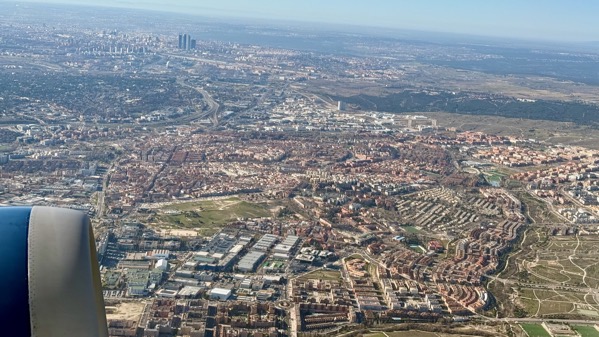
Finally, we took off!
[Insert hours and hours of westward movement.]
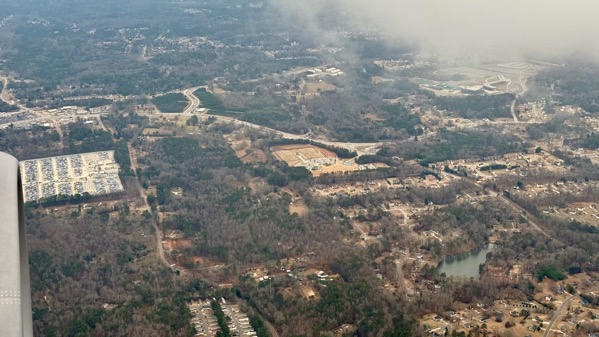
What a relief to reach ATL, and land!
[Skip discussion of extremely flawed layout of ATL airport…necessitating an at least fifteen-minute walk to get to passport control from our gate, and a fifteen-minute bus ride to the “other side” of the airport from the international terminal to reach the MARTA station.]
Wednesday, 5 February 2025
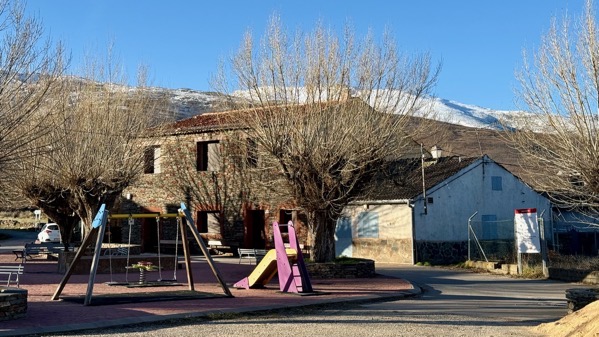
Our departure…leaving from beneath the looming, snow-dusted Sierra de Ayllón, amid ice-crystals…mostly melted when we got going (lots of sun exposure).
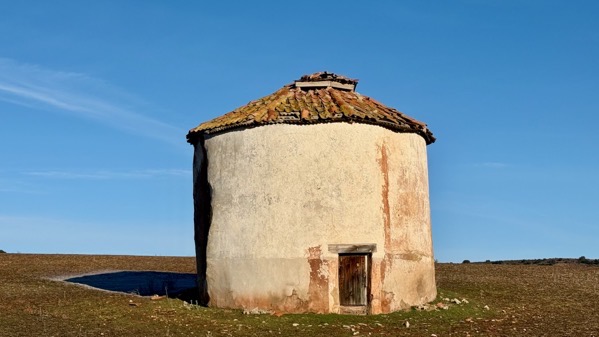
We came upon these round structures in/near several towns, but I couldn’t figure them out. They seem clearly for storage, and the roof is vented, yet there’s only one door, and it’s small. My guess is they’re something to do with grain production…mystified.
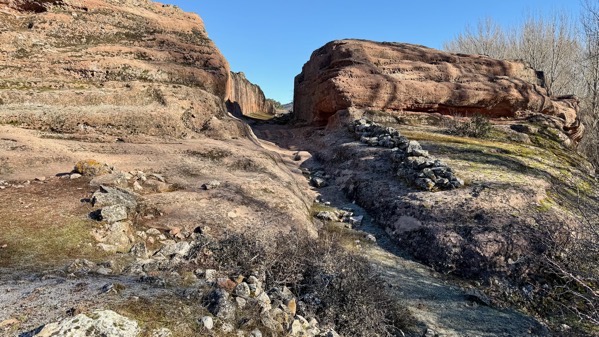
Our first stop was Tiermes, which was a large CeltIberian fort that allied with Numancia (and others), and held out against the Romans for longer than other places (probably routed about 133 BC). The Romans remade the settlement, adding homes, a large aqueduct, a forum, temples, and more. The sandstone hill also had earlier Neolithic and Bronze Age occupations. Here’s the southeast gate; all the gates to Tiermes that I saw had a bend like this…I assume offering an additional level of security.
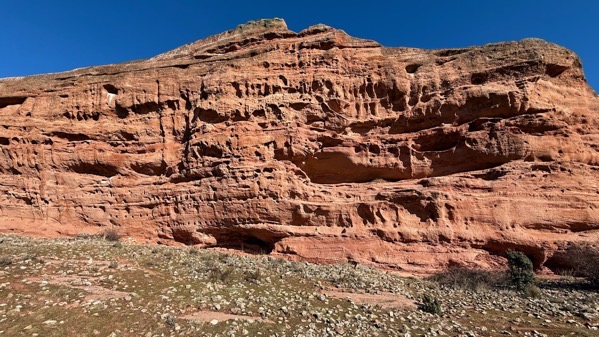
The southern face of the hill is mostly a wall of sandstone. The horizontal rows of holes held beams that made ceilings and floors of multi-story structures.
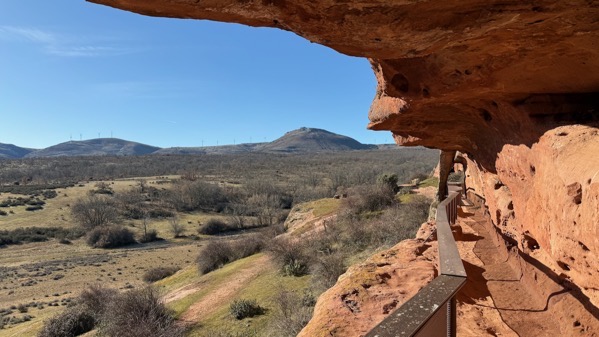
Here’s a look along the aquaduct from where it (presently) goes into the hill. This is just to the left and above the last photo.
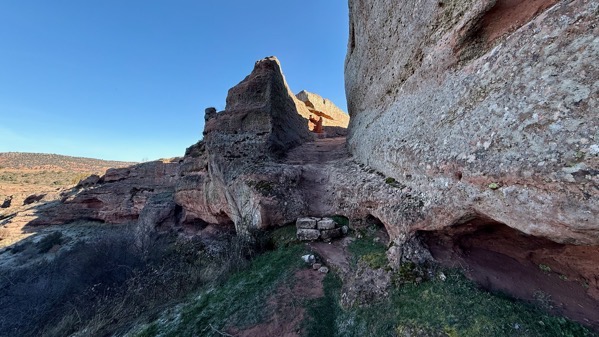
This is the west gate, surely more eroded than when Romans and their CeltIberian predecessors used it…or maybe this was just a Roman gate.
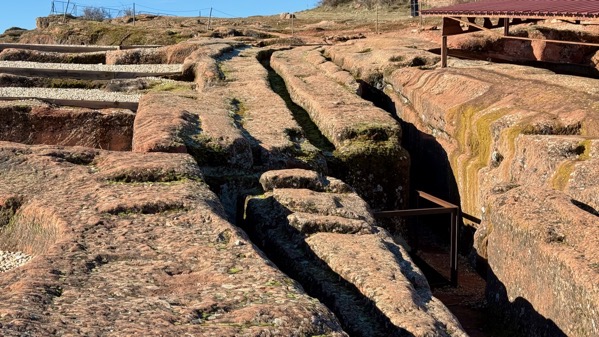
The wheels of carts dug into the soft sandstone, and later eroded into deep trenches.
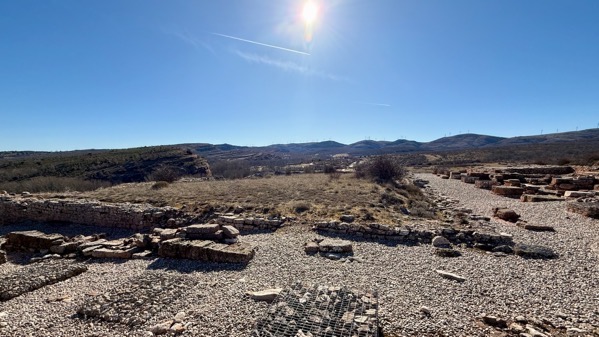
That vegetated (grassy?) area is the Roman forum. These photos do not do justice to the huge area of this settlement, and I mean huge in pre-Roman CeltIberian times especially. My walking track was almost two miles, and I missed some highlights. Of course, I have not seen the excavation reports, which may describe many unused (often trash-collecting) rooms, as often happens for Puebloan settlements in southwest North America.
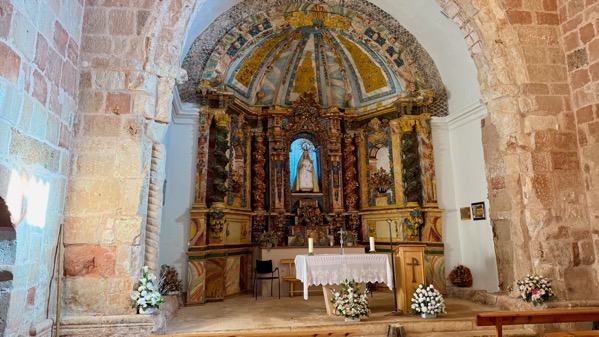
Our last stop on the present Tiermes property was to step inside this Romanesque chapel/church, probably built in the late 12th C. I don’t know the date of the interior. There’s no longer any town nearby and I don’t know if there are scheduled services any longer.
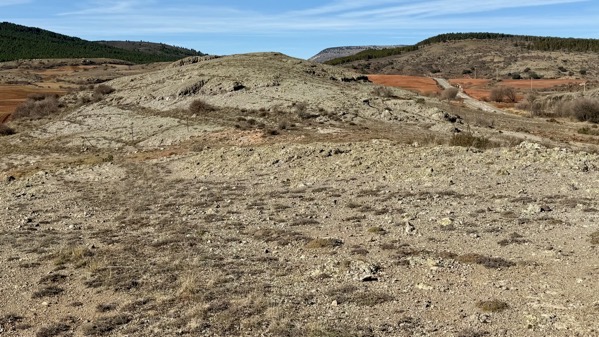
Our next place of interest was the Cerros volcánicos de La Miñosa, a very small area that constitutes an unusual micro-environment.
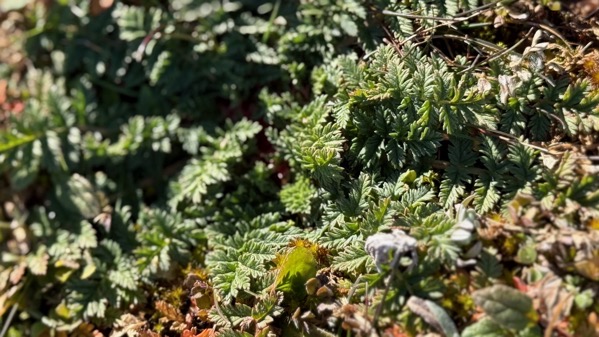
One species typically mentioned is Erodium paularense, or the Paular geranium. This might be it. Interestingly, a few hundred meters away archaeologists have recorded six Paleolithic (meaning early) sites…perhaps because the ancients obtained something important to them from the volcanic zone. Dunno, just hypothesizing.
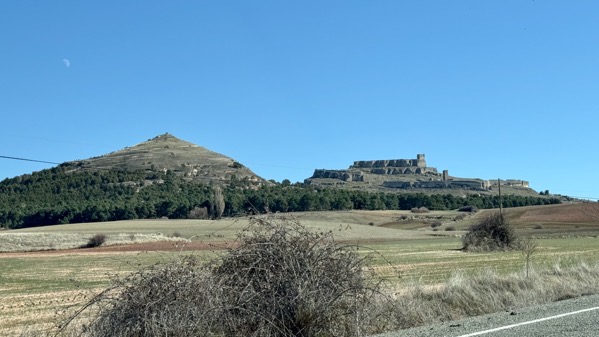
The pointy hill has a Castro atop, and the other is a Castillo. Off to the right on the slope below the Castillo is the Medieval (as in: most of the central buildings date to…) town of Atienza.
That’s enough for today. Tiermes remains among the most amazing pre-Roman/Roman sites I’ve yet seen.