Musings
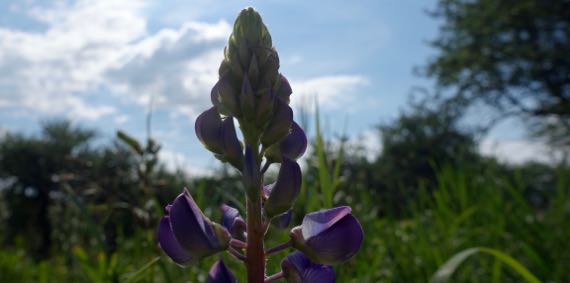
We’re getting toward the end of the lupine, with many fully in seed pods. A few are still opening at the tips, however.
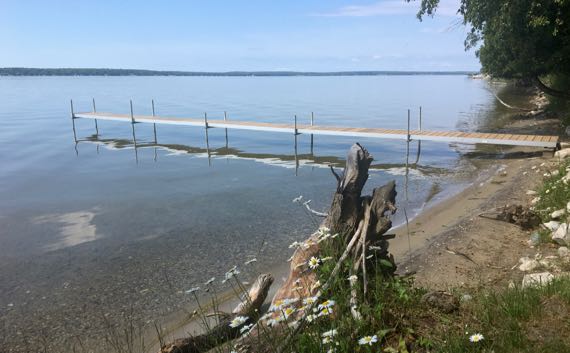
Farm news: ML and DL have installed a new dock! It’s a beaut! Smells like fresh lumber.
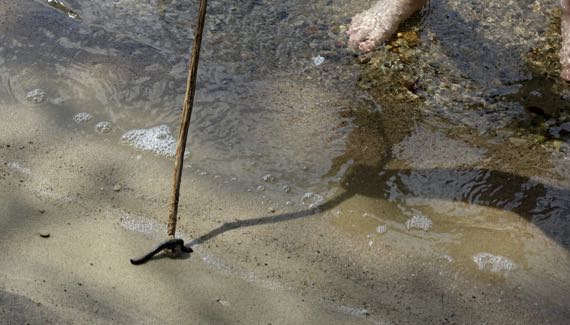
I channeled Diana the Huntress (21st century version) and stalked the shallows for the lithe and limber lacustrine annelids, finding eight in about ten minutes and removing them from the breeding pool. And the lake. It may have been the perfect stick I found for catching them and tossing them into the brush that brought me luck. But not them.
The late afternoon became overcast and waves of drippy rain, straight down, so the windows all could remain open.
Posted at 7:19 PM |
2 Comments »

This fawn sighting is from yesterday, overlooked due to poor monitoring by yours truly or it would have appeared (ahem) then. The photo is by the Guru. The fawn was nowhere near this close when I saw (spotted? hahaha) him/her. Kudos to the Guru for this digital capture.

These potentilla blossoms were not mewling and strolling away (like the Odocoileus virginianus of yesterday), so I managed to capture them in all their glory. What gutsy insect is eating the petals?
Turns out that Potentilla is now Dasiphora…geeze, can’t those taxonomists settle on genus/species???? huh????
Posted at 9:34 PM |
Comments Off on Observations, localized

We spent most of the day at a 170-acre living history village-and-rural-area that is paired with an indoor museum of transportation. We began in the rural area. At least a half-dozen stone cottages in different styles and dates offer the opportunity to think about heating/cooking with coal or peat turves and living in close proximity to farm animals. One cottage (no photo) even had a byre at one end and family space at the other—with no wall in between; maybe it was only used seasonally, however.
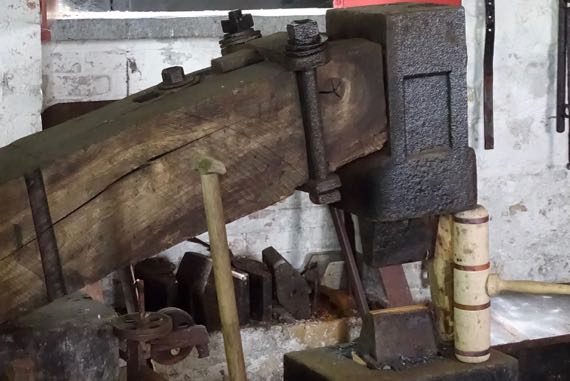
We enjoyed a long chat with a spade-smith; he makes spades, not shovels (shovels are for loose materials). This is his water-powered trip hammer. 3K pounds of pressure per smack. No water flowing to make it trip today….
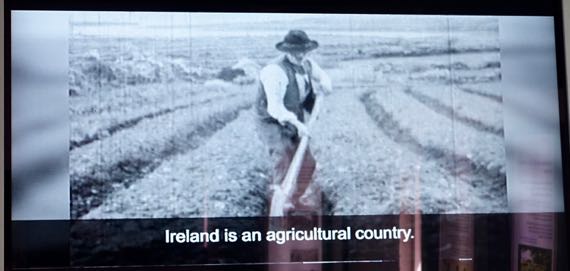
And this is a shot from a 1940 news-reel/documentary about spade and shovel making in the town of Monard, County Cork. With water power and coal-fired forges. Laborers worked six days a week. On the seventh they went to church, played gambling games, and played music and danced. Ireland had a great diversity of spade and shovel types. Over a hundred, and then many different sizes of each. Diversity.
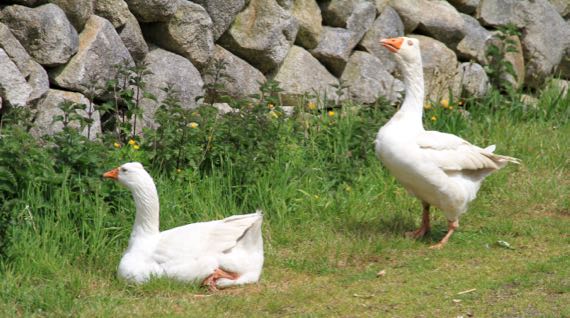
John tried a bullfighter move with these geese. No horns involved, thankfully, just hissing.
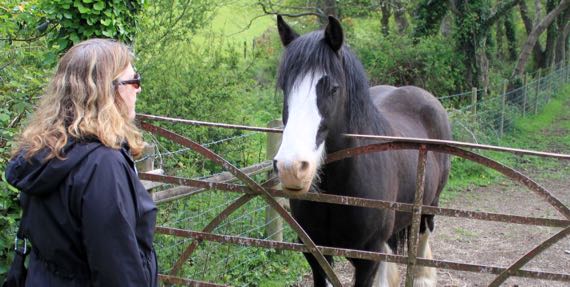
Me, I had a chat with this horse (we think in a field next to the museum property).
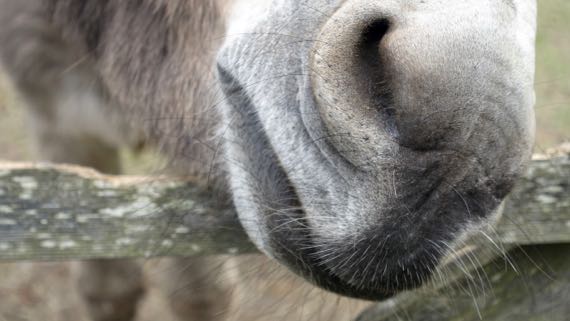
And we both had a moment with this donkey. One lady looked around for grass-not-nettles and fed her a small handful. Happy day for the donkey.
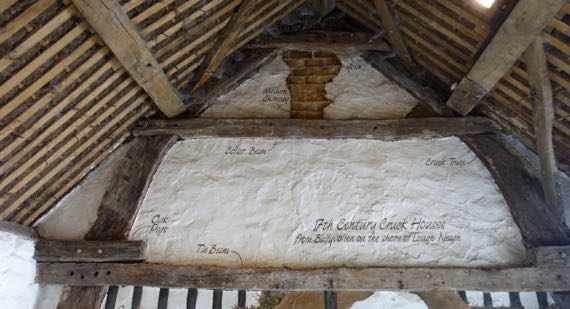
This wall is cut-away and labeled to highlight the crucks—those curving beams that go up from the ground and support the roof beams. I think folks used ropes to bend trees to make the needed shapes. Crucks were also used in ship-building.
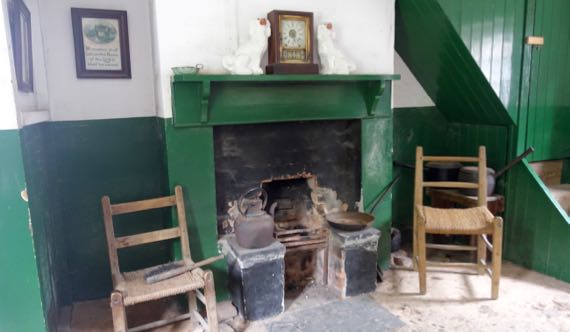
Here’s the fireplace in one apartment in a row of village/urban row-homes with this small room downstairs, two teensy bedrooms upstairs, and a tiny yard out back with a water closet and coal bin, and a bit more room for washing laundry, etc. I thought this is the kind of place where TB would have spread quickly.
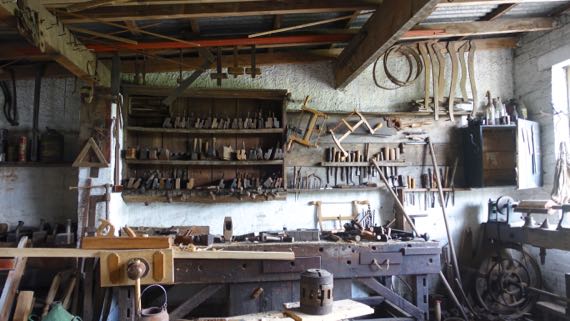
Look at the rows of tools etc. in this carpenter’s shop.

Next we went across the highway to the Transport Museum. Of course, we started with trains. This is the shamrock detail on the County Donegal Railways seal.
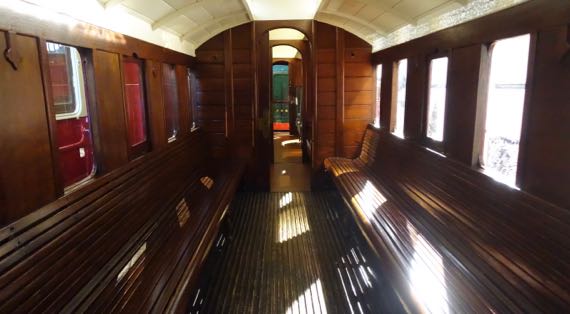
Here’s the third-class area on a train carriage. They had to pass a law in Ireland to make the railways put roofs and sidewalls on third-class spaces. They used to be like riding in a cart—just relatively low side walls, with riders fully exposed to the weather.
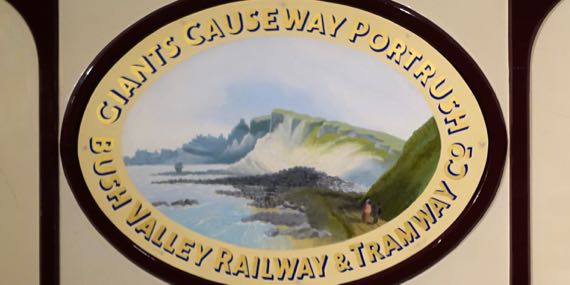
Loved this stylized image of Giant’s Causeway and the cliffs that frame it even today. I think I read that this began to be a travelers’ destination in the 1700s. !!
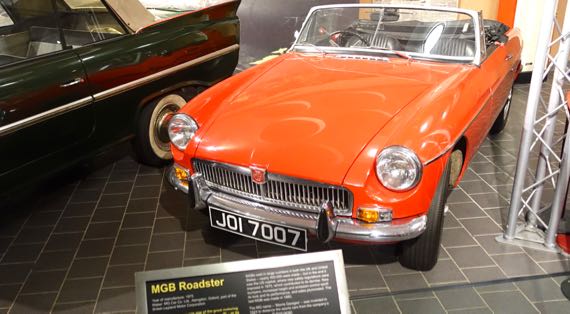
Cars, too! An MGB Roadster, 1975 model.
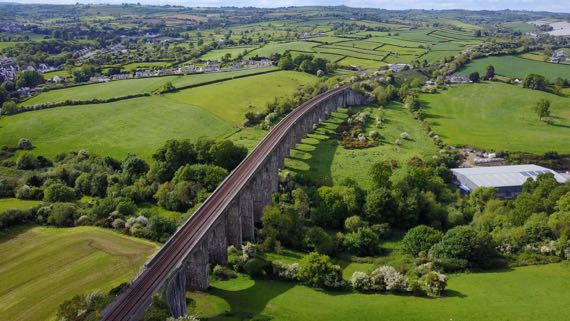
Droney made two short runs, and the Guru captured the lovely shadow from this long railroad bridge during the first one.
Posted at 4:48 PM |
Comments Off on Tired of ruins?
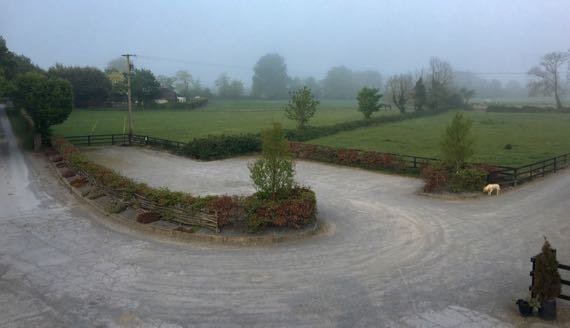
This morning, fog shrouded the horse farm where we stayed last night. Love the dog on patrol.
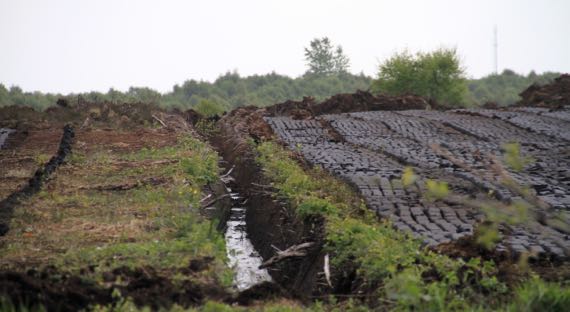
As we rolled out, we came across another mechanized peat harvest area. I think the depth of the drainage ditch indicates how deep the harvest of peat will extend. Across the road, it looked like at least six feet (vertically) had been removed. Now there’s a national movement to clean up the air by limiting coal and peat burning in residential and noncommercial buildings.
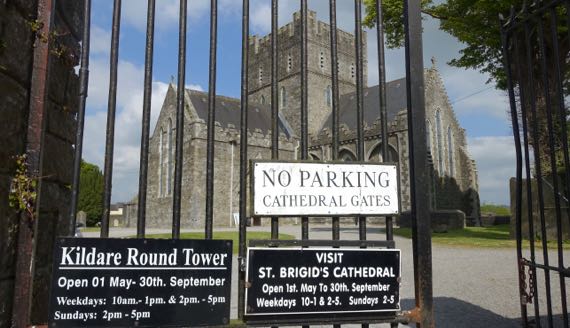
We made our first stop at St Brigid’s Cathedral in Kildare. Brigid lived from ~453 to 523. She founded a monastery here in ~480. This building dates to 1223, and has substantial 19th-C reconstruction. There’s an odd rectangular area outlined by a low wall in the churchyard that is called the Fire Temple (rebuilt last in 1988, I read), marking where it’s believed that nuns kept an eternal flame going to honor St Brigid. It’s somewhat like Rome’s Vestal Virgins, no?
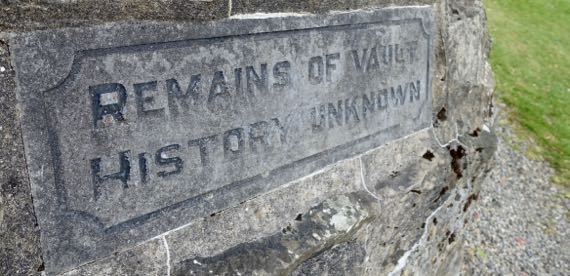
Loved this sign on a strange nubbin of architecture—Remains of Vault…History Unknown.
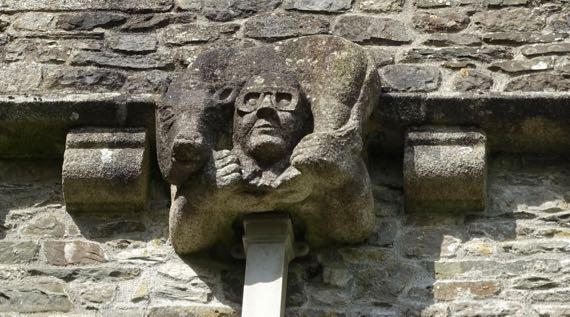
I could not figure out this grotesque downpipe detail on the church. Aviator goggles? Bull or cow around the neck?
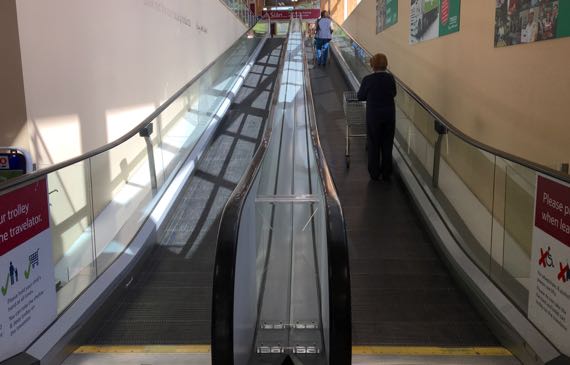
Next stop: Tesco for “triangle” sandwiches and snacks. I was astounded that patrons must “stay right” on the travelator. This is a drive-left country…although pedestrians may pass right or left…adding to my confusion.
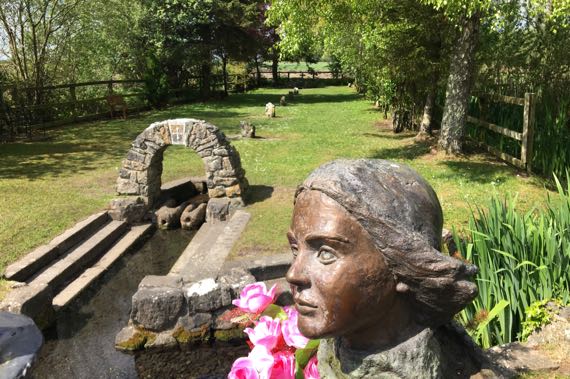
Just south of Kildare is a pilgrimage destination, St. Brigid’s well. It’s relatively elaborate. We had to wait on a busload of pilgrims (from Texas, from what they said) to walk past our parking space before we could exit along the narrow lane.
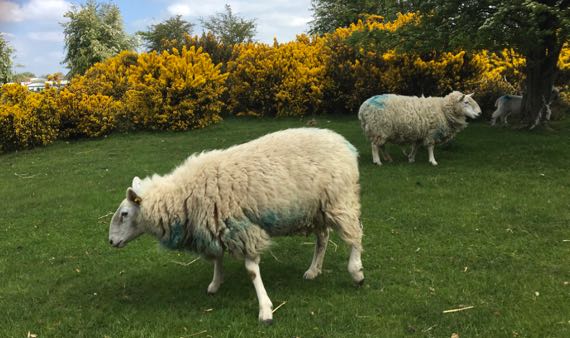
These sheep are browsing on The Curragh. Curragh means race-course. In ancient times it was a common. Much of the time it was used as sheep pasture, but also as a general rendezvous for mustering military forces. The earliest reference dates to the
10th C, and old documents indicate an óenaig (periodic fairs, wake games) was held here. So, it was a multipurpose space not owned by a particular person. What’s left of The Curragh has a formal racecourse where the Irish national races are held, a military base, and still has grazing sheep. The Luftwaffe bombed it on 2 Jan 1941.
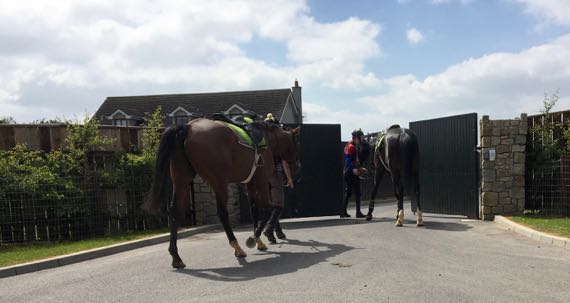
Part of The Curragh also has stables, etc., of the Irish National Stud, where Thoroughbreds are bred; the facility includes several gardens (why?).
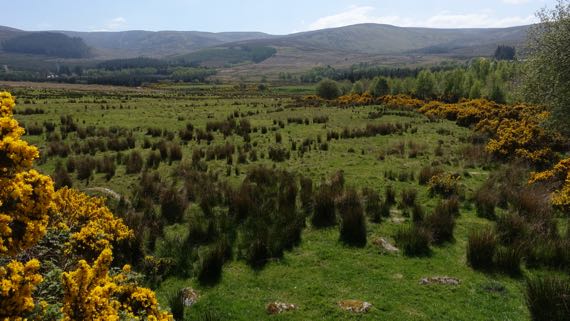
Next, we headed into the Wicklow Mountains! We went through Wicklow gap (near here), 478 meters. This looks very like moorland in Scotland and England.
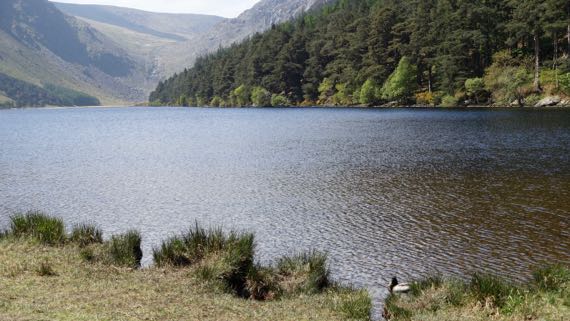
The east side of the pass descends to Glendalough, or Gleann Dá Loch meaning valley of two lakes. This is the larger, upper lake. I’m facing the main drainage into the lake. Note Mr. Mallard. Mrs. Mallard is busy feeding in the reeds and not showing herself.
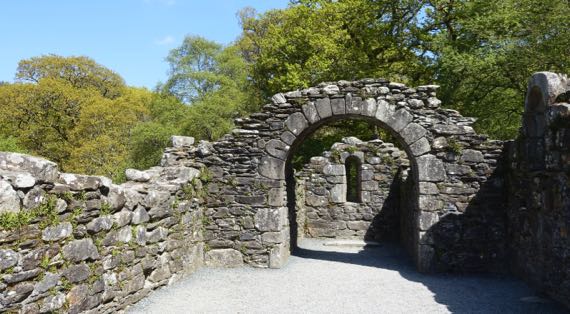
There’s a huge monastic complex here, well known and heavily visited—an easy day-trip from Dublin. We saw many school-kids, high-school age, and heard them speaking Irish Gaelic. This was the 11th-C Reefert Church, way off to the west from the core of the monastic complex. I quite enjoyed this ruin as we visited it alone, no hubbub of visitors in this area of old trees and bird-calls.

I found many of these wildflowers with trifoliate compound leaves. I know it’s the common wood sorrel (Oxalis acetosella), but for today it’s the shamrock (generally accepted to be a clover).
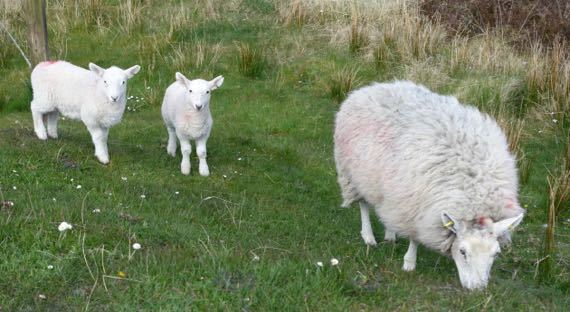
We also made a loop up to Sally Gap, the next pass north of Wicklow. We found these half-grown lambs and their momma enjoying the heights and dining on the roadside grass. Most of the “wild” vegetation is gorse and heather, so this is the best grazing. The heights also have many peat-harvest scars.
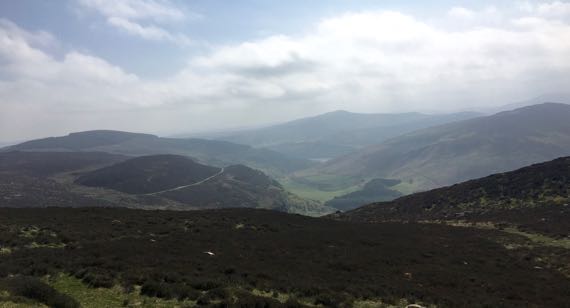
This is the view back toward Glendalough. We found the haze denser with the elevation and think the late afternoon hour also contributed to it. Stunning.
Posted at 2:42 PM |
2 Comments »

I took my shower today with three ladybugs. [Get yer thoughts outta the gutter.]
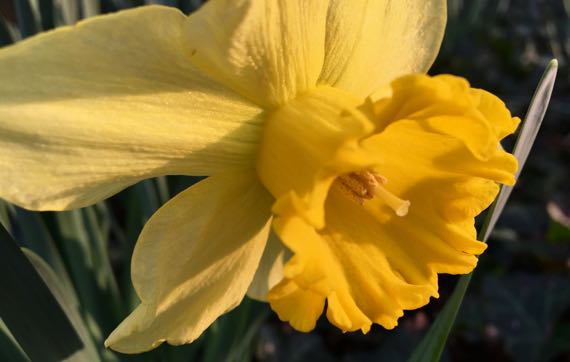
The early bulbs are…flowering? fluorescing?
Why is it never Woodchuck Day?*
This has been on my mind for…12 days….
Posted at 11:44 PM |
Comments Off on Report (catching up)
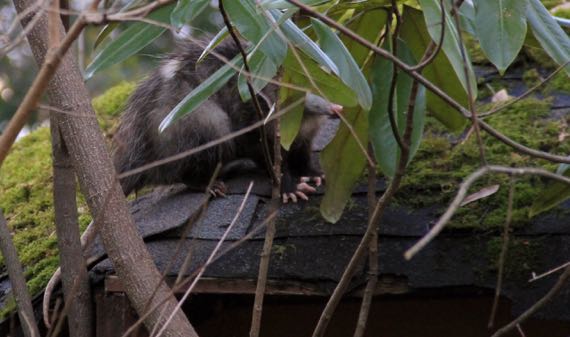
My, what’s that there in the back yard? I see toes…claws! And a nekkid tail.
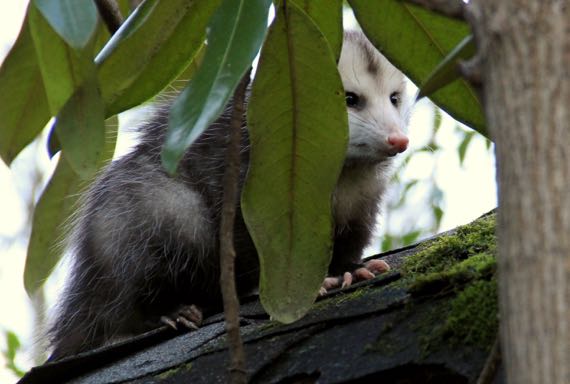
Ah, there’s a pointy nose and beady eyes, too.
Posted at 11:58 PM |
1 Comment »
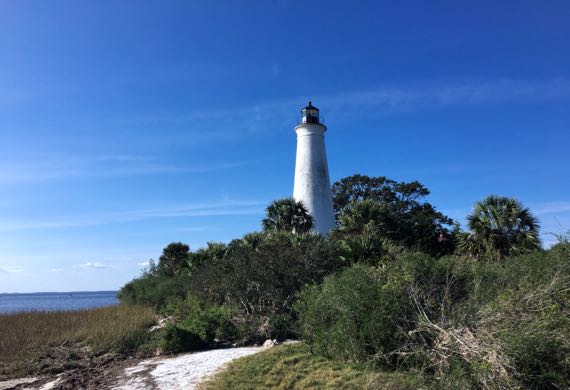
Hey, we’re on the Gulf Coast, so of course we saw…a lighthouse!
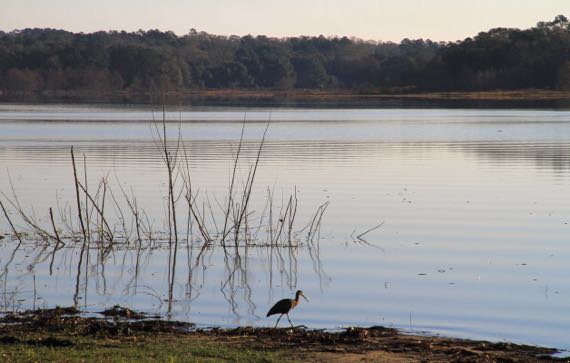
And wading birds! Is this a limpkin? I think so…. Watched her/him for some time….
We also saw birds of several colors and configurations (including Snow Birds), two gators, one armadillo (wait, that was yesterday), shrimp and oysters (on our plates)….
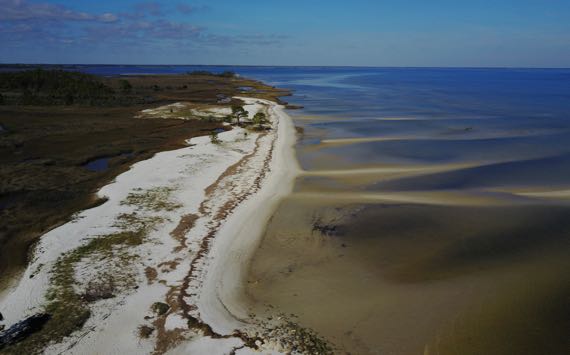
But the best shots of the day were from Drone-y/Roney…above this white sand beach with the narrow peninsulas extending out from the beach during low tide…
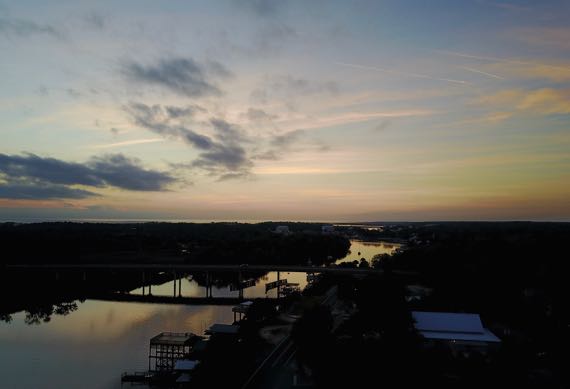
…and this sunset shot. You can see a sliver of the Gulf past the river….
Posted at 8:38 PM |
Comments Off on Shoreline fun
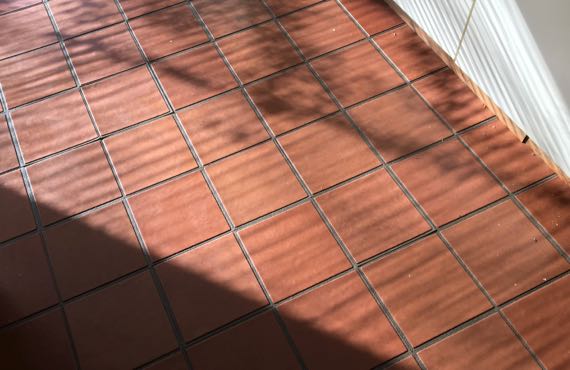
When we wore working out the design of the rebuild after Tree#1, I wanted a big window to the south, with a balcony above to shade it during the summer, but not protruding enough to cut the view out the window too much. Is this possible, I asked the architect. Yes.
And, so, this time of the year the sun floods in, and I am cheered.
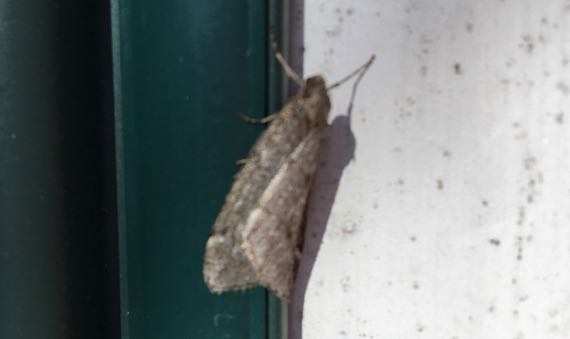
I guess my eyes were distracted by the sun when I tried to capture the soul of this moth resting on the doorframe. Hah! Maybe I’ll have to get one of those clip-on lens gizmos, again….
Posted at 10:22 PM |
Comments Off on Observing nature
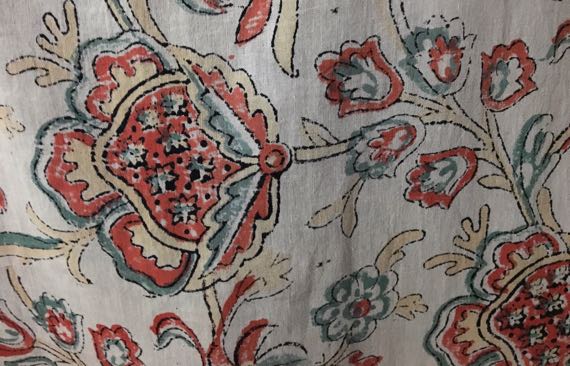
The other day I read that narwhals are excellent at finding cracks in the sea ice (breathing holes) and mapping their environment using echolocation. The part that stuck with me is that they use “phonic lips” to make the clicks and buzzes. Not sure if that’s a typo…phonic lips to make phonic blips?
I also read today that in Medieval Europe they seeded fields with both rye and wheat, and both the mixture and the flour/bread made from it were called maslin. Turns out the word is etymologically related to miscellany, and can also be used for a metal blend mimicking brass, so that there could be a maslin kettle. Chaucer spelled it maselyn. Note that I checked, and King Arthur doesn’t sell a maslin flour. You could make your own….
This program accepts phonic lips but wants maslin to be marlin. Not.
Posted at 10:22 PM |
Comments Off on Do I read too much?
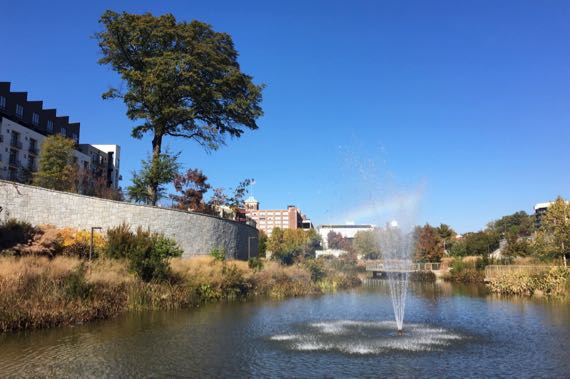
We couldn’t smell the wildfire smoke, so we went over to the Old Fourth Ward park and walked around the lake, up and down, but took it easy. (Knee MUCH better, but still a tad ailing.)
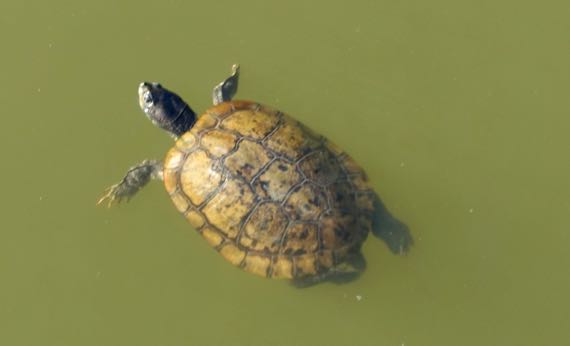
And, we even spotted a turtle! Minnows (not pictured)! Slightly larger feeeesh (not pictured)! So, despite the horrendous murkiness, this water supports turtle food, and hence, at least one turtle.
Posted at 8:26 PM |
2 Comments »