Colorful sunset
Friday, 14 March 2008
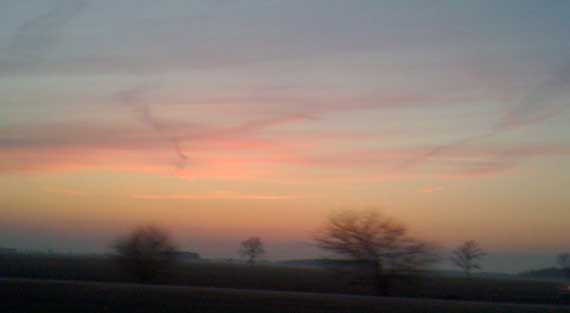
Sometimes, even through travel-smudged windows, sunset from the Interstate can look mighty fine.
Friday, 14 March 2008
Sometimes, even through travel-smudged windows, sunset from the Interstate can look mighty fine.
Thursday, 13 March 2008
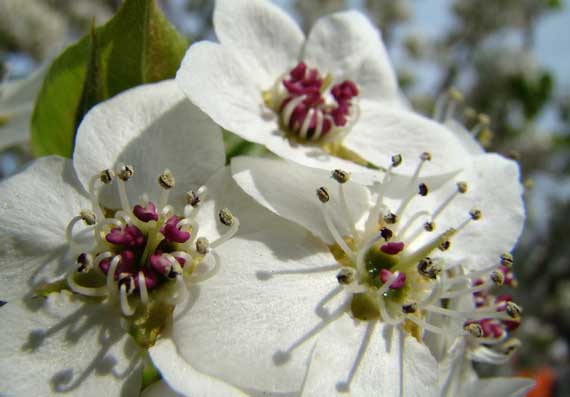
…the bees didn’t stay in one place long enough to have their picture taken….
Actually, this may be a pear and not an apple; still both are within Rosaceae…so, I guess I shoulda thought more ’afore I labeled this Malus….
Among its meanings, bloom as a noun has somewhat contradictory references both 1) to being in the state of flowering, and 2), to the light, powdery (natural) surface deposit on leaves or the skin of fruit, e.g., apples, plums, grapes. So, in the growth sequence of Malus (and other species), bloom can be used twice—at least.
Sunday, 9 March 2008
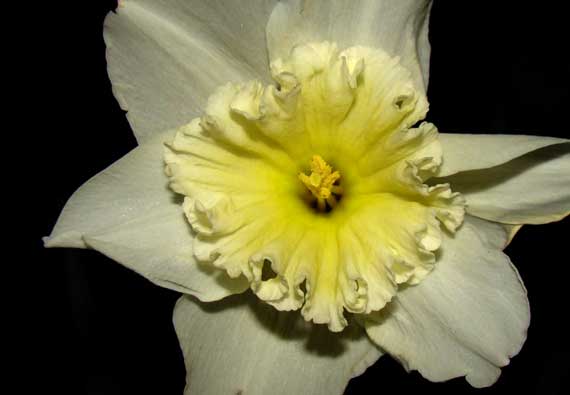
To a great degree, our vocabularies reflect the kinds of things we feel a need to express. In other words (haha), the words we originate, use and keep current in our languages reflect the things we feel a need to say. Thus, unfamiliar words judged archaic by our dictionaries are words for things we no longer talk about—or for things for which we have other or newer terminology.
One category of words that are now uncommon in American English refer to landscape features. A quick glance at place names across the British Isles reveals myriad examples, which include holm, -stead, and heath. Suffixes -bridge and -ford remain current in our vocabularies and thus are self-explanatory.
a flat piece of ground adjacent to a river that floods when the water level is high
suffix referring to place or town, of Germanic origin and related to the Dutch stad
an area of open, uncultivated land vegetated with low vegetation like gorse, heather, and grasses [differs from forests or cultivated lands, for example]
* Definitions adapted from Apple dictionary.
Saturday, 8 March 2008

Today’s All Things Considered included an interview by Jacki Lyden with an arachnologist named Gustavo Hormiga about spider species he’s identified—that’s how Lyden puts it; on his web page, Hormiga writes that his research focuses on the systematics and evolutionary biology of spiders, with emphasis on orbweavers and their close relatives (Orbiculariae).
Interesting and recommended.
I was surprised, however, that they didn’t work into the story any comment about the fact that the scientist’s surname translates as ant.
Extra credit if you know who El Hormigón—meaning The Big Spider—is!
Thursday, 6 March 2008
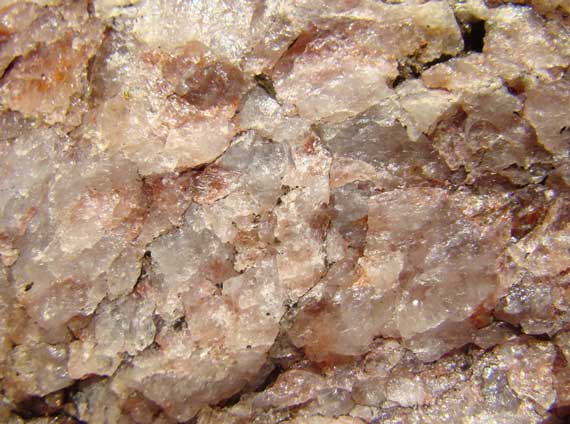
Rose quartz, if I don’t miss my guess, but I’m no geologist….
I had never thought of managing a garden to increase insect life in general (not just butterflies—sorry KW—for example). Actually it’s just a smokescreen for managing for biodiversity and native species.
No more privet. No more nandina. No more Acer palmatum. Sadly, no more daffodils or pansies, both blooming now….
Tuesday, 4 March 2008

The pool just above the Pocket Falls, in Sunday’s sun.
Looking forward to hearing the election results from todays voting/caucus activity, fully realizing that this news probably won’t surface until tomorrow—or possibly later.
Sunday, 2 March 2008
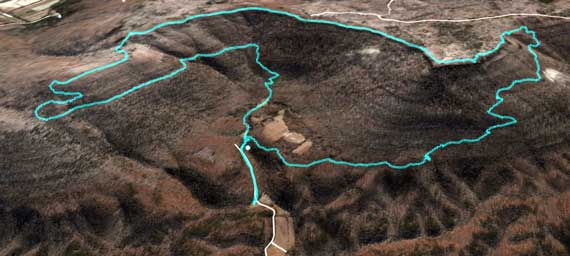
Our route, courtesy of our aging Garmin and Google Earth.
Good thing it was downhill for miles back to the car…. This loop, around and through The Pocket, totaled 9.71 miles. Whew!
It’s still the earliest of winter/spring transitions up in NW GA. We found only three sets of wildflowers, although I saw non-blooming greenry almost constantly along the path.
For Googlers and other researchers, there are two hiking areas/landforms called The Pocket in NW GA. The other one is on the edge of John’s Mountain in the Armuchee Ridges (that looks like you’d say are-moo-chee, but locally they say are-murr-chee; go figure). This one is nestled up next to Pigeon Mountain. Cherokees took refuge across this area when Intruders began to proliferate across this continent, and they have contributed substantially to the surviving place names….
Wednesday, 20 February 2008
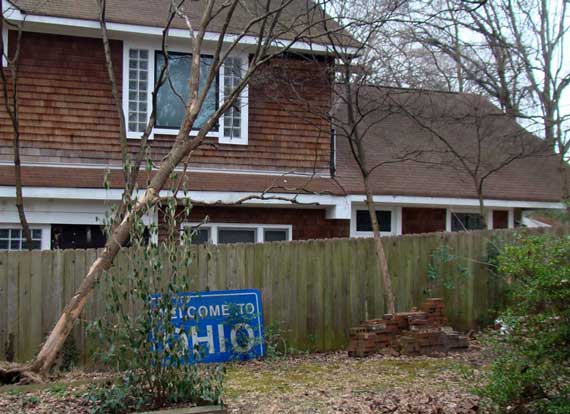
Getting this dead dogwood* safely onto the ground was a weekend project by The Logger. Dogwood trees have pretty hard wood, like fruit trees, and pretty, too!
Ah, you ask about the glittering and decorative “Welcome to Ohio” sign—that was a b-day gift years ago to The Logger back when he was merely A Yardman. It’s from a movie set. The give-away: unlike a real sign, there’s no prominent mention of a Governor….
* Like many dogwoods around here, I think this one was infected with anthracnose—click here or here for pathology text and pictures…yum!
Sunday, 3 February 2008

I forgot to mention that yesterday’s Intrepid Hikers found a bit of snow/ice in a very sheltered north-side spot right next to the AT.
No sign of the earliest spring vegetation, though. I saw a few vultures high up, but neither heard nor saw birds among the trees. Instead, I heard the spring-blush of water tumbling down the balds and ledges and steep slopes—a very happy sound in these drought-times….
Saturday, 2 February 2008
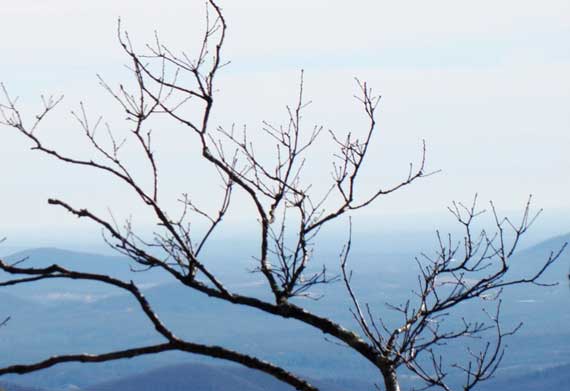
Today was a gorgeous day for a walk, so we headed for the mountains! This view is looking back toward the Piedmont from up above Neels Gap on the AT.
And you can see why they call this area the Blue Ridge Mountains!