Musings
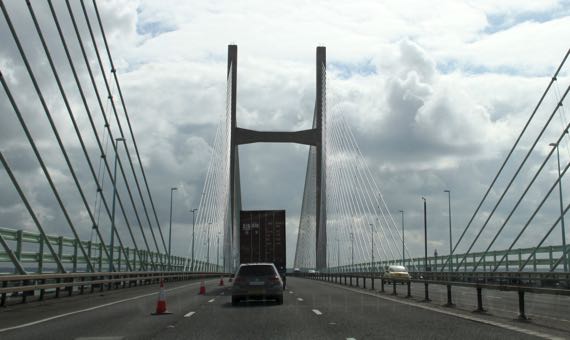
The Severn Bridge we took into Wales opened in 1966. I bet traffic patterns changed immensely, even with the substantial toll. In 1996, the Second Severn Crossing opened; set a bit downstream, it especially carries vehicles flowing to/from southwest Wales, including Cardiff and Swansea. The powers-that-be had the two combined into a single concession to share toll collection and debt repayment. So, we entered Wales on the old bridge (not that old), and left on the new bridge. Bye-bye Wales, we are London-bound with two Roman stops en route.
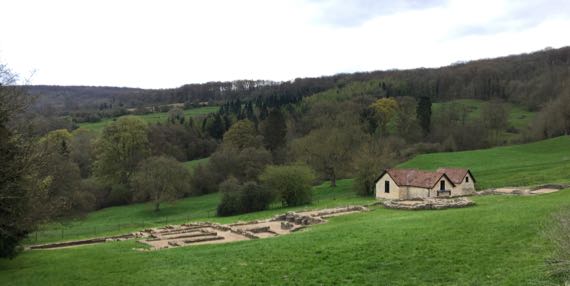
Discovered in 1818, this modest Roman villa commanded the upper area of a smallish drainage, and was built into a hill. Construction began in the AD 250s, and the place was abandoned in the early 400s, when the Roman military pulled out of Britannia. The mosaics are under the roof. The place was ours to visit, quiet except for distant pheasant squawks and generic country sounds.
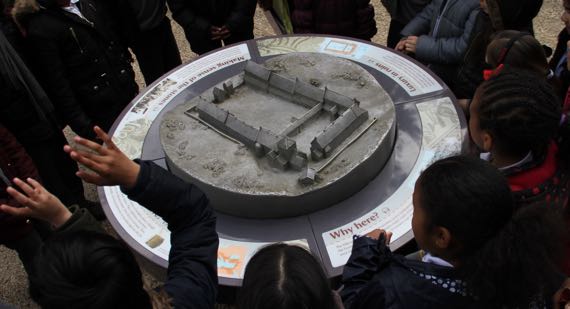
Chedworth Roman Villa, on the other hand, was bustling with docents and vendors, school groups, walkers, and generic tourists. The complex grew over about the same period as the previous villa, and also was set into a hill’s upper slope. This complex became much larger, and much more architecturally elaborate. It ultimately had two bath areas, for example. In this view of the metal maquette, uphill is to the lower right, with the lower, larger courtyard planted into a garden that opens to the upper left (actually east) and views of the valley.
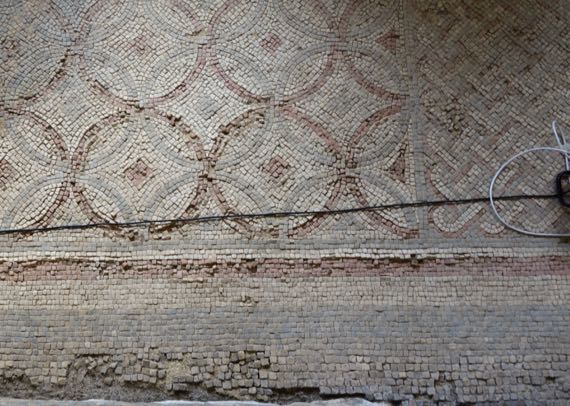
This was among the earliest mosaic floors at Chedworth, along a passageway in the upper “horizontal” bank of rooms that faced the valley (late AD 200s). The earliest construction was up here, three separate buildings that eventually became a single “range” of attached rooms.
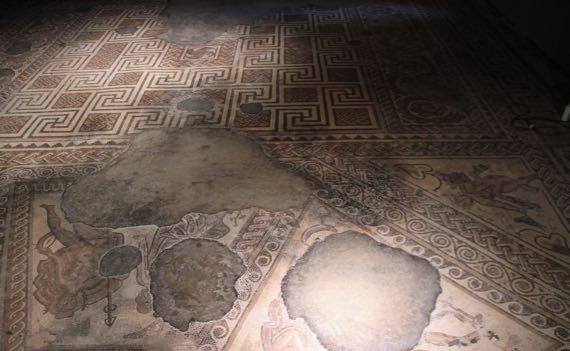
In the early 300s, this elaborate dining room was added, with considerable wealth invested in the floor. This was a typical choice of elite homeowners, as the dining room was the principal location for entertaining (plus the decorative gardens).
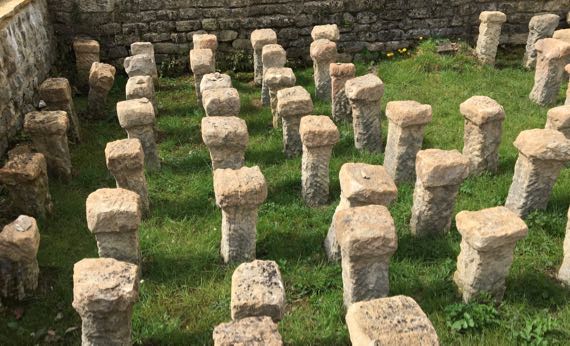
Love the mushroom pillars of the hypocaust floor…. It seems to me that more rooms than in a Rome-area Roman villa had heated floors, I’m assuming because they had the water/firewood to make the heat, and because it was colder than Rome here, and this was how elites made living in the colonies more like life at the imperial center, and thus more Roman.
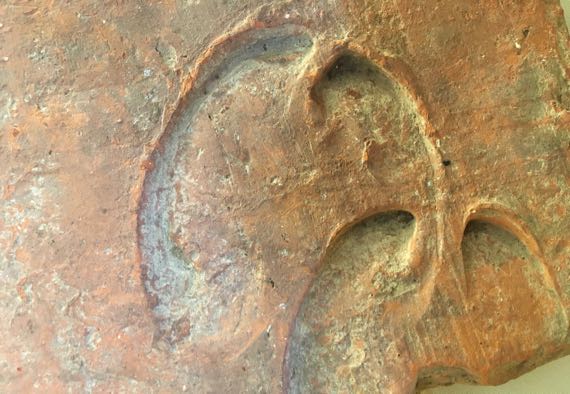
Just one detail from the museum, from the display of impressions in roof tiles. The tiles were made locally, but probably not on the villa property. These are ox-hoof impressions. Other displayed examples were dog, cat, human fingers….
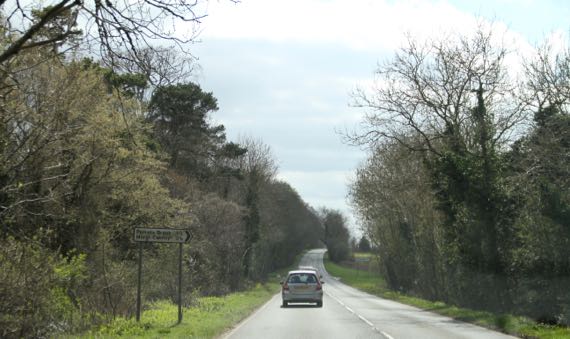
Within ten miles of Chedworth are eleven villas, including Great Whitcombe that we visited earlier today. Chedworth is between two roads that radiate in a northerly direction from Cirencester. We misheard our navigation-voice say that place as Siren-sister (hence today’s title); it’s pretty close. While that sounds like the Roman name, it isn’t; the Roman name was Corinium Dobunnorum. During the time of the villas, Corinium also had many domestic complexes with elaborate mosaic floors and other markers of wealth. Money could be made here, both through agricultural pursuits and through regional and long-distance trade. Anyway, this modern road follows Fosse Way, the Roman route to the NNE out of Corinium. The complete Fosse Way went NNE from Exeter to Lincoln (today’s names).
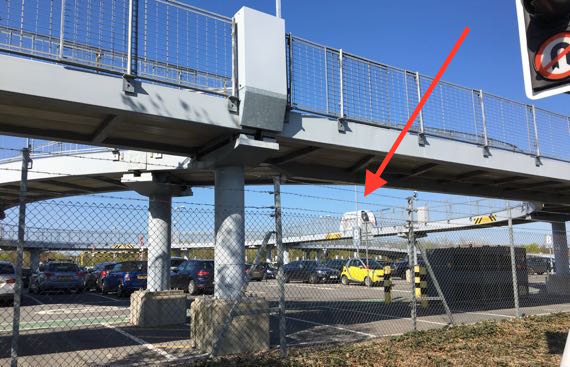
En route around Heathrow’s runways to the car rental return, we again noticed these little human transporters on a rail. I only got this one crappy picture, at a distance. These self-driving units are called pods, and the service is aimed at business travelers, linking a special parking lot with Terminal 5. It opened in 2011.
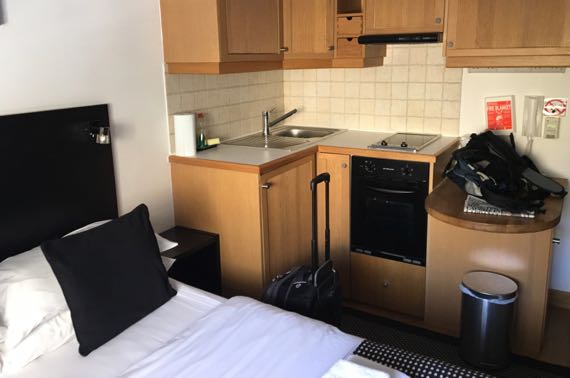
Our London home is an Ikea special. The folding chairs are actually from Ikea. If you have long arms, you can almost make coffee from the bed. We have a window with a park view and wifi; life is good.
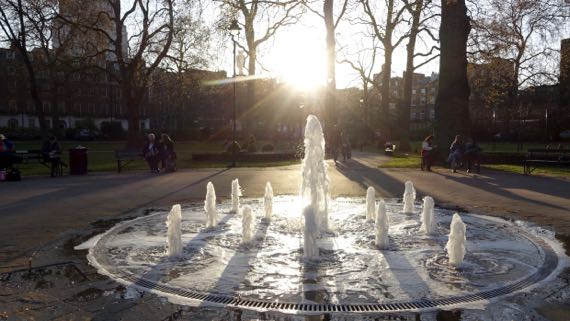
We took off for the Thames and points en route. We thought we might take the train back, but hoofed it the whole evening. Here’s a fountain in a nearby park (not our window-park). We saw several groups sitting on the grass enjoying an early meal/snack.
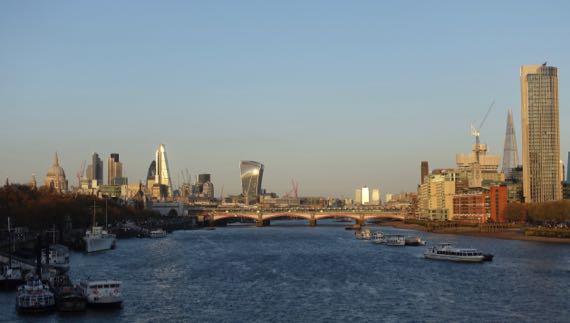
We saw the Thames in the last of the day’s light. And heard Big Ben chime at 8pm.
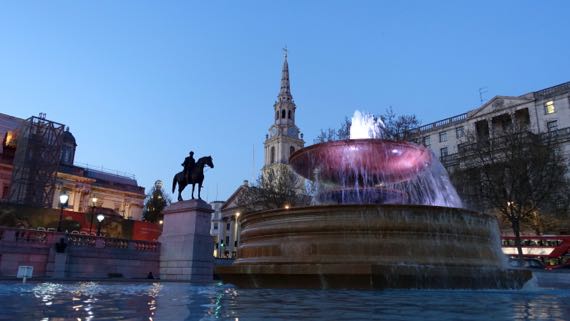
Turning north, we entered Trafalgar Square. Fountains. Spires. Blocky buildings. Man-on-horse statues.
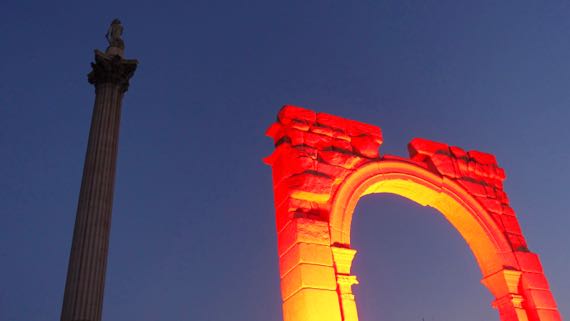
And…Admiral Nelson towering over a red glowing Roman arch. Art. The Guardian says it’s a Carrara marble replica of Palmyra’s Arch of Triumph, recently destroyed by Daesh/Isis. It is here for three days and gorgeously lit.
Posted at 10:22 PM |
Comments Off on Siren-sister
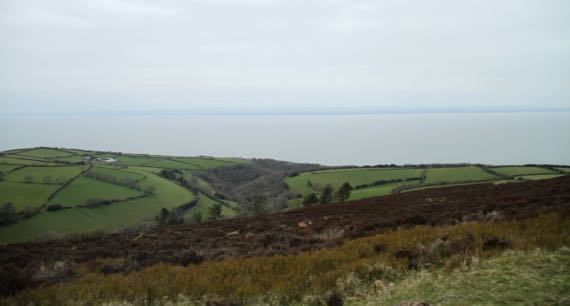
Fog on the moor this morning. Love the visual contrasts of, from front to back, the uncultivated moor, the quilt of fields separated by hedges, the sea, the Wales coast, and the muted sky.
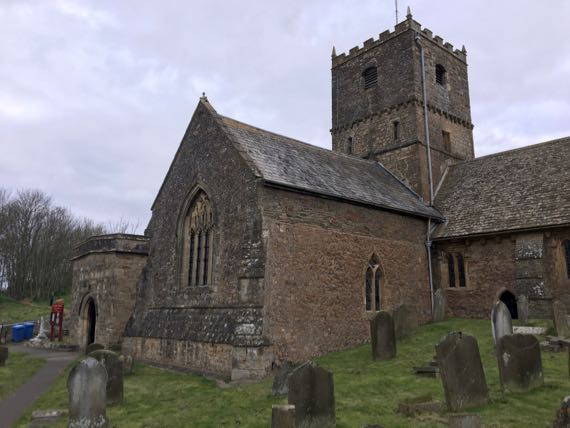

Quick stop in Clevedon to see several places used as the town in “Broadchurch”—including this church, St Andrews in real life. This is a living church, as it were, with a gravedigger (man and machine) busy opening a new spot and prayer books shelved by the door.

Then, farther up the coast, we turned west to cross this Big Bridge, the pleasure for which we paid the princely sum of £6.60. Of course, leaving Wales is no charge…just a one-way fee collection plan…perhaps to encourage the English to leave but not to visit?
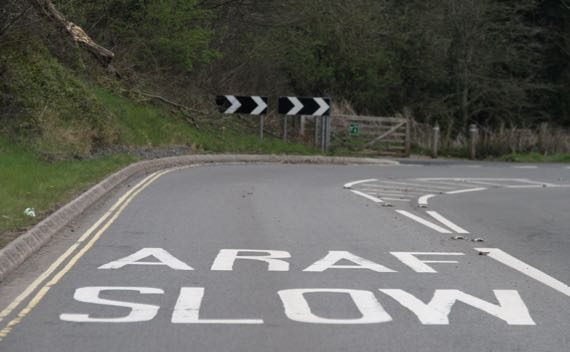
Welsh lesson: ARAF means slow. Sometimes they’re in the other order. (I was going to make the title of this post “post wan,” which translates as “weak bridge,” a not uncommon phrasing on a sign on a country lane.)
And, now for Tintern’s church ruins. It is mostly commonly referred to as an abbey, and it was, but most photos are, frankly, not of the monastery, but of the church.
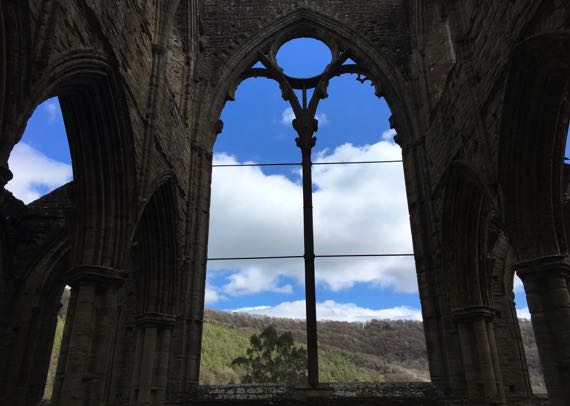
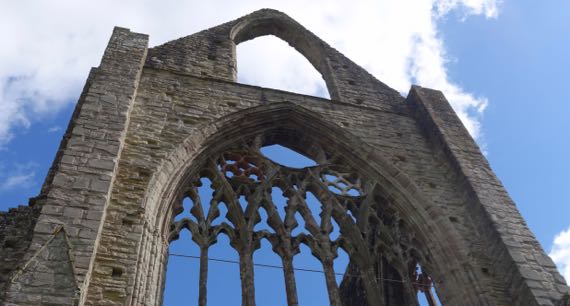
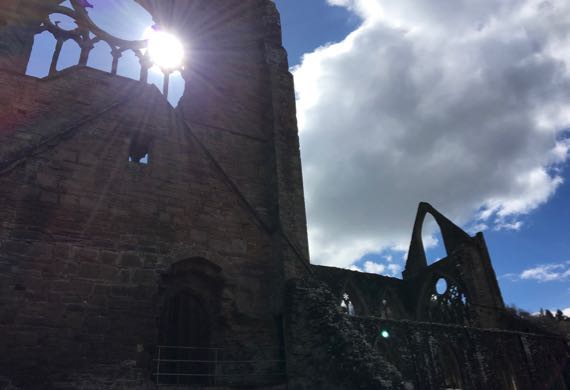
First, the window opening above the east, altar end of the main hall. Second, the newly restored upper window area of the opposite, west (door) end. North transept, wall of high window openings extending to west end.
The light was transcendent.
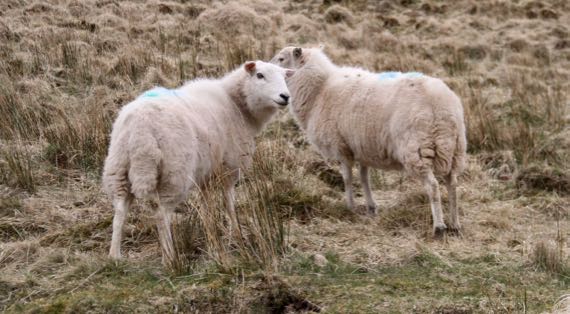
Today is our first visit to Wales. Signs are different—bilingual. Sheep seem the same to us non-shepherds.

And this is the National Assembly building in the dock-front area of Cardiff. Shipping is not what it used to be and this zone is being repurposed to draw locals and visitors. While somewhat commercialized, there are also stunning modern and historic buildings. And glittering water, wheeling gulls, and, for a while just for us(!), late-afternoon warm-toned sunshine.
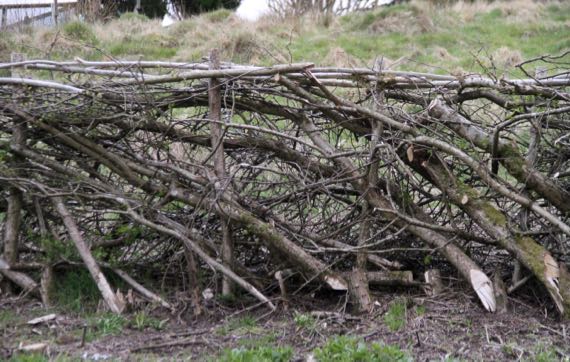
Here’s a closeup of a living fence, mentioned yesterday. This one has the uprights just bent to the side, rather than all the way horizontal. After growing, it has the same effect of making a latticework impenetrable to sheep, cattle, and people. Small birds, rodents, and other small creatures may well make their home here….
Posted at 10:22 PM |
1 Comment »
We had several sightings of “fog smoke” signs (no photo) along the highway. Since we experienced bright sunshine, we remain unclear about how to recognize this condition. That was the first two-word phrase of the day.
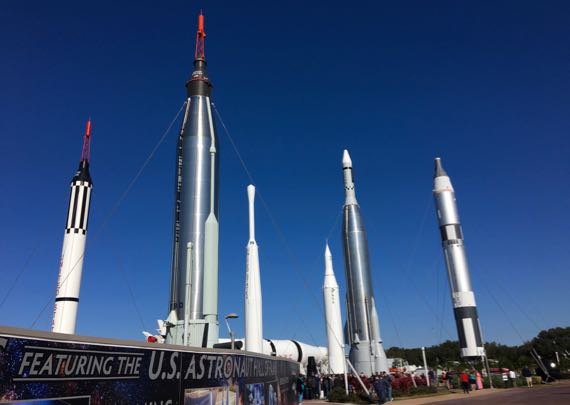
Our first stop…this “Rocket Garden,” or so the Kennedy Space Center Visitor Complex signs described it. I guess they’re all real, and not copies. They kindly broadcast a live “tour” of the garden periodically. We caught part of two of them, both the same voice, one disconcertingly similar to Rachel Maddow’s.
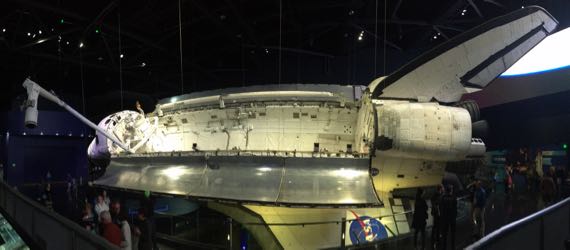
This is the Space Shuttle Atlantis, somewhat distorted by the pano process. It is huge, and I was happy that we could see it for real—not a copy, not a mockup. The two words? The business end (terminus?) of the arm (made in Canada and liberally decorated with Canada/maple leaf logos)…is the end effector. That cylindrical thing you see to the far left is the end effector.
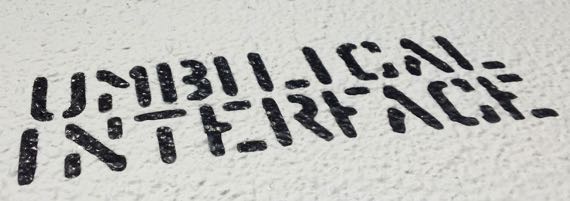
This stencil is from a lower flank of a space shuttle fuel tank. Self explanatory (another two-word phrase, teeeheee).
Posted at 10:01 PM |
Comments Off on Two-word phrases
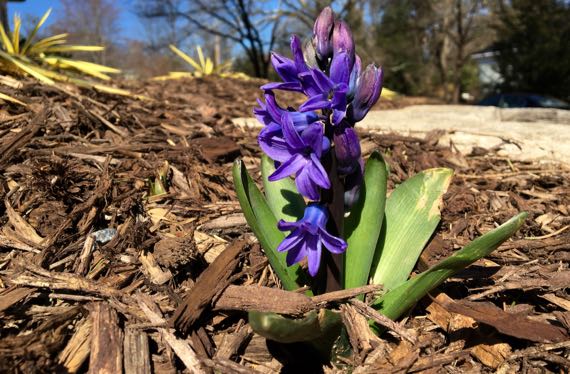
Easiest closeup flower photo of the day: this hyacinth was in an almost eye-level planting by the sidewalk. A bit frost-nipped….
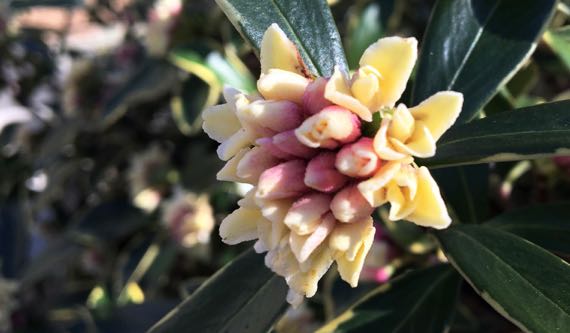
I smelled a combination of honey and orange…looked for the flower and found this unassuming specimen. Sorry I can’t post the lovely scent.
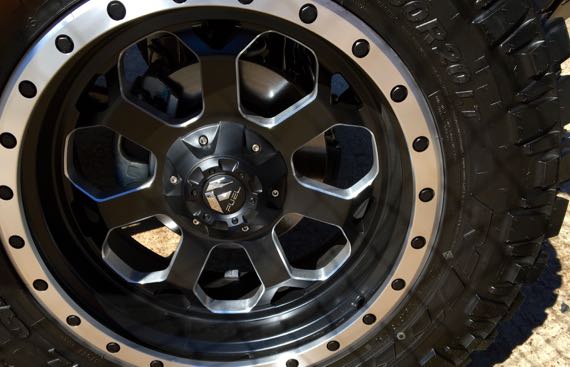
For no apparent reason, I include this knobby tire/wheel, aka tire with toenails, as I once heard it put.
Happy spring, or almost-spring.
Posted at 11:05 PM |
Comments Off on Season-noted
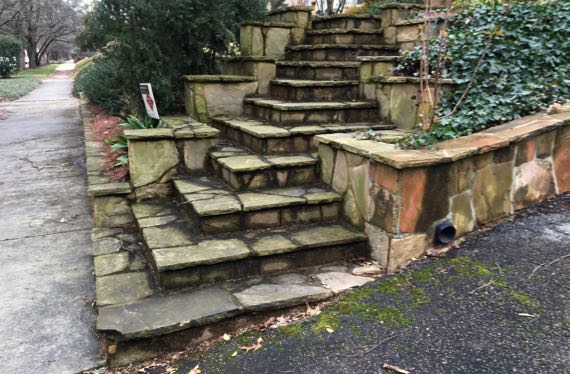

I thought about steps today, about architectural solutions to elevation change between the sidewalk and a house. Nothing monumental in that…just functional problem-solving.

This is simple, however—footprints in mud. People (sneakers) and dog.
Are Fitb_t steps (possibly simply footfalls?) simpler or more complex?
Posted at 10:16 PM |
1 Comment »
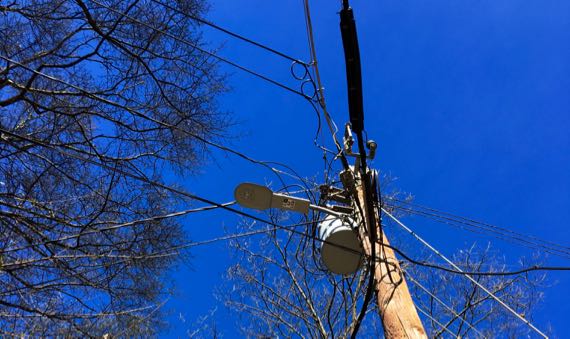
Beautiful sunny day, and I took advantage of it for an early afternoon ramble. I found a power-pole festooned with lines and a light and maybe that’s a transformer, too. That’s not the simple one to three lines passing straight by that I remember from The Old Days.
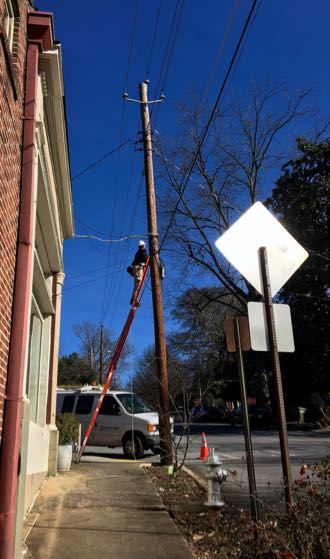
Then, around the corner, I found another pole, with fewer accessories on top, and a Man on a Ladder—not a mechanized ladder, just the regular painter-carpenter kind—checking out the lowest level of technologies. I think his work is related to the coming fiber-delivered communication options we keep hearing about (foot-tapping impatience…).
Posted at 6:40 PM |
Comments Off on News of the heights
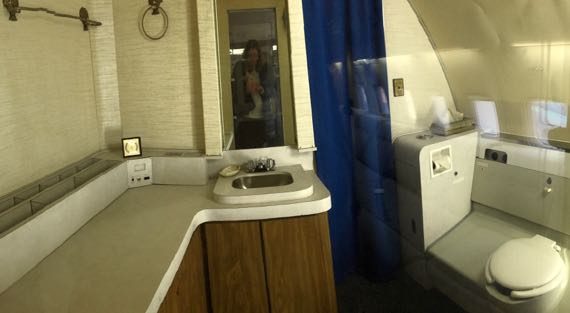
Air Force One Presidential Potty, retired. The plane has three other potties, one up front for pilots and I’m guessing staff, and two in the tail (modified two-holer? each has its own door…) right next to each other. I know you’re glad to know this.
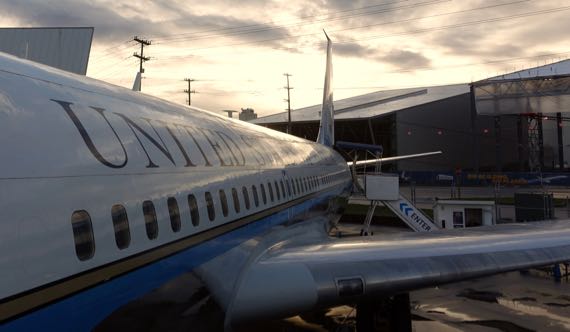
Here’s proof that it is indeed Air Force One, retired. And that the sun wanly appeared, briefly. And, yes, I know that it has an N-number and is only Air Force One when the Pres is aboard. Still, us civilians say and type inaccuracies like this.
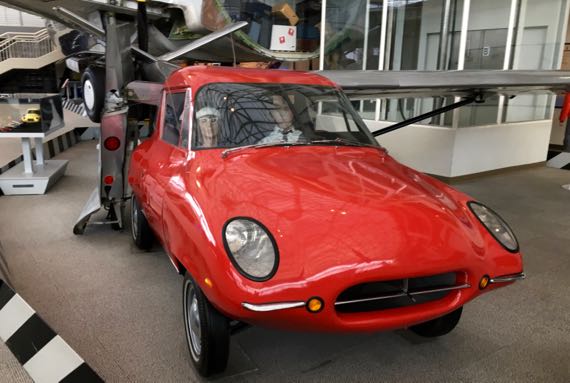
Other attractions include a flying car. Red, of course. One wing is dismantled, and the V to the rear is (part of?) the upper tail structure.
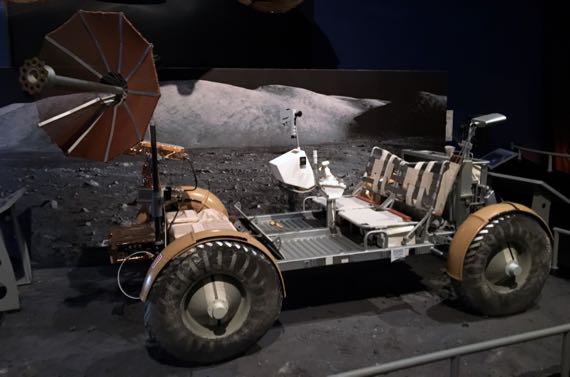
For a Museum of Flight, there was a lot of non-flying going on. The only active flying was out the window of a control-tower mockup, and a screen there showing active airborne aircraft (clumsy phrasing; you get my drift). Again, not a flying vehicle, in contrast to the many formerly flying vehicles. And mockups.
Posted at 10:22 PM |
1 Comment »
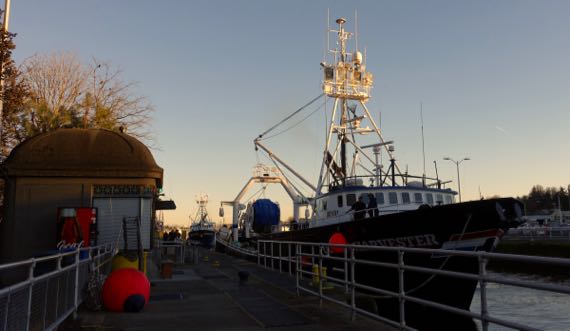
For a short while, as this afternoon, I can be spellbound by deep-ocean vessels…while my feet are on solid ground. Two fishing vessels preparing to descend in a single lock of the Ballard Locks, the busiest locks in the USofA. They’re part of the Lake Washington Ship Canal.
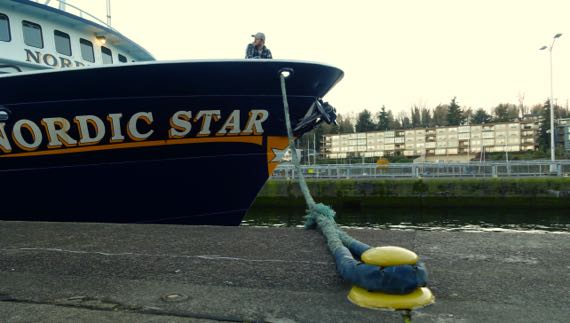
Seaman watching to maintain proper tension on the hawser. (Or is it a line? Clearly, I’m not nautical.)
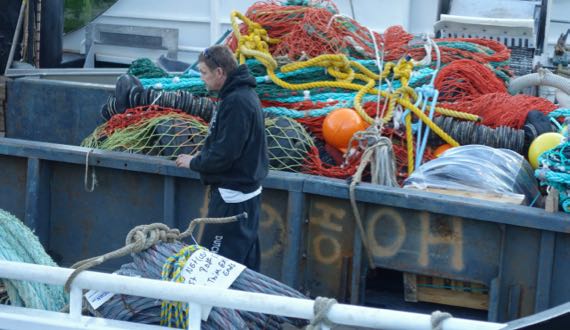
Here are the multicolored nets and floats and lines/hawsers on the leading boat. The two vessels seemed like sisters, but the deck of the other one was almost empty of nets. The windows and size of the deck and pilot house seemed identical, but the working area was set up differently, or appeared to be.
Regarding the title: sample of two.
Posted at 8:40 PM |
1 Comment »
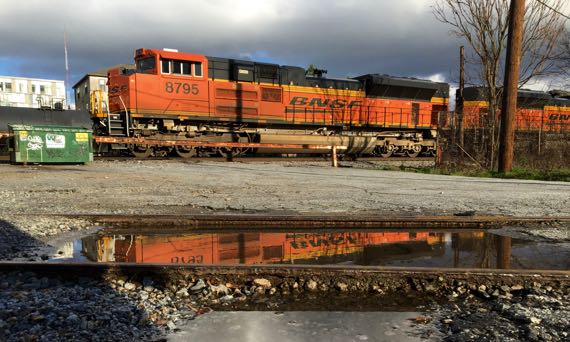
We got out for Boxing Day into intermittent sunshine—and shadows. Looks like the locomotive world is getting going again after a down day. We saw a crew-switch at another location, but not here, although it looks like a waiting situation….
Posted at 10:22 PM |
Comments Off on Parked contained energy package
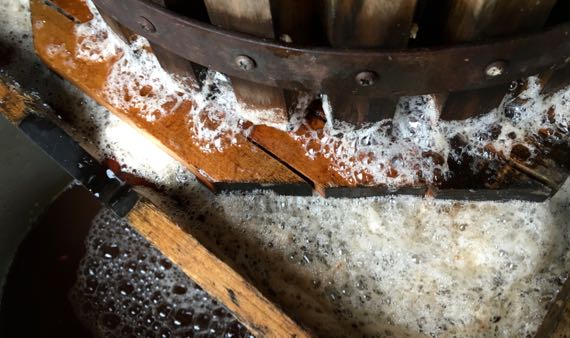
Our big activity today: squeezing apples aka cider-making. Which is far more than that.
The neighbors have a magic hand-operated machine that chips up the apples (circular motion, like a steering wheel), collects the chips in a cylindrical barrel lined with a stout, fabric filter. Then, with another circular motion on a different plane, we cranked down the press, squeezing the juice out through the cracks in the barrel, into the tray, and out the V-cut into the pan below. (I’m not sure why this particular batch was so foamy-bubbly.)
That brings in the next phase: filter and final bottling. We have special fabric filters (old sheeting) stretched across large funnels, and anchored with clothes pins. We pour the fresh juice through, which involves some fussing to get it all through (sediment blocks the filters, sl-o-w-ing the flow), and into a glass gallon jug. We transfer from that through the funnel (without the filter) to the final vessels, plastic jugs suitable for freezing. Long winters you know.
Use the hose outdoors to clean the fabric, wring, and reset on the funnels.
I was on the pouring operation. The Guru ended up on the apple loading and cranking and squeezing part of the operations.
Since it was raining, we did this in the commodious garage. Since it was cool, we didn’t have to watch out for busy and sometimes sated yellow jackets.
We took a break about two-thirds of the way through to have home-made potato soup and pasta (separately), topped off by home-made caramel corn. Living large!
What I didn’t mention was the prep work: collecting the apples, washing them. The apple-loaders picked through them, and selected from the various containers to make the blend.
Now, through the long winter, these households will have some fresh cider as a pick-me-up. We took a quart; it may last a few hundred miles.
Posted at 8:05 PM |
Comments Off on No cabernet