Careful!
Friday, 1 May 2009
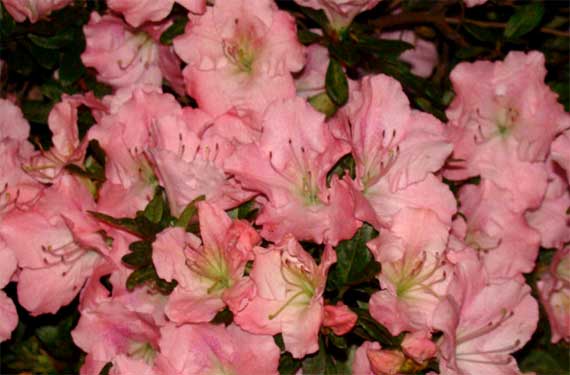
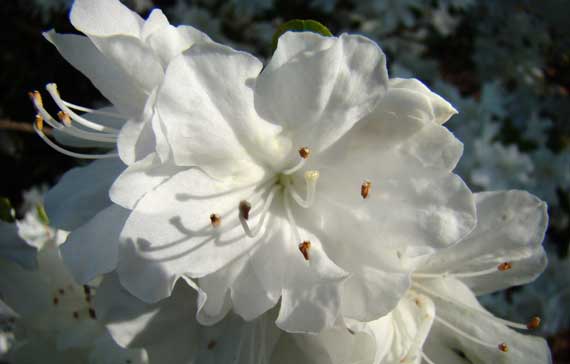
The latest blooming azaleas in our yard are now fading….
If you didn’t know what the phrase meant, wouldn’t you think the hero in a bad spy novel would be beset by (Eastern European) Boolean operators?
Friday, 1 May 2009
The latest blooming azaleas in our yard are now fading….
If you didn’t know what the phrase meant, wouldn’t you think the hero in a bad spy novel would be beset by (Eastern European) Boolean operators?
Thursday, 30 April 2009
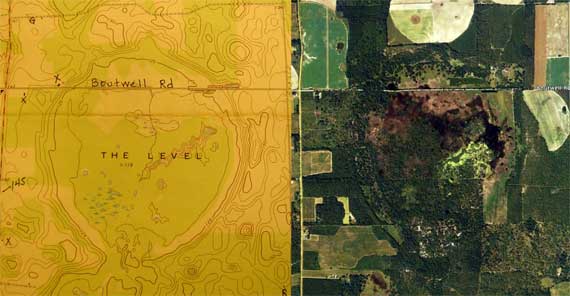
So, the other week I was looking at topos of way down in Decatur County, in south Georgia, and I saw this stunningly round, distinct, and dramatic landform. I finally got around to checking it out on GoogleEarth, and it seems even more interesting than it looked on the map. Next time I’m down that way….
Not sure what it is, but I’d start with Carolina bays; they are rounder rather than oval in these parts and this landform is sure round!
More on stereoviewing….
Tuesday, 28 April 2009
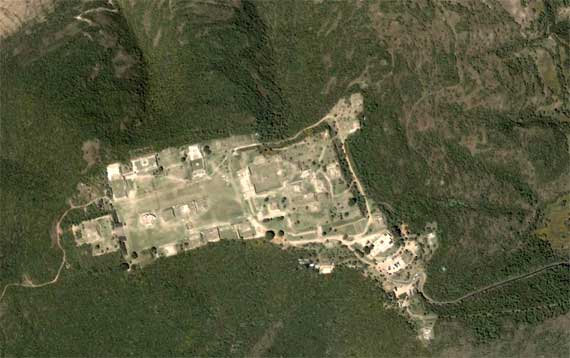
One thing about the SAAs, most people throw up a Keynote (or that other MS format), and since archaeology has a lot of spatial variables, there’re often maps. Well, they used to be maps, hand-drawn back in the old days; now a GoogleMap or two creeps in….
Note that the cleared area on this image had just civic-ceremonial architecture—no normal residential area. Some of that was on the terraces that sprawl down the slopes, mostly toward the top and right of the frame (no, north is not “up”). When this was a vibrant community a millennia ago, it extended outside this image. It was BIG. Uh, scale? Those rectangular things are tour buses on one of the whitish patches toward the lower right….
I had a good idea today—at least I’m pretty sure, even now, that it’s a good idea. That makes today a superb day!
Saturday, 25 April 2009
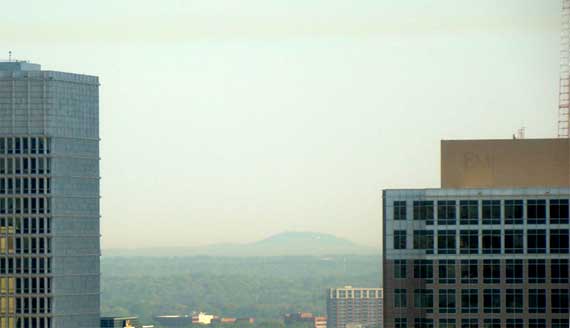
That hotel I’ve been hanging out in? I finally got something good out of the architecture—the view north from the 19th floor. Of course, I was turned around and kept trying to make this into the view east, but the shape of the bump on the horizon wasn’t looking right for Stone Mountain. I did think about it being a view north, since I couldn’t explain one building cluster in between…. So, conclusion, after consulting the multi-talented Guru: this is Kennesaw Mountain.
Tuesday, 8 April 2008
For unknown reasons (unexercised and unverbalized desire to wander exacerbated by fine spring weather?), I’ve been distracted for a time both yesterday and today looking closely at the Isle of Skye in Google Earth. I even downloaded a 1905 text from archive.org called The Misty Isle of Skye: Its Scenery, Its People, Its Story, and examined places noted therein.
Somewhere along the way, I discovered that those crazy Brits (or Scots) decided that if a Munro is any Scottish mountain more than 3K feet tall, then a somewhat smaller landform, at least 150 meters tall (just under 500 feet for you metric-challenged types), shall be referred to as a Marilyn (get it?), or, roughly, a hill. Or, and I suppose this is entirely possible, those Wikipedia wackos are totally pulling my leg!
Friday, 15 February 2008
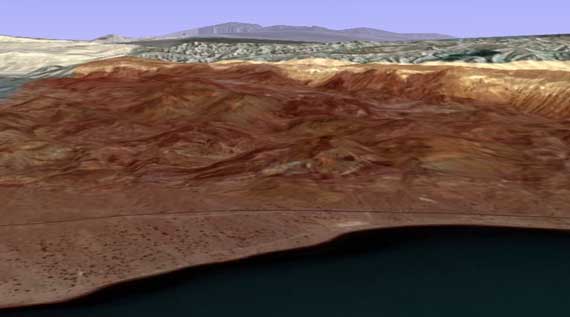
Except for the pixellation, perhaps this could have been in the exhibition we saw yesterday…but it’s grabbed from Google Earth, and is of the Iranian coast just west of the Strait of Hormuz, tipped for a low-angle view….
In June the U.P. is a semitropical bug farm.
That’s Jim Harrison in Returning to Earth (2007; pg. 78), and he’s so right! Although not always—he also says the Seney stretch is 50 miles, but I think it’s quite a bit less. Like high 20s. I guess if you’re on a bicycle, though, it may well feel like fifty miles!
You may know Harrison as the author of Legends of the Fall or Wolf (both made into movies), or possibly from his non-fiction writing about food and cooking. I cleave more to his fiction pieces set in Michigan or Oklahoma.
Interesting word meaning either to split/sever or to adhere (both verbs, notice). Opposite meanings…I meant the latter…. I guess the clue is the “cleave to” phrasing; with “to” cleave almost always means to adhere/be attached.
Tuesday, 22 January 2008
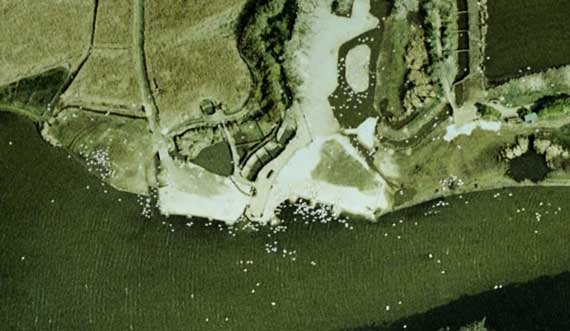
Google Earth image of Abbotsbury Swannery lagoon, with mute swan-dots.
These days I often explore the world using Google Earth (free free free!), spurred by something I read somewhere—cheap trips, no?
Today I noticed mention of the Abbotsbury Swannery in a NYTimes article by Donald G. McNeil Jr. on the global avian flu virus situation (check the sidebar graphic, too). First, on the flu, yup, it’s still a problem, and is now endemic in parts of Egypt, Indonesia, and Nigeria, and probably also in China, Vietnam and Bangladesh—that’s two continents, and multiple flyways. The virus is adept at mutating, and scientists have already identified “10 clades and hundreds of variants”—makes you look a bit warily at those migrating birds overhead….
I’d never heard of a swannery before, and that the Abbotsbury (Dorset, UK) one dated back to the 11th century, well, geeze, my hand was instantly conflicted about whether to google the Swannery or search out the Google Earth icon first! Cleverly, I set GE app to opening while googling for info…. I found a tourist listing, including a photo of a recoverd bomb (looks like a huge black round, well, egg, given its display location at the Swannery!), and, no surprise, a Wikipedia entry, which has a lovely picture of downy mute swan cygnets.
The Google Earth picture is from the green season, and white swan-dots are along the shoreline and floating on the lagoon, and while there are a few swan and beach pictures from Panoramio, most of the nearby Google Earth Community links are to shoreline and bluff “pillbox” fortifications, I assume from WWII.
And, yup, the Wiki-people are alert; there’s mention of the avian flu showing up at the Swannery less than ago….
I love that this travel contributes nothing to my carbon footprint and removes nothing from my savings account….
Friday, 26 October 2007
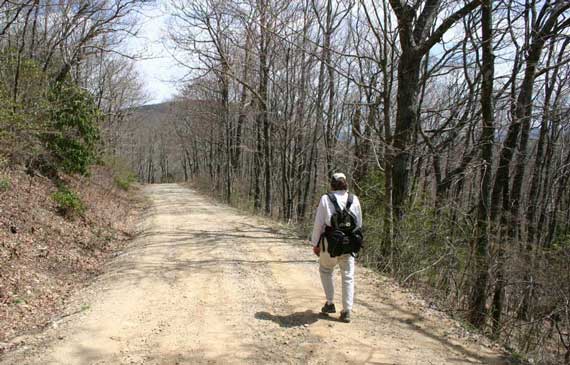
April 2006 (no, the drought’s not so bad the trees have no leaves).
Clever (perhaps) title, but it’s not a crawl…. According to the Georgia Conservancy:
Georgia ranks 3rd, behind Texas and Florida, in the amount of farm land and open space converted to development.
I not sure if they mean as a percentage of land in the state or sheer number of acres (the truths and subterfuges of statistics…). Either way (and I think it must be the latter), this is scary. Those are all big states, so it’s a massive land area.
Some years ago I tried to get a handle on the impact development has had on archaeological sites here in Georgia, which is particularly rich in prehistoric occupation. Look here if you’re interested. If you’re really interested, there’s a 2005 update (unfortunately, not available online as near as I can tell) by Steve Kowalewski in SGA’s Early Georgia, summarized in this press release.
Tuesday, 4 September 2007

We made a run across southeast Michigan at midday, doing a bounce shot off the TJ’s in Ann Arbor (picking up a near-dead laptop the Guru hopes to rehabilitate from Cousin S), ending up in Grosse Pointe Woodse (seems like all three words should have terminal “e”s…).
Dinner tonight: northern cuisine from Mexican Town. Mmmm.
(And, yes, that’s really what they call it.)
Friday, 31 August 2007
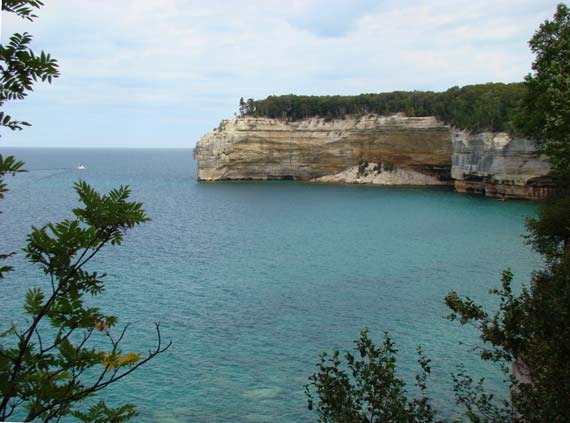
Lake Superior greeted us with light breezes and lovely views of the Pictured Rocks meeting the water and sky, as we hiked in what’s called the Chapel–Mosquito area. We squeezed in the hike before the assault of Labor Day visitors, and actually met only a few other hiking parties as we worked our way around the Grand Portal Point area.
I have no recollection of ever taking the tourist boat that leaves from Munising (probably deemed too expensive), but I think the time to do that is late afternoon, to catch the best light on the banded sandstone.
Two turkeys on the roadside down by Star (east of Shingleton) ignored us as we drove by on our way “out”, and a pheasant (the same one I saw several weeks ago?) clucked our return.
It’s a bird’s life.